
Barber Tips & Tricks
Follow us for the latest barber techniques and tips
Barber Tips & Tricks
Follow us for the latest barber techniques and tips
Top 7 Reasons Why Your Clients
Aren't Returning
Stay Ahead in the Barbering Game: Nurturing
Lifelong Clientele
You might have come across the saying “give a client a good cut at a reasonable price, and they'll be yours for life.” Unfortunately in reality this is not always the case. That’s where we come in! Check out some of the reasons why your clients may not be returning, whether they were long-term customers or a first-time appointment, below.

Top 7 Reasons Why Your Clients
Aren't Returning
Stay Ahead in the Barbering Game: Nurturing
Lifelong Clientele
You might have come across the saying “give a client a good cut at a reasonable price, and they'll be yours for life.” Unfortunately in reality this is not always the case. That’s where we come in! Check out some of the reasons why your clients may not be returning, whether they were long-term customers or a first-time appointment, below.
Career in Mobile Barbering: Key
Things You Need to Know about
While most barbers work in physical barbershops or hair salons, there are a growing number of barbers who work on-call. What does it mean to be a mobile barber? What are their primary responsibilities? Where to find them? In this blog, we will explain some key terms you should know about mobile barbering and how you can start a new career in it.

Career in Mobile Barbering: Key
Things You Need to Know about
While most barbers work in physical barbershops or hair salons, there are a growing number of barbers who work on-call. What does it mean to be a mobile barber? What are their primary responsibilities? Where to find them? In this blog, we will explain some key terms you should know about mobile barbering and how you can start a new career in it.
Top 4 Ways for Barbers to
Promote Themselves
Marketing is key. Knowing how to market yourself as a barber can be the difference between having 5 to 20 clients a day. If you are interested in boosting the number of your customers and furthering your advertising skills, read the list below with four ways to promote yourself as a barber.

Top 4 Ways for Barbers to
Promote Themselves
Marketing is key. Knowing how to market yourself as a barber can be the difference between having 5 to 20 clients a day. If you are interested in boosting the number of your customers and furthering your advertising skills, read the list below with four ways to promote yourself as a barber.
5 Tips for Social Media Content
Creating as a Barber
It is next to impossible to find someone who is not on social media today. More than just a tool for connection, social media is key helping barbers market themselves and promote their names and skills. If you want to up your barber game quickly, here are five tips on how to promote content online that you don't want to miss out on.

5 Tips for Social Media Content
Creating as a Barber
It is next to impossible to find someone who is not on social media today. More than just a tool for connection, social media is key helping barbers market themselves and promote their names and skills. If you want to up your barber game quickly, here are five tips on how to promote content online that you don't want to miss out on.
5 Best Haircuts for Men with
Early Hair Thinning
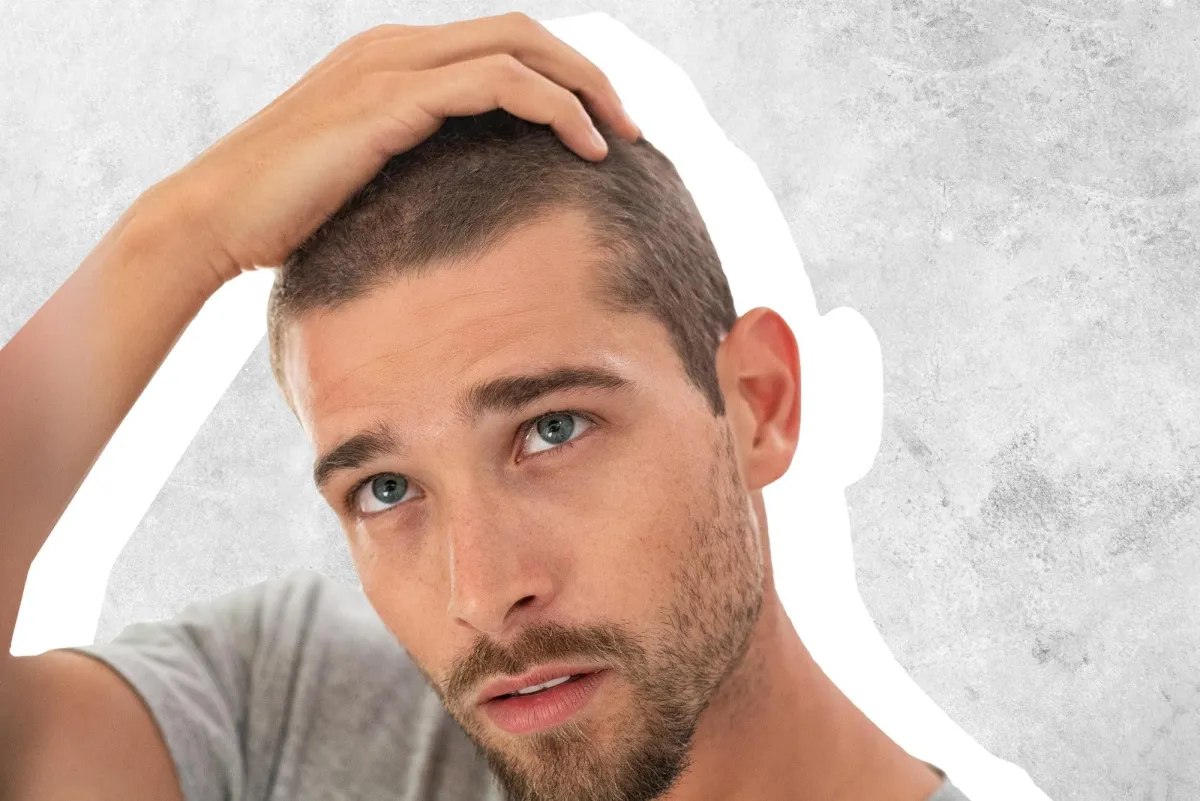
Losing your hair is never a good feeling, most men tend to feel self-conscious about it. Some men decide to completely shave off their heads or constantly wear a hat. One of the most common insecurities men face is hair thinning; for some men, it starts as early as in their 20s. The loss of confidence really starts to affect the way men do their hair and the types of hair cuts they get. Men start to worry about how they will be perceived by friends, family, and colleagues. Hair thinning should not be the cause of self distraughtness, and it should not limit men to have to continuously cover their heads. CADMEN Barbershop has compiled a list of the top 5 best haircuts for men experiencing early hair loss.
The Comb Over Haircut: What It Is and How It's Cut Today
The Comb Over Haircut: What It Is and How It's Cut Today
The term "comb over" once described a specific style associated with attempts to conceal thinning hair by combing long strands across a bald area. That style still exists, but it is not what most people mean when they request a comb over at a modern barbershop.
The contemporary comb over is a clean, side-parted style with longer hair on top (typically 2 to 4 inches) combed or brushed to one side, with shorter sides that can be faded, tapered, or disconnected. It is one of the most versatile and broadly flattering men's haircuts in the current market.
Structure
The modern comb over has two structural elements: a part line (a defined side part, either natural or barber-set with the comb) and length on top sufficient to sweep clearly to one side. The sides are shorter than the top, creating the contrast that makes the comb over readable as a distinct style.
Variation in the contemporary comb over comes from: the length of the top section (from just over 2 inches to as long as 5 or 6 for more dramatic versions), the height and type of the side treatment (tapered vs. faded vs. disconnected undercut), and the styling finish (slicked and polished vs. matte and textured).
How It Is Cut
The sides are cut first to establish the framework. For a faded comb over, the sides are faded to the desired height and graduation. For a tapered version, the sides taper down to shorter guard lengths near the hairline.
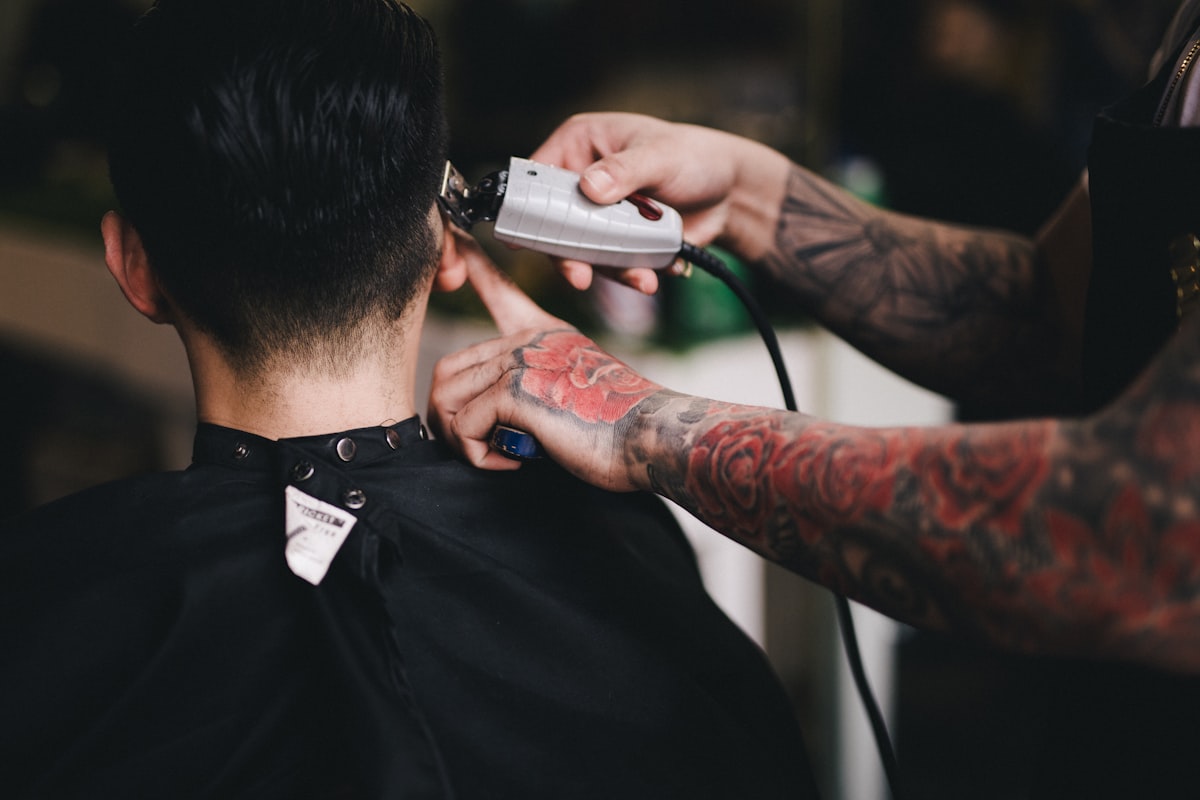
The top section is cut with scissors to the desired length, with internal weight removal (through point-cutting and texturizing) to allow the top to lie flat when swept without adding bulk. The part line is either the client's natural growth pattern or cut to a specific location by the barber using a fine comb to draw a clean part and cutting each section separately.
The Part Line
A hard part (a shaved or very closely clipped line defining the part) is a common addition to the comb over, creating a defined separation between the top and the side. The hard part makes the style look more precise and structured. It does require maintenance, the shaved line grows in within 1 to 2 weeks and requires either upkeep or allowing it to soften into a natural part.
Styling
The comb over is easy to style. Apply product (pomade or clay, depending on the desired finish) to damp hair. Comb the top section to the dominant side (the direction it naturally falls or the direction of the cut). The hair follows the direction it was cut in and typically sets quickly in the correct position.
CADMEN Training
Structured cuts and part-line technique are taught in CADMEN's hands-on barbering program. academy.cadmen.ca/in-person-training.
Frequently Asked Questions
What is a comb over haircut?
The contemporary comb over is a men's hairstyle with longer hair on top (typically 2 to 4 inches) that is swept to one side, creating a clean side-parted look. The sides are shorter, either faded, tapered, or cut with a disconnected undercut. The style is one of the most requested in modern barbershops because it is versatile (works in professional and casual environments), broadly flattering, and relatively easy to style daily. The name carried negative connotations from an earlier context (the comb over used to conceal baldness by combing long strands over thinning areas), but the modern barbershop comb over is structurally unrelated to that style and is considered a sophisticated, intentional haircut.
How long does hair need to be for a comb over?
At minimum 2 to 2.5 inches on the top section for the style to read clearly as a comb over. At shorter lengths, the hair does not have enough weight to sweep definitively to one side and the part reads as ambiguous rather than intentional. Longer top sections (3 to 5 inches) allow for more styling flexibility and a more dramatic effect. Men growing a comb over from a short cut typically need 2 to 4 months of top growth before the style is achievable. The sides can be cut short from the beginning, the grow-out period only affects the top section.
What is a hard part comb over?
A hard part comb over includes a shaved or closely clipped line defining the part between the top section and the side. The hard part is created with a detail trimmer or T-outliner, drawing a clean, precise line at the part location. It makes the side part more dramatic and defined than a natural part line. The hard part grows in within 1 to 2 weeks, it requires upkeep at each barbershop visit to maintain or is allowed to soften into a natural part between appointments. The hard part comb over is currently one of the most commonly requested specific variations of the style.
Is a comb over the same as a side part?
A side part is a specific detail (the part line location and direction) that is almost always present in a comb over, but a side part can also appear in many other styles (the Ivy League, the classic businessman, the slick back with a part). A comb over specifically refers to a style where the top's length is swept clearly and intentionally to one side, creating a directional flow that is the defining visual element. A side part without a clear sweep, where the hair is simply parted on the side but styled in other ways, would not typically be called a comb over. In common usage, the terms are sometimes used interchangeably.
What face shapes suit a comb over?
The comb over works well on most face shapes and is considered one of the more universally flattering men's haircuts. The side sweep creates asymmetry that softens angular jaw shapes and the length on top adds height without the full frontal emphasis of the pompadour. Round faces benefit from the height and the angular side part, which counterbalances the circular proportions. Oval faces work well with the style at any side treatment length. Square faces benefit from the side parting and sweep because the direction adds asymmetry that breaks the geometric regularity of the jaw. Long or narrow faces may prefer a comb over with a lower fade and less top height to avoid emphasizing the face length.
Related Reading From CADMEN Barber Academy
- Clipper Over Comb: The Foundational Technique Every Barber Needs to Master
- The Comb Over Fade: How to Cut and Style It
- Comb Over Haircut: How to Cut and Style It
- The Comb Over Haircut: How Barbers Cut and Style the Most Versatile Men's Haircut
- The Modern Comb Over: How It Works and Why Men Wear It
- Scissor Over Comb: The Technique Every Barber Needs

5 Best Haircuts for Men with
Early Hair Thinning
Losing your hair is never a good feeling, most men tend to feel self-conscious about it. Some men decide to completely shave off their heads or constantly wear a hat. One of the most common insecurities men face is hair thinning; for some men, it starts as early as in their 20s. The loss of confidence really starts to affect the way men do their hair and the types of hair cuts they get. Men start to worry about how they will be perceived by friends, family, and colleagues. Hair thinning should not be the cause of self distraughtness, and it should not limit men to have to continuously cover their heads. CADMEN Barbershop has compiled a list of the top 5 best haircuts for men experiencing early hair loss.


For any request, please contact us at info@cadmen.ca