
Barber Tips & Tricks
Follow us for the latest barber techniques and tips
Barber Tips & Tricks
Follow us for the latest barber techniques and tips
Top 7 Reasons Why Your Clients
Aren't Returning
Stay Ahead in the Barbering Game: Nurturing
Lifelong Clientele
You might have come across the saying “give a client a good cut at a reasonable price, and they'll be yours for life.” Unfortunately in reality this is not always the case. That’s where we come in! Check out some of the reasons why your clients may not be returning, whether they were long-term customers or a first-time appointment, below.

Top 7 Reasons Why Your Clients
Aren't Returning
Stay Ahead in the Barbering Game: Nurturing
Lifelong Clientele
You might have come across the saying “give a client a good cut at a reasonable price, and they'll be yours for life.” Unfortunately in reality this is not always the case. That’s where we come in! Check out some of the reasons why your clients may not be returning, whether they were long-term customers or a first-time appointment, below.
Career in Mobile Barbering: Key
Things You Need to Know about
While most barbers work in physical barbershops or hair salons, there are a growing number of barbers who work on-call. What does it mean to be a mobile barber? What are their primary responsibilities? Where to find them? In this blog, we will explain some key terms you should know about mobile barbering and how you can start a new career in it.

Career in Mobile Barbering: Key
Things You Need to Know about
While most barbers work in physical barbershops or hair salons, there are a growing number of barbers who work on-call. What does it mean to be a mobile barber? What are their primary responsibilities? Where to find them? In this blog, we will explain some key terms you should know about mobile barbering and how you can start a new career in it.
Top 4 Ways for Barbers to
Promote Themselves
Marketing is key. Knowing how to market yourself as a barber can be the difference between having 5 to 20 clients a day. If you are interested in boosting the number of your customers and furthering your advertising skills, read the list below with four ways to promote yourself as a barber.

Top 4 Ways for Barbers to
Promote Themselves
Marketing is key. Knowing how to market yourself as a barber can be the difference between having 5 to 20 clients a day. If you are interested in boosting the number of your customers and furthering your advertising skills, read the list below with four ways to promote yourself as a barber.
5 Tips for Social Media Content
Creating as a Barber
It is next to impossible to find someone who is not on social media today. More than just a tool for connection, social media is key helping barbers market themselves and promote their names and skills. If you want to up your barber game quickly, here are five tips on how to promote content online that you don't want to miss out on.

5 Tips for Social Media Content
Creating as a Barber
It is next to impossible to find someone who is not on social media today. More than just a tool for connection, social media is key helping barbers market themselves and promote their names and skills. If you want to up your barber game quickly, here are five tips on how to promote content online that you don't want to miss out on.
5 Best Haircuts for Men with
Early Hair Thinning
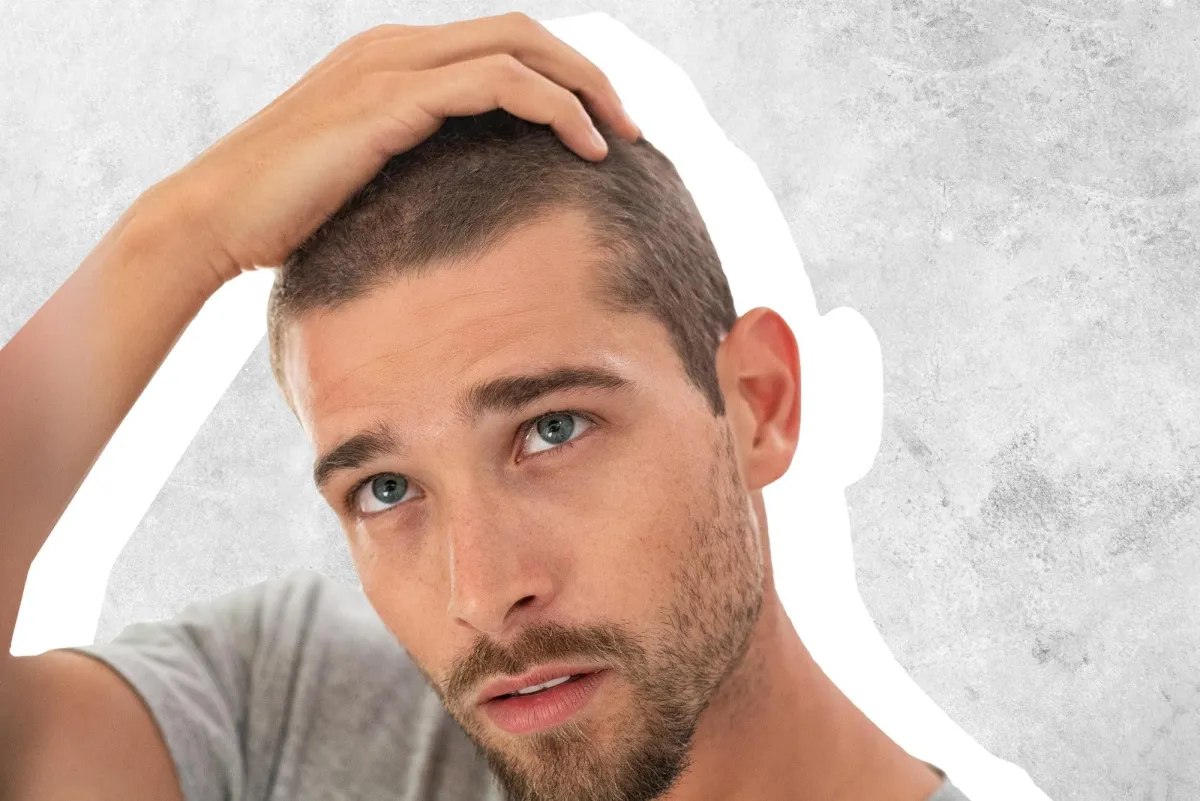
Losing your hair is never a good feeling, most men tend to feel self-conscious about it. Some men decide to completely shave off their heads or constantly wear a hat. One of the most common insecurities men face is hair thinning; for some men, it starts as early as in their 20s. The loss of confidence really starts to affect the way men do their hair and the types of hair cuts they get. Men start to worry about how they will be perceived by friends, family, and colleagues. Hair thinning should not be the cause of self distraughtness, and it should not limit men to have to continuously cover their heads. CADMEN Barbershop has compiled a list of the top 5 best haircuts for men experiencing early hair loss.
Natural Hairstyles for Men: Wearing Your Natural Texture
Natural Hairstyles for Men: Wearing Your Natural Texture
Natural hairstyles for men have grown significantly in mainstream acceptance and visibility over the past decade. For men who want to wear their hair in its natural texture rather than chemically straightened, heat-styled, or otherwise processed, the options range from close-cropped to longer styles. The key is a cut structure that works with the natural growth pattern, and a product regimen appropriate for the specific curl or coil type.
The Foundation: A Cut That Works with Natural Texture
Natural hair worn at medium to longer lengths needs internal structure, layering and shape work that allows the curl or coil to spring freely without becoming a shapeless mass. A barber experienced with natural hair texture shapes the perimeter and removes internal weight in a way that lets the natural pattern express itself as a deliberate style. A barber who is not familiar with textured hair may cut it as if it were straight hair, removing too much or too little in the wrong places.
For men with very short natural hair, the shape of the cut and the edge-up are the primary style elements. A clean line at the hairline and temple, paired with a shape that complements the face, produces a polished look at 1 to 2 inches on a coil or tight curl type. This is the foundation of most close-cut natural styles.
Common Natural Hairstyles for Men
The natural taper: A short sides, longer top structure where the top section is left at its natural curl or wave and the sides are tapered (not faded to skin, but shortened to a natural neckline). This works for Type 2 through Type 3C curl types and produces a clean, low-maintenance style.
The afro: For Type 4 coil types, a shaped afro with clean edges is a high-visual-impact natural style. The barber rounds the shape and cleans the hairline and temple edges. Maintenance involves keeping the edges sharp and the shape even as the hair grows.
The coil fade: A skin or low fade on the sides with a coily or curly top section. The contrast between the short fade and the full natural top section is high-impact and widely worn in urban barbershop markets.
CADMEN Training
Textured hair cutting and natural hairstyle technique are covered in CADMEN's hands-on program. academy.cadmen.ca/in-person-training.
Frequently Asked Questions
What are natural hairstyles for men?
Natural hairstyles for men are styles that work with the hair's natural texture rather than processing, heat-straightening, or chemically altering the natural curl or coil pattern. The term is most commonly used in the context of men with Type 3 and Type 4 hair (curly to coily textures), though the principle of wearing natural texture applies across all hair types. Common natural hairstyles for men include: the shaped afro (Type 4 coil or tight curl, perimeter shaped and edges cleaned up), the coil fade or curly fade (natural top section with faded or tapered sides), the natural taper (short sides with natural-texture top, no fade), the twist out (coil or curl type hair twisted when wet and unraveled when dry for a defined pattern), and the wash and go (curly or coily hair styled immediately after washing using curl-defining products, worn in its natural spring-out state). Most of these styles work across a range of lengths, from very short (1 to 2 inches on top) to medium (3 to 5 inches) and longer. The appropriate length depends on the specific curl or coil type and how the client wants to manage the daily styling requirement at that length.
How do you maintain natural hair for men?
Natural hair maintenance for men involves three main areas: moisture management, protective practices, and regular shape maintenance. Moisture management: natural hair, particularly Type 4 coil types, requires regular moisturizing because the tight coil structure prevents the scalp's natural sebum from traveling down the hair strand as easily as it does on straight or loose wave types. Leave-in conditioners, oils, and butters applied after washing are standard in natural hair routines for Type 3 and 4 hair. Washing 1 to 2 times per week with a sulfate-free shampoo maintains cleanliness without over-stripping. Protective practices: sleeping on a satin or silk pillowcase (or wearing a satin sleep cap or durag) reduces nighttime friction that causes breakage and frizz. Not over-manipulating the hair (excessive combing, tight styles that stress the follicle) preserves length and follicle health. Regular shape maintenance: the natural hair cut structure grows out and loses its shape, typically faster at the perimeter than in the interior. Most men wearing medium to longer natural styles benefit from a shape-up and edge cleanup every 3 to 4 weeks, with a full reshape every 6 to 8 weeks as the length grows and the style changes.
What products work best for natural men's hair?
The products appropriate for natural men's hair depend on the curl type. For Type 2 wavy hair: lightweight curl-enhancing cream or mousse applied to damp hair, scrunched to enhance the wave without weighing it down. For Type 3 curly hair: leave-in conditioner as a base (applied to damp hair after washing), followed by a defining cream or gel for hold. The "LOC" method (Liquid, Oil, Cream, layering in this order) is a widely used protocol for Type 3. For Type 4 coily hair: heavier products are required because coily hair is more porous and loses moisture faster. Leave-in conditioner plus a butter or heavy cream for moisture, sometimes followed by an oil sealant (jojoba, castor, or argan oil) to seal the moisture in. The product amount should be adjusted to hair length and density, more hair requires proportionally more product. Testing products individually (rather than switching entire routines at once) allows men to identify what is working versus what is not. Professional barbers who specialize in textured hair can often recommend products based on the specific hair type observed during the cut.
Related Reading From CADMEN Barber Academy
- Natural Hair at the Barbershop: What Men Need to Know About Afro-Texture Care
- Natural Hair Care for Men: What Barbers Recommend and Why It Works
- Men's Natural Hair Care: What the Routine Actually Requires
- Eyebrow Grooming for Men at the Barbershop: What to Expect
- Early Signs of Hair Loss Men Miss: What Barbers See First
- Men's Hair Thinning: What Is Actually Happening and What the Barbershop Can Do
- Barbering Topics Index: Every Guide by Subject

5 Best Haircuts for Men with
Early Hair Thinning
Losing your hair is never a good feeling, most men tend to feel self-conscious about it. Some men decide to completely shave off their heads or constantly wear a hat. One of the most common insecurities men face is hair thinning; for some men, it starts as early as in their 20s. The loss of confidence really starts to affect the way men do their hair and the types of hair cuts they get. Men start to worry about how they will be perceived by friends, family, and colleagues. Hair thinning should not be the cause of self distraughtness, and it should not limit men to have to continuously cover their heads. CADMEN Barbershop has compiled a list of the top 5 best haircuts for men experiencing early hair loss.


For any request, please contact us at info@cadmen.ca