
Barber Tips & Tricks
Follow us for the latest barber techniques and tips
Barber Tips & Tricks
Follow us for the latest barber techniques and tips
Top 7 Reasons Why Your Clients
Aren't Returning
Stay Ahead in the Barbering Game: Nurturing
Lifelong Clientele
You might have come across the saying “give a client a good cut at a reasonable price, and they'll be yours for life.” Unfortunately in reality this is not always the case. That’s where we come in! Check out some of the reasons why your clients may not be returning, whether they were long-term customers or a first-time appointment, below.

Top 7 Reasons Why Your Clients
Aren't Returning
Stay Ahead in the Barbering Game: Nurturing
Lifelong Clientele
You might have come across the saying “give a client a good cut at a reasonable price, and they'll be yours for life.” Unfortunately in reality this is not always the case. That’s where we come in! Check out some of the reasons why your clients may not be returning, whether they were long-term customers or a first-time appointment, below.
Career in Mobile Barbering: Key
Things You Need to Know about
While most barbers work in physical barbershops or hair salons, there are a growing number of barbers who work on-call. What does it mean to be a mobile barber? What are their primary responsibilities? Where to find them? In this blog, we will explain some key terms you should know about mobile barbering and how you can start a new career in it.

Career in Mobile Barbering: Key
Things You Need to Know about
While most barbers work in physical barbershops or hair salons, there are a growing number of barbers who work on-call. What does it mean to be a mobile barber? What are their primary responsibilities? Where to find them? In this blog, we will explain some key terms you should know about mobile barbering and how you can start a new career in it.
Top 4 Ways for Barbers to
Promote Themselves
Marketing is key. Knowing how to market yourself as a barber can be the difference between having 5 to 20 clients a day. If you are interested in boosting the number of your customers and furthering your advertising skills, read the list below with four ways to promote yourself as a barber.

Top 4 Ways for Barbers to
Promote Themselves
Marketing is key. Knowing how to market yourself as a barber can be the difference between having 5 to 20 clients a day. If you are interested in boosting the number of your customers and furthering your advertising skills, read the list below with four ways to promote yourself as a barber.
5 Tips for Social Media Content
Creating as a Barber
It is next to impossible to find someone who is not on social media today. More than just a tool for connection, social media is key helping barbers market themselves and promote their names and skills. If you want to up your barber game quickly, here are five tips on how to promote content online that you don't want to miss out on.

5 Tips for Social Media Content
Creating as a Barber
It is next to impossible to find someone who is not on social media today. More than just a tool for connection, social media is key helping barbers market themselves and promote their names and skills. If you want to up your barber game quickly, here are five tips on how to promote content online that you don't want to miss out on.
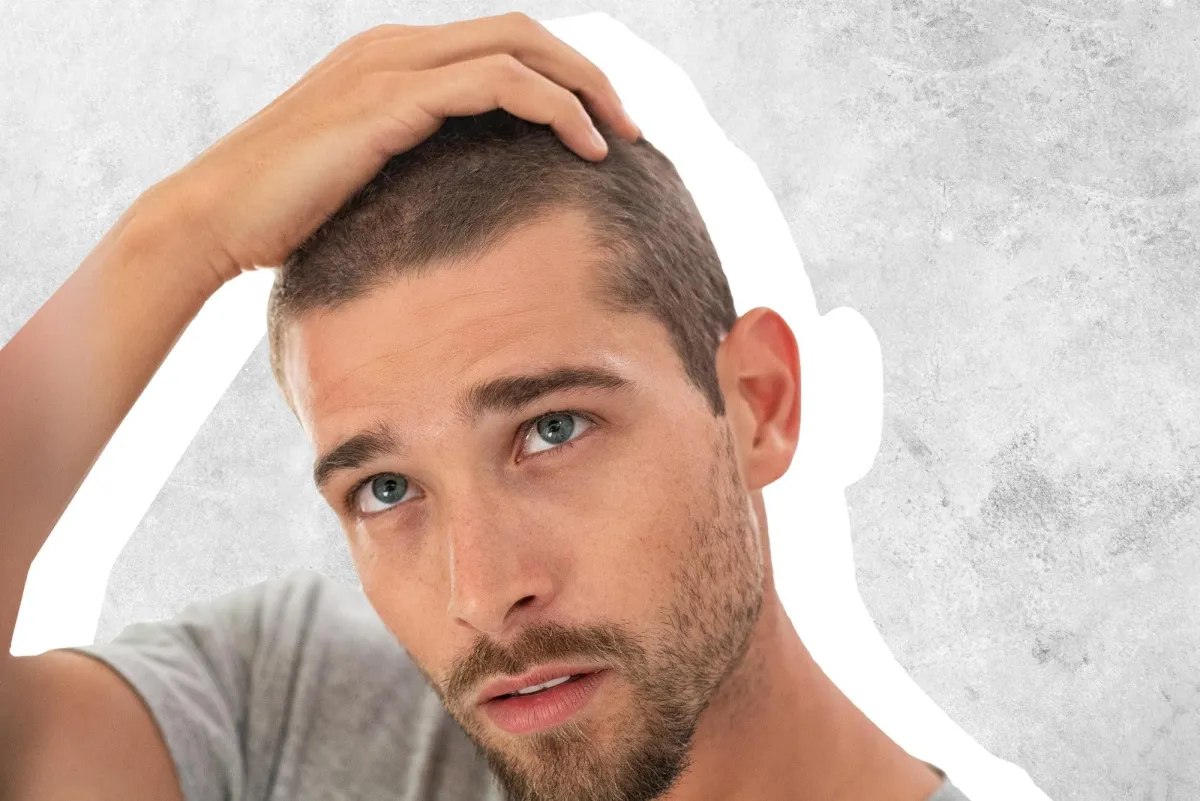
5 Best Haircuts for Men with
Early Hair Thinning
Losing your hair is never a good feeling, most men tend to feel self-conscious about it. Some men decide to completely shave off their heads or constantly wear a hat. One of the most common insecurities men face is hair thinning; for some men, it starts as early as in their 20s. The loss of confidence really starts to affect the way men do their hair and the types of hair cuts they get. Men start to worry about how they will be perceived by friends, family, and colleagues. Hair thinning should not be the cause of self distraughtness, and it should not limit men to have to continuously cover their heads. CADMEN Barbershop has compiled a list of the top 5 best haircuts for men experiencing early hair loss.

Men's Long Hair: What to Expect at the Barbershop
Men's Long Hair: What to Expect at the Barbershop
The majority of barbershop clients still wear their hair short, but the segment of men maintaining medium to long hair has grown steadily over the past decade. Men with longer hair still visit barbershops rather than salons for a specific reason: they want a barber's approach to their haircut, not a stylist's. They want precision on the sides and neckline, they want clean edges, and they want to leave looking intentional, not just trimmed.
Barbershops that can serve this client well expand their addressable market without adding complex new services.
What "Long Hair" Means in a Barbershop Context
In barbershop terms, long hair typically refers to any length that falls past the ears or approaches or passes the collar. This includes:
- Medium length: 3 to 6 inches, enough for varied styling (textured crop at the long end, undercut, curtain fringe, messy natural fall)
- Long: 6 to 12 inches, falls past the collar, can be tied back
- Very long: over 12 inches, requires significant maintenance time per visit
The services a longer-hair client needs differ from the standard fade client. Less clipper work, more scissor work, more focus on shape and weight distribution, and more client education on at-home maintenance.
The Consultation Is More Important
For a client with a standard short fade, the consultation is brief, length on top, fade height, line-up style. For a longer-hair client, the consultation needs to establish the intended shape, the weight distribution, how much length they want removed, and what their styling routine looks like. A client who blow-dries and uses a round brush needs a different cut than a client who air-dries and uses nothing. Both may be coming in for a "trim," but the right cut for each is genuinely different.
Scissor Work Dominates
Medium and long hair cuts are primarily scissor cuts. Clippers handle the neckline cleanup and any short sections above the ears, but the bulk of the length work is done with scissors: blunt cuts for baseline length, point cutting for texture and movement, scissor over comb in the graduation zones.
Barbers who are strong with clippers but less practiced with scissors should invest in scissor training before heavily marketing long hair services. A poorly executed scissor cut on 6 inches of grown-out hair requires significant correction that a poorly executed fade on 1 inch of hair does not.
Neckline Options at Longer Lengths
The neckline on longer hair has specific options that short-hair clients do not need to consider:
- Natural taper: the neckline is left to follow its natural growth pattern, tapered but not heavily shaped. The most low-maintenance option for long-hair clients.
- Blocked neckline: a square, horizontal line across the nape. Looks clean and deliberate but shows new growth within 1 to 2 weeks.
- Tapered neckline: similar to natural but more deliberately tapered to skin at the very base. Cleaner than natural but requires more maintenance than the blocked version to stay looking intentional.
At-Home Care Advice for Long Hair Men
The barber who gives useful advice on at-home maintenance for longer hair gives the client something they genuinely cannot get elsewhere. Key points to communicate:
- Conditioner is important for any length over 3 inches, the hair shaft needs moisture maintenance that scalp oil alone does not provide at longer lengths
- Heat protection before blow-drying prevents cumulative damage to the hair shaft over time
- A boar bristle or mixed-bristle brush distributes scalp oil through the length of the hair and keeps longer hair looking conditioned between washes
- Regular trims (every 6 to 10 weeks for longer styles) prevent split ends from working up the shaft and requiring more length removal at the next visit
CADMEN Training
Scissor work and men's long hair cutting are covered in the CADMEN scissors class. academy.cadmen.ca/in-person-training.
Frequently Asked Questions
Can men get long hair cut at a barbershop?
Yes. Barbershops traditionally specialized in short hair, but most professional barbershops today serve clients across the full range of men's hair lengths. A barber with strong scissor skills and experience with medium-to-long hair can produce results that rival any salon for men who want their longer hair maintained with a barber's precision on the edges and neckline. The distinction between barbershops and salons has largely collapsed at the practitioner level, the question is whether the specific barber has the scissor technique to handle the length, not whether the shop can serve the client in principle.
How often should men with long hair get a haircut?
Every 6 to 10 weeks for most men maintaining medium to long styles. This is significantly less frequent than the 2 to 4 week cadence of short fade clients, but the service time per visit is longer. Men maintaining a specific shape (undercut with long top, curtain fringe, defined layers) may need visits on the shorter end of the range to keep the shape intentional. Men maintaining a simpler "keep it clean and healthy" long style can often extend to 10 to 12 weeks between cuts. The practical signal: when the ends start to look dry or split, or when the shape has grown out to where it no longer reads as intentional, it is time for a cut.
What is the best haircut for men with long hair?
There is no single best haircut, it depends on hair texture, face shape, and lifestyle. High-contrast options (undercut, disconnected layers) suit men who want a deliberate, styled look. Uniform length cuts with point-cut texture suit men who want natural movement and minimal daily effort. Curtain fringe styles (center-parted, face-framing) have been widely popular and suit oval and rectangular face shapes in particular. The most durable long style for low-maintenance men: a shape that works well with the natural growth pattern, requires minimal daily product, and grows out gradually rather than looking noticeably unkempt within weeks of the cut.
How do you maintain long hair as a man?
Four habits that make the biggest difference: (1) condition 2 to 3 times per week, conditioner is the single most impactful product for keeping longer hair soft, manageable, and healthy; (2) brush daily with a natural bristle brush that distributes scalp oil through the length and prevents tangling; (3) use heat protection before any blow-dry or heat styling, which prevents cumulative damage over months; (4) book regular trims rather than waiting for significant growth to be visibly unhealthy, trimming 1/4 inch of split ends every 8 weeks requires far less total length removal over a year than waiting until split ends have worked up 2 inches and require removing more length to fix. Trim schedule consistency is the most common mistake men with growing-out hair make.
Does long hair suit every man?
Longer hair suits most men with the right cut and styling approach, but not every length suits every face shape or hair type equally. Oval face shapes have the most flexibility with longer styles. Round and square face shapes benefit from longer styles that add vertical height (curtain fringe parted to the center, styles with volume at the crown) rather than styles that add horizontal width at the sides. Fine hair at longer lengths can look limp without styling, a textured cut and a volume-building styling product compensates for this. Wavy or naturally textured hair often looks better at medium to long length than very short, because the natural texture works with the length rather than against it. The most practical answer: try it, cut it with intention, and adjust based on how the hair naturally behaves at that length.
Related Reading From CADMEN Barber Academy
- Long Hair for Men: What the Barbershop Approach Looks Like
- Cutting Long Men's Hair at a Barbershop: What Barbers Do Differently Than Salons
- Long Hair for Men at the Barbershop: Maintenance and What to Ask For
- Cutting Coily Hair: The Techniques That Work and the Mistakes That Damage the Pattern
- Cutting Curly Hair: What Barbers Do Differently
- How to Cut Curly Hair: Barber Techniques and Approach

5 Best Haircuts for Men with
Early Hair Thinning
Losing your hair is never a good feeling, most men tend to feel self-conscious about it. Some men decide to completely shave off their heads or constantly wear a hat. One of the most common insecurities men face is hair thinning; for some men, it starts as early as in their 20s. The loss of confidence really starts to affect the way men do their hair and the types of hair cuts they get. Men start to worry about how they will be perceived by friends, family, and colleagues. Hair thinning should not be the cause of self distraughtness, and it should not limit men to have to continuously cover their heads. CADMEN Barbershop has compiled a list of the top 5 best haircuts for men experiencing early hair loss.


For any request, please contact us at info@cadmen.ca