
Barber Tips & Tricks
Follow us for the latest barber techniques and tips
Barber Tips & Tricks
Follow us for the latest barber techniques and tips
Top 7 Reasons Why Your Clients
Aren't Returning
Stay Ahead in the Barbering Game: Nurturing
Lifelong Clientele
You might have come across the saying “give a client a good cut at a reasonable price, and they'll be yours for life.” Unfortunately in reality this is not always the case. That’s where we come in! Check out some of the reasons why your clients may not be returning, whether they were long-term customers or a first-time appointment, below.

Top 7 Reasons Why Your Clients
Aren't Returning
Stay Ahead in the Barbering Game: Nurturing
Lifelong Clientele
You might have come across the saying “give a client a good cut at a reasonable price, and they'll be yours for life.” Unfortunately in reality this is not always the case. That’s where we come in! Check out some of the reasons why your clients may not be returning, whether they were long-term customers or a first-time appointment, below.
Career in Mobile Barbering: Key
Things You Need to Know about
While most barbers work in physical barbershops or hair salons, there are a growing number of barbers who work on-call. What does it mean to be a mobile barber? What are their primary responsibilities? Where to find them? In this blog, we will explain some key terms you should know about mobile barbering and how you can start a new career in it.

Career in Mobile Barbering: Key
Things You Need to Know about
While most barbers work in physical barbershops or hair salons, there are a growing number of barbers who work on-call. What does it mean to be a mobile barber? What are their primary responsibilities? Where to find them? In this blog, we will explain some key terms you should know about mobile barbering and how you can start a new career in it.
Top 4 Ways for Barbers to
Promote Themselves
Marketing is key. Knowing how to market yourself as a barber can be the difference between having 5 to 20 clients a day. If you are interested in boosting the number of your customers and furthering your advertising skills, read the list below with four ways to promote yourself as a barber.

Top 4 Ways for Barbers to
Promote Themselves
Marketing is key. Knowing how to market yourself as a barber can be the difference between having 5 to 20 clients a day. If you are interested in boosting the number of your customers and furthering your advertising skills, read the list below with four ways to promote yourself as a barber.
5 Tips for Social Media Content
Creating as a Barber
It is next to impossible to find someone who is not on social media today. More than just a tool for connection, social media is key helping barbers market themselves and promote their names and skills. If you want to up your barber game quickly, here are five tips on how to promote content online that you don't want to miss out on.

5 Tips for Social Media Content
Creating as a Barber
It is next to impossible to find someone who is not on social media today. More than just a tool for connection, social media is key helping barbers market themselves and promote their names and skills. If you want to up your barber game quickly, here are five tips on how to promote content online that you don't want to miss out on.
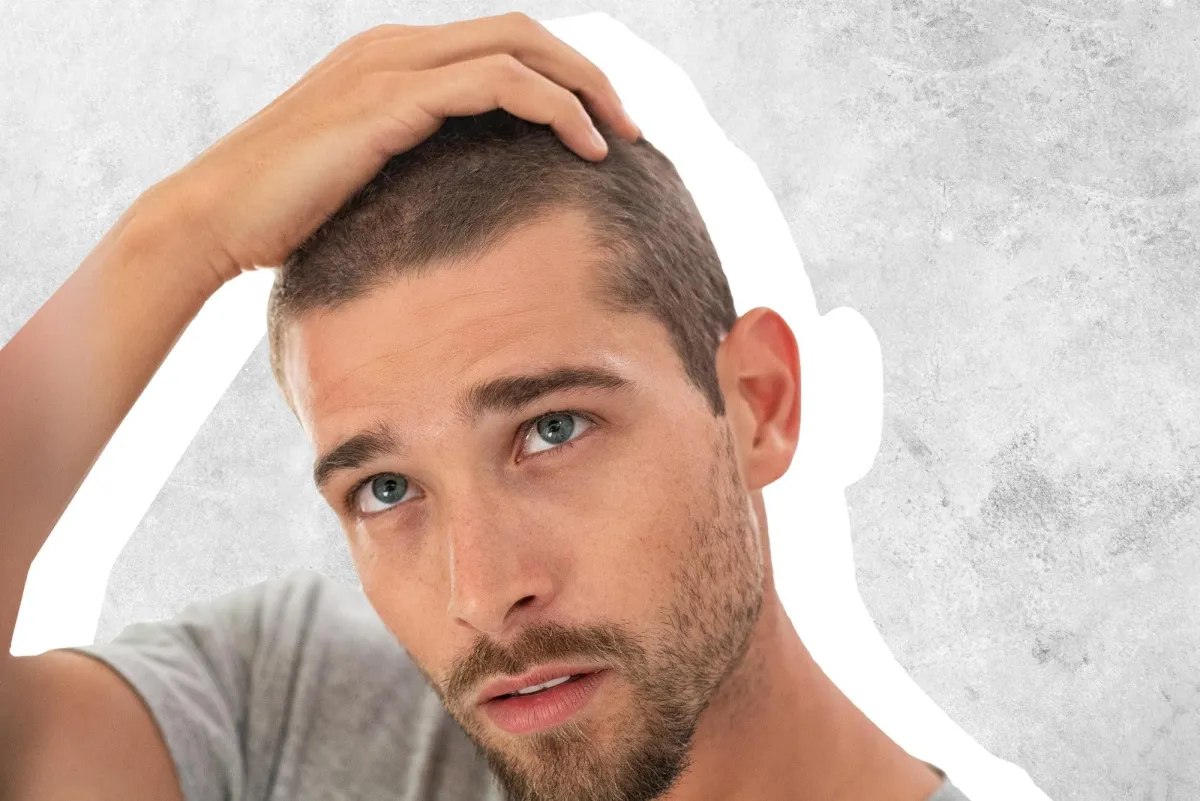
5 Best Haircuts for Men with
Early Hair Thinning
Losing your hair is never a good feeling, most men tend to feel self-conscious about it. Some men decide to completely shave off their heads or constantly wear a hat. One of the most common insecurities men face is hair thinning; for some men, it starts as early as in their 20s. The loss of confidence really starts to affect the way men do their hair and the types of hair cuts they get. Men start to worry about how they will be perceived by friends, family, and colleagues. Hair thinning should not be the cause of self distraughtness, and it should not limit men to have to continuously cover their heads. CADMEN Barbershop has compiled a list of the top 5 best haircuts for men experiencing early hair loss.

Beard Growth: What Actually Affects It and What You Can Do
Beard Growth: What Actually Affects It and What You Can Do
Beard growth rate, coverage, and pattern are largely determined by genetics and hormonal factors, specifically testosterone and dihydrotestosterone (DHT). The primary determinant of whether you can grow a full beard, and how fast it grows, is inherited. That said, several controllable factors influence the rate and quality of growth within your genetic potential.
Average Growth Rate
Facial hair grows approximately half an inch per month, consistent with the growth rate of scalp hair. Individual rates vary. Men with higher androgen sensitivity tend to grow facial hair faster and with more coverage. Age also affects beard growth, most men reach their fullest beard potential in their 20s to 30s, with the beard continuing to fill in from the late teens through the mid-twenties in many cases.
The Patchy Beard Reality
Patchy beards are common, particularly in men under 25. The follicles in patchy areas are not absent, they are present but produce finer, lighter vellus hair rather than the coarser terminal hair of a full beard. As androgen sensitivity in those follicles increases with age, terminal hair may eventually grow in those areas. Some patchiness is permanent. Allowing the beard to grow for at least 4 to 6 weeks before assessing the final coverage gives the beard time to fill in beyond the initial growth phase.
CADMEN Training
Beard services and facial hair consultation are part of CADMEN's barbering program. academy.cadmen.ca/in-person-training.
Frequently Asked Questions
Does shaving make beard hair grow back thicker or faster?
No. Shaving does not make beard hair grow back thicker or faster. This is one of the most persistent hair-related myths and has been tested repeatedly in clinical studies. The explanation: when a hair is shaved, it is cut at the surface of the skin. The hair shaft that grows back has a blunt cross-section at the cut end rather than the natural tapered tip that an unshaved hair has. This blunt end feels coarser to the touch and looks slightly darker, which is why shaved hair appears thicker when it first grows back. But the diameter of the hair shaft, the growth rate, and the number of follicles are completely unchanged by shaving. These characteristics are determined by the follicle and cannot be altered by cutting. The same principle applies to scalp hair, no cutting, shaving, or styling technique changes the hair's diameter or growth rate. Practical implication: if you are growing a beard and wonder whether shaving and starting over will produce a fuller result, it will not. The same follicles producing the same hair will grow back with the same coverage and the same rate. The only change is starting from zero length again. For patchy beards: the common advice to "shave it and start over" for a patchy beard has no biological justification. The beard that grows back after shaving will be identical in coverage to the one that was shaved. If the patchiness is going to fill in, it will do so over time as the androgen sensitivity of those follicles increases, which has nothing to do with whether the hair was recently shaved or not.
What can I do to grow a thicker beard?
Within the limits of your genetics, several factors meaningfully influence beard health and the appearance of thickness. What actually helps: sleep and recovery. Growth hormone is primarily secreted during deep sleep. Consistent, adequate sleep (7 to 9 hours) supports the hormone environment that drives hair growth. Men who are chronically sleep-deprived tend to see slower overall hair growth, including facial hair. Protein intake. Hair is primarily composed of keratin, a protein. Diets consistently low in protein can limit hair growth rate and hair quality. Ensuring adequate protein intake (the commonly cited recommendation is 0.7 to 1 gram per pound of bodyweight per day, though recommendations vary) supports the production of the keratin that makes up the beard. Vitamin and mineral sufficiency. Biotin deficiency can affect hair growth, though biotin deficiency is uncommon in men eating a varied diet. Zinc deficiency is more commonly associated with hair growth issues. Iron deficiency (more common in women but relevant to some men) can slow hair growth. A general multivitamin or specific testing and supplementation for deficiency if a deficiency is found is more evidence-based than taking high-dose supplements of every hair-related vitamin. Exercise. Exercise increases testosterone circulation and blood flow to peripheral tissues including the face and scalp. Regular resistance training in particular is associated with testosterone levels. Beard care while growing. Keeping the beard moisturized and avoiding excessive dryness (which causes breakage) allows the existing growth to reach its full length rather than breaking off. Beard oil is the primary product for this. What does not work: topical products claiming to stimulate beard growth through direct skin application (with the exception of minoxidil, discussed below). Most "beard growth serums" are moisturizers in disguise. Minoxidil: this is the one over-the-counter exception. Minoxidil (originally developed as a blood pressure medication, marketed topically as Rogaine) has been shown in clinical studies to increase hair growth in the beard area when applied topically. The effect is real but modest, requires consistent daily application, and reverses when stopped. It is off-label use (the FDA has not approved minoxidil specifically for beard growth, though it is approved for scalp hair loss). Men considering minoxidil for beard growth should research the mechanism, risks, and use requirements before starting.
How long does it take to grow a full beard?
A full beard takes most men 3 to 6 months to reach substantial coverage, though the final density and length continue to develop for 12 months or more. The growth phases: weeks 1 to 4: the initial growth phase. The beard is between 0 and 2 centimeters in length. Patchiness is at its most visible in this phase, the follicles that grow faster produce visible hair first, while slower-growing or finer follicles are not yet contributing noticeable hair. The itchiness phase peaks here. This is the stage where most men give up on growing a beard. Weeks 4 to 8: the beard is between 2 and 4 centimeters. The patchiness begins to fill in for many men as the slower follicles catch up. The overall density appears to increase significantly between week 4 and week 8. The itchiness typically subsides in this window as the hair grows past the prickly length and the skin adjusts. Months 2 to 4: the beard reaches 2 to 5 centimeters depending on growth rate. Coverage continues to fill in. For men with androgen-sensitive follicles throughout the beard area, the coverage at the 3-month mark is significantly fuller than at the 4-week mark. This is the point where most beards are assessed as "yes, I can grow a full beard" or "I have persistent patchiness that is not filling in further." Months 4 to 12 and beyond: the beard continues growing at the half-inch-per-month rate. Full terminal length (the length at which the beard stops growing, which varies by individual from 2 to 6 inches typically) is reached at different points for different men. The density at 12 months is typically greater than at 6 months for men whose follicles are still converting to terminal production. The honest assessment: if you are considering growing a beard for the first time, commit to a minimum of 3 months before evaluating the coverage. The 4-week beard is not an accurate representation of what the beard will look like at 3 months.
Related Reading From CADMEN Barber Academy
- Beard Balm vs. Beard Oil: What Each Product Does
- Beard Balm vs. Beard Oil: The Difference, When to Use Each, and How to Explain It to Your Clients
- Beard Color for Barbers: Services, Techniques, and Adding Color to Your Menu
- How to Contour and Shape a Beard
- How to Line Up a Beard: Edge Work and Shaping
- Beard Fading: What It Is and How Barbers Do It

5 Best Haircuts for Men with
Early Hair Thinning
Losing your hair is never a good feeling, most men tend to feel self-conscious about it. Some men decide to completely shave off their heads or constantly wear a hat. One of the most common insecurities men face is hair thinning; for some men, it starts as early as in their 20s. The loss of confidence really starts to affect the way men do their hair and the types of hair cuts they get. Men start to worry about how they will be perceived by friends, family, and colleagues. Hair thinning should not be the cause of self distraughtness, and it should not limit men to have to continuously cover their heads. CADMEN Barbershop has compiled a list of the top 5 best haircuts for men experiencing early hair loss.


For any request, please contact us at info@cadmen.ca