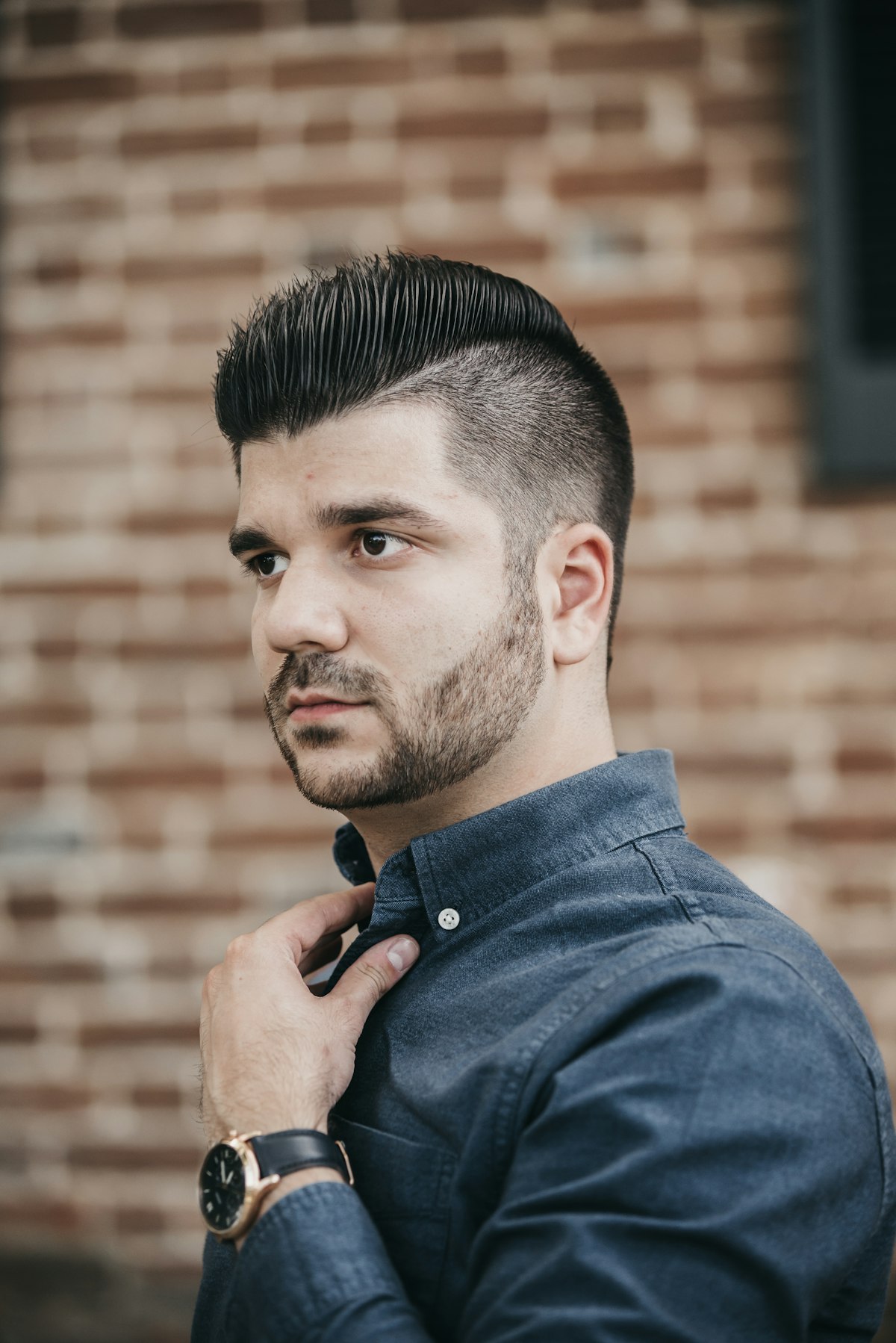
Burst Fade Haircut: The Technique for Executing the Curved Fade Around the Ear
Burst Fade Haircut: The Technique for Executing the Curved Fade Around the Ear
The burst fade is one of the most visually distinct fade variations in modern barbering. Its defining characteristic is a curved fade arc that radiates from behind the ear, following the shape of the ear rather than moving in a straight horizontal line from front to back. The result is a rounded arc of fading hair that creates a contrast between the section behind the ear and the hair above and below it. It is frequently paired with mohawks, faux hawks, mullets, and textured top styles.
What Makes It Different From a Standard Fade
A standard low, mid, or high fade moves in a relatively horizontal line from the temple to the back of the head. The guide is straight across the side and back. A burst fade follows a curved path: the fade line is high behind the ear and curves downward in front of the ear and at the neckline, creating a half-moon shape around the ear when viewed from the side.
The result is that the hair behind the ear fades to zero (or very short) at the highest point of the arc, while the hair at the neckline and in front of the ear can retain more length. This creates the visual "burst" appearance: the fade appears to radiate outward from behind the ear rather than moving uniformly across the head.
Executing the Burst Fade
Step 1: Establish the arc
Using the outliner or T-blade, draw or establish the arc of the fade. The highest point of the arc sits directly behind and slightly above the ear. From that point, the arc curves downward in front of the ear and curves downward at the back toward the neckline. The arc does not have to be perfectly symmetric; the anatomy of the ear and the client's head shape naturally influence the arc's shape.
Step 2: Zero out the highest point
The skin or zero point is at the apex of the arc, directly behind the ear. Use the outliner or a 0 guard to take this point to skin. This is the anchor of the fade; everything else graduates upward from it.
Step 3: Blend outward from the zero point
Working from the zero point outward along the arc (upward toward the top, downward toward the neckline, and forward toward the temple), blend through the guard sizes in the same sequence as a standard fade. The difference from a standard fade is that the blend follows the curve of the arc rather than a straight horizontal line. The guard sizes increase as the distance from the zero point increases.
Step 4: Handle the neckline and front
The neckline on a burst fade typically stays natural or slightly squared, depending on the style. The front (temple area) usually blends into the top hair or meets a hairline. The clarity of the arc depends on how cleanly the zero-point section is defined and how smoothly the blend transitions from the zero point outward.
Pairing With Styles on Top
The burst fade works best with styles that create visual width or height in the center of the head, because the fade emphasizes the sides. Common pairings: mohawk or faux hawk (the burst fade emphasizes the center strip by zeroing out the sides), mullet (the burst fade creates a clean separation between the faded side and the longer back section), and textured crop or quiff (the side contrast makes the top texture stand out).
Frequently Asked Questions
What is a burst fade haircut?
A burst fade is a fade variation where the zero point is positioned behind the ear and the fade arc curves in a semicircle around the ear rather than moving in a straight horizontal line. The fade radiates outward from behind the ear (like a burst), graduating from skin at the apex of the arc to longer lengths as the distance from the ear increases. It is commonly paired with mohawk, mullet, and faux hawk styles.
Is a burst fade hard to do?
It requires more three-dimensional thinking than a standard straight fade because the guide follows a curve rather than a horizontal line. The key challenges: establishing the arc consistently (the curve shape determines the entire look), zeroing the apex cleanly, and blending outward along the curved path without creating flat or unblended sections. A barber who is strong at standard fades can typically learn the burst fade technique in a few practice sessions. The technique is fundamentally the same as other fades; the difference is the guide line shape.
How long does a burst fade last before needing a touch-up?
2 to 3 weeks before the zero point at the apex shows visible regrowth. Because the zero point is very tight and clearly defined, any regrowth is visible. Clients who want the burst fade at its sharpest typically rebook every 2 weeks. The top portion of the style can often go longer without a full rebook; it is the defined arc of the fade that drives the rebooking cadence.
Can a burst fade work on curly hair?
Yes. The burst fade is popular on curly and coily hair textures, often paired with a mohawk or twist-out on top. The curved arc of the fade creates strong contrast with the texture on top. Executing the fade on tightly coiled hair follows the same technique; the key is working with the natural growth patterns when establishing the arc and blending through the guard sizes.
Related Reading From CADMEN Barber Academy
- The Bald Fade: Technique and Common Mistakes
- The Burst Fade: What It Is and How to Ask for One
- How to Cut a Low Fade: Guard Progression, Blending, and the Common Mistakes
- The Zero Fade: How to Cut a Skin Fade from Scratch
- Beard Fade: What It Is and How Barbers Blend the Beard into the Skin
- Burst Fade: What It Is, How to Cut It, and When Clients Ask for It
Want to learn to cut a burst fade yourself? CADMEN Barber Academy teaches cutting hands-on, with an educator beside you. See the barber academy in Mississauga or view in-person classes and send an enquiry.
Learn this fade step by step in our free Fade Tutorials playlist on YouTube.
