
Barber Tips & Tricks
Follow us for the latest barber techniques and tips
Barber Tips & Tricks
Follow us for the latest barber techniques and tips
Top 7 Reasons Why Your Clients
Aren't Returning
Stay Ahead in the Barbering Game: Nurturing
Lifelong Clientele
You might have come across the saying “give a client a good cut at a reasonable price, and they'll be yours for life.” Unfortunately in reality this is not always the case. That’s where we come in! Check out some of the reasons why your clients may not be returning, whether they were long-term customers or a first-time appointment, below.

Top 7 Reasons Why Your Clients
Aren't Returning
Stay Ahead in the Barbering Game: Nurturing
Lifelong Clientele
You might have come across the saying “give a client a good cut at a reasonable price, and they'll be yours for life.” Unfortunately in reality this is not always the case. That’s where we come in! Check out some of the reasons why your clients may not be returning, whether they were long-term customers or a first-time appointment, below.
Career in Mobile Barbering: Key
Things You Need to Know about
While most barbers work in physical barbershops or hair salons, there are a growing number of barbers who work on-call. What does it mean to be a mobile barber? What are their primary responsibilities? Where to find them? In this blog, we will explain some key terms you should know about mobile barbering and how you can start a new career in it.

Career in Mobile Barbering: Key
Things You Need to Know about
While most barbers work in physical barbershops or hair salons, there are a growing number of barbers who work on-call. What does it mean to be a mobile barber? What are their primary responsibilities? Where to find them? In this blog, we will explain some key terms you should know about mobile barbering and how you can start a new career in it.
Top 4 Ways for Barbers to
Promote Themselves
Marketing is key. Knowing how to market yourself as a barber can be the difference between having 5 to 20 clients a day. If you are interested in boosting the number of your customers and furthering your advertising skills, read the list below with four ways to promote yourself as a barber.

Top 4 Ways for Barbers to
Promote Themselves
Marketing is key. Knowing how to market yourself as a barber can be the difference between having 5 to 20 clients a day. If you are interested in boosting the number of your customers and furthering your advertising skills, read the list below with four ways to promote yourself as a barber.
5 Tips for Social Media Content
Creating as a Barber
It is next to impossible to find someone who is not on social media today. More than just a tool for connection, social media is key helping barbers market themselves and promote their names and skills. If you want to up your barber game quickly, here are five tips on how to promote content online that you don't want to miss out on.

5 Tips for Social Media Content
Creating as a Barber
It is next to impossible to find someone who is not on social media today. More than just a tool for connection, social media is key helping barbers market themselves and promote their names and skills. If you want to up your barber game quickly, here are five tips on how to promote content online that you don't want to miss out on.
5 Best Haircuts for Men with
Early Hair Thinning
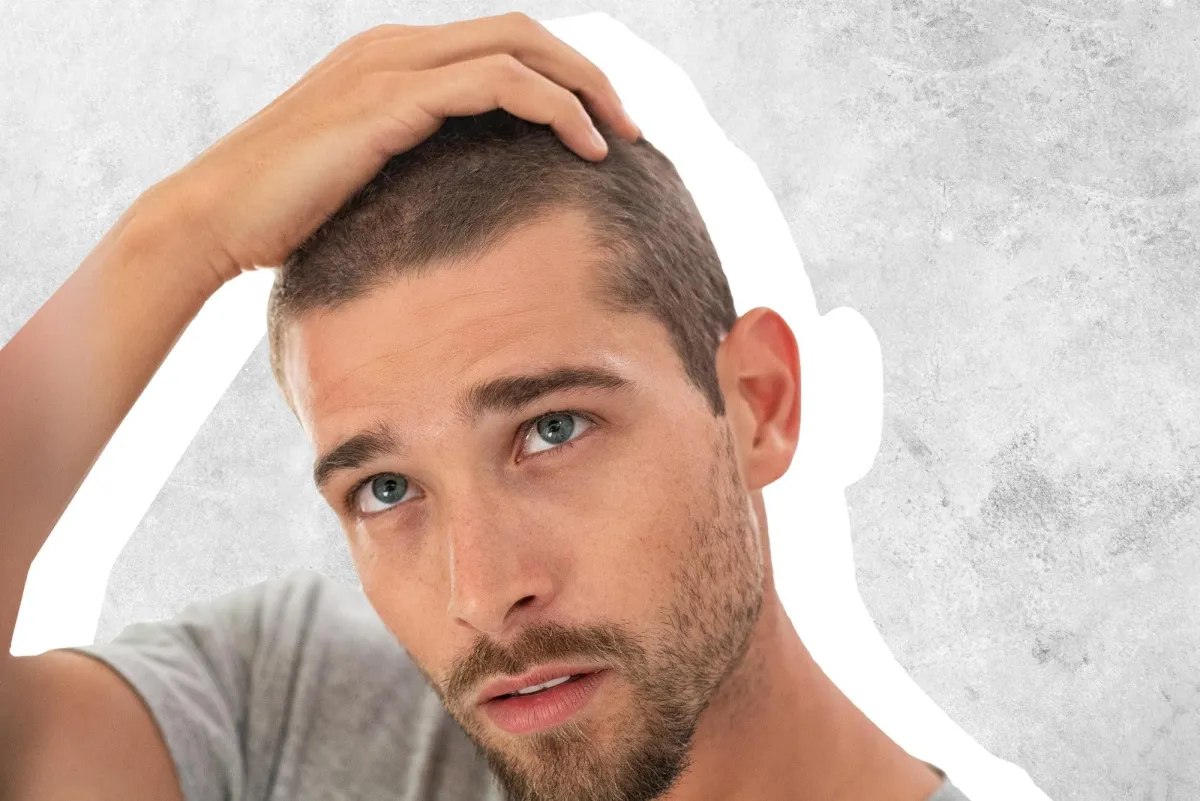
Losing your hair is never a good feeling, most men tend to feel self-conscious about it. Some men decide to completely shave off their heads or constantly wear a hat. One of the most common insecurities men face is hair thinning; for some men, it starts as early as in their 20s. The loss of confidence really starts to affect the way men do their hair and the types of hair cuts they get. Men start to worry about how they will be perceived by friends, family, and colleagues. Hair thinning should not be the cause of self distraughtness, and it should not limit men to have to continuously cover their heads. CADMEN Barbershop has compiled a list of the top 5 best haircuts for men experiencing early hair loss.
How to Do a Drop Fade: The Arc Behind the Ear and Why It Changes the Shape
How to Do a Drop Fade: The Arc Behind the Ear and Why It Changes the Shape
A drop fade follows a curved arc that drops lower behind the ear than it sits on the sides. Instead of a horizontal fade line that runs at a consistent height around the head, the drop fade curves down behind the ear and then rises back up as it crosses the back. The result is a more curved, sculptural shape at the bottom of the cut that looks different from a standard mid or high fade.
Why the Drop Fade Looks Different
A standard fade maintains roughly the same height at the bottom whether the barber is on the side, above the ear, or working the back. The drop fade intentionally lowers the bottom of the fade behind the ear, following the curve of the skull and the natural drop of the hairline in that area. The visual effect is a crescent or arc shape visible from the side profile, which can elongate the neck and create a more styled silhouette than a straight horizontal fade line.
The Process
Step 1: Establish the arc visually before cutting
The drop fade arc should be visualized and, for barbers who are less experienced with it, lightly sketched with the trimmer before any clipper work is done. The arc starts at the temple (same height as a standard fade would), curves down to its lowest point behind and below the ear, and then rises back up as it moves across the nape. The symmetry of this arc on both sides is the most critical quality factor in a drop fade.
Step 2: Set the high point first on both sides
Establish the starting height of the fade on both sides before dropping into the arc behind the ear. Use the same guard or clipper setting you would for a standard fade on the sides, working up to the established height on both sides. Having both sides balanced before the arc work begins makes the arc itself easier to execute consistently.
Step 3: Create the arc with a trimmer or clipper on skin
The arc line is created by working the trimmer (or clipper with the lever fully open) along the curve of the drop. Move from the back of the ear, curving downward and then back up toward the nape in a fluid motion. The motion follows the arc you established in Step 1. For a skin zero drop fade, the arc line is executed with a trimmer as the definition line, and the fade gradient above it is then blended with clippers.
Step 4: Blend the gradient above the arc
The fade gradient (from zero or near-zero at the arc line up to the length on the sides and back) is blended using the same lever technique as a standard fade. The shape of the graduation is different because the arc creates a curved starting point rather than a horizontal one, but the blending process is the same: guard numbers increase as you move up the head, and the lever creates smooth transitions between guard lengths.
Step 5: Match both sides
The most common technical failure in a drop fade is an asymmetrical arc. Step back and evaluate both arcs from the back of the client's head at equal distance. The arcs should mirror each other in height, depth, and curve. Any asymmetry is corrected before the service is finished. A visible asymmetry in the drop arc is immediately apparent to the client and to anyone who sees the cut.
When to Use a Drop Fade
The drop fade suits clients who want a more sculptural, styled silhouette with visible shape to the haircut rather than a clean horizontal line. It is particularly flattering on clients with longer necks, where the arc frames the neck in a way a standard horizontal fade does not. It is also a stronger choice for clients with curly or textured hair on top, where the curved bottom of the fade complements the natural shape of the hair. Not every client wants or suits a drop fade; present it as an option when it is a natural fit for the client's head shape and desired result.
Frequently Asked Questions
What is a drop fade?
A drop fade is a fade haircut where the lowest line of the fade curves down behind the ear (drops) rather than maintaining a horizontal line around the head. The fade line arcs downward from the side of the head, reaches its lowest point below and behind the ear, and then rises back up across the nape. The distinctive curved arc is visible from the side profile and is the defining characteristic of the style compared to a standard mid or high fade.
Is a drop fade harder to do than a regular fade?
Yes. The drop fade requires the barber to execute a symmetrical arc on both sides of the head, which is more technically demanding than maintaining a straight horizontal fade line. Arc asymmetry is the most common mistake. An experienced barber who has built muscle memory for the drop arc can execute it efficiently; a barber building the skill should slow down on the arc portion and evaluate symmetry at each stage rather than rushing through to the blend.
What hair types work best with a drop fade?
A drop fade works on all hair textures. The arc and definition of the fade are executed in the same way regardless of hair texture; what varies is the technique for blending the gradient above the arc, which adapts to the specific hair texture. Clients with natural curly or coarse hair, where the sides naturally form a rounded shape, often suit the drop fade particularly well because the curved arc at the bottom echoes the natural shape of the texture above it.
How is a drop fade different from a Temple Fade?
A temple fade (also called a Brooklyn fade or temp fade) works specifically at the temple and hairline above the ear, tapering the hair around the temple corners while leaving length elsewhere. A drop fade addresses the entire fade line from the side of the head, around the ear, and across the nape, with the defining arc behind the ear. A temple fade is a more localized alteration to the hairline; a drop fade is a full fade with a specific arc shape.
Can you combine a drop fade with other styles?
Yes. A drop fade is a bottom-of-the-cut shape, not a hairstyle on its own. It can be combined with any top style: crop top, curls, waves, a quiff, or a slick back. It is also commonly combined with a skin fade (the drop arc reaches true skin at its lowest point) or a mid fade (the arc starts at mid-head height). The specific combination is chosen based on the client's preference for the top length, the overall shape they want, and what suits their face shape and head structure.
Related Reading From CADMEN Barber Academy
- The Drop Fade: What It Is and Who It Works For
- The Drop Fade: What It Is and How It Differs from Other Fades
- Taper Fade vs. Drop Fade: What the Difference Actually Is
- Drop Fade Haircut Explained: What It Is and Who It Suits
- The Drop Fade: What It Is and How It Changes the Shape of a Haircut
- The Drop Fade: What It Is and How It Differs from Other Fades
Want to learn to cut a drop fade yourself? CADMEN Barber Academy teaches cutting hands-on, with an educator beside you. See the barber academy in Mississauga or view in-person classes and send an enquiry.
Learn this fade step by step in our free Fade Tutorials playlist on YouTube.

5 Best Haircuts for Men with
Early Hair Thinning
Losing your hair is never a good feeling, most men tend to feel self-conscious about it. Some men decide to completely shave off their heads or constantly wear a hat. One of the most common insecurities men face is hair thinning; for some men, it starts as early as in their 20s. The loss of confidence really starts to affect the way men do their hair and the types of hair cuts they get. Men start to worry about how they will be perceived by friends, family, and colleagues. Hair thinning should not be the cause of self distraughtness, and it should not limit men to have to continuously cover their heads. CADMEN Barbershop has compiled a list of the top 5 best haircuts for men experiencing early hair loss.


For any request, please contact us at info@cadmen.ca