
Barber Tips & Tricks
Follow us for the latest barber techniques and tips
Barber Tips & Tricks
Follow us for the latest barber techniques and tips
Top 7 Reasons Why Your Clients
Aren't Returning
Stay Ahead in the Barbering Game: Nurturing
Lifelong Clientele
You might have come across the saying “give a client a good cut at a reasonable price, and they'll be yours for life.” Unfortunately in reality this is not always the case. That’s where we come in! Check out some of the reasons why your clients may not be returning, whether they were long-term customers or a first-time appointment, below.

Top 7 Reasons Why Your Clients
Aren't Returning
Stay Ahead in the Barbering Game: Nurturing
Lifelong Clientele
You might have come across the saying “give a client a good cut at a reasonable price, and they'll be yours for life.” Unfortunately in reality this is not always the case. That’s where we come in! Check out some of the reasons why your clients may not be returning, whether they were long-term customers or a first-time appointment, below.
Career in Mobile Barbering: Key
Things You Need to Know about
While most barbers work in physical barbershops or hair salons, there are a growing number of barbers who work on-call. What does it mean to be a mobile barber? What are their primary responsibilities? Where to find them? In this blog, we will explain some key terms you should know about mobile barbering and how you can start a new career in it.

Career in Mobile Barbering: Key
Things You Need to Know about
While most barbers work in physical barbershops or hair salons, there are a growing number of barbers who work on-call. What does it mean to be a mobile barber? What are their primary responsibilities? Where to find them? In this blog, we will explain some key terms you should know about mobile barbering and how you can start a new career in it.
Top 4 Ways for Barbers to
Promote Themselves
Marketing is key. Knowing how to market yourself as a barber can be the difference between having 5 to 20 clients a day. If you are interested in boosting the number of your customers and furthering your advertising skills, read the list below with four ways to promote yourself as a barber.

Top 4 Ways for Barbers to
Promote Themselves
Marketing is key. Knowing how to market yourself as a barber can be the difference between having 5 to 20 clients a day. If you are interested in boosting the number of your customers and furthering your advertising skills, read the list below with four ways to promote yourself as a barber.
5 Tips for Social Media Content
Creating as a Barber
It is next to impossible to find someone who is not on social media today. More than just a tool for connection, social media is key helping barbers market themselves and promote their names and skills. If you want to up your barber game quickly, here are five tips on how to promote content online that you don't want to miss out on.

5 Tips for Social Media Content
Creating as a Barber
It is next to impossible to find someone who is not on social media today. More than just a tool for connection, social media is key helping barbers market themselves and promote their names and skills. If you want to up your barber game quickly, here are five tips on how to promote content online that you don't want to miss out on.
5 Best Haircuts for Men with
Early Hair Thinning
Losing your hair is never a good feeling, most men tend to feel self-conscious about it. Some men decide to completely shave off their heads or constantly wear a hat. One of the most common insecurities men face is hair thinning; for some men, it starts as early as in their 20s. The loss of confidence really starts to affect the way men do their hair and the types of hair cuts they get. Men start to worry about how they will be perceived by friends, family, and colleagues. Hair thinning should not be the cause of self distraughtness, and it should not limit men to have to continuously cover their heads. CADMEN Barbershop has compiled a list of the top 5 best haircuts for men experiencing early hair loss.

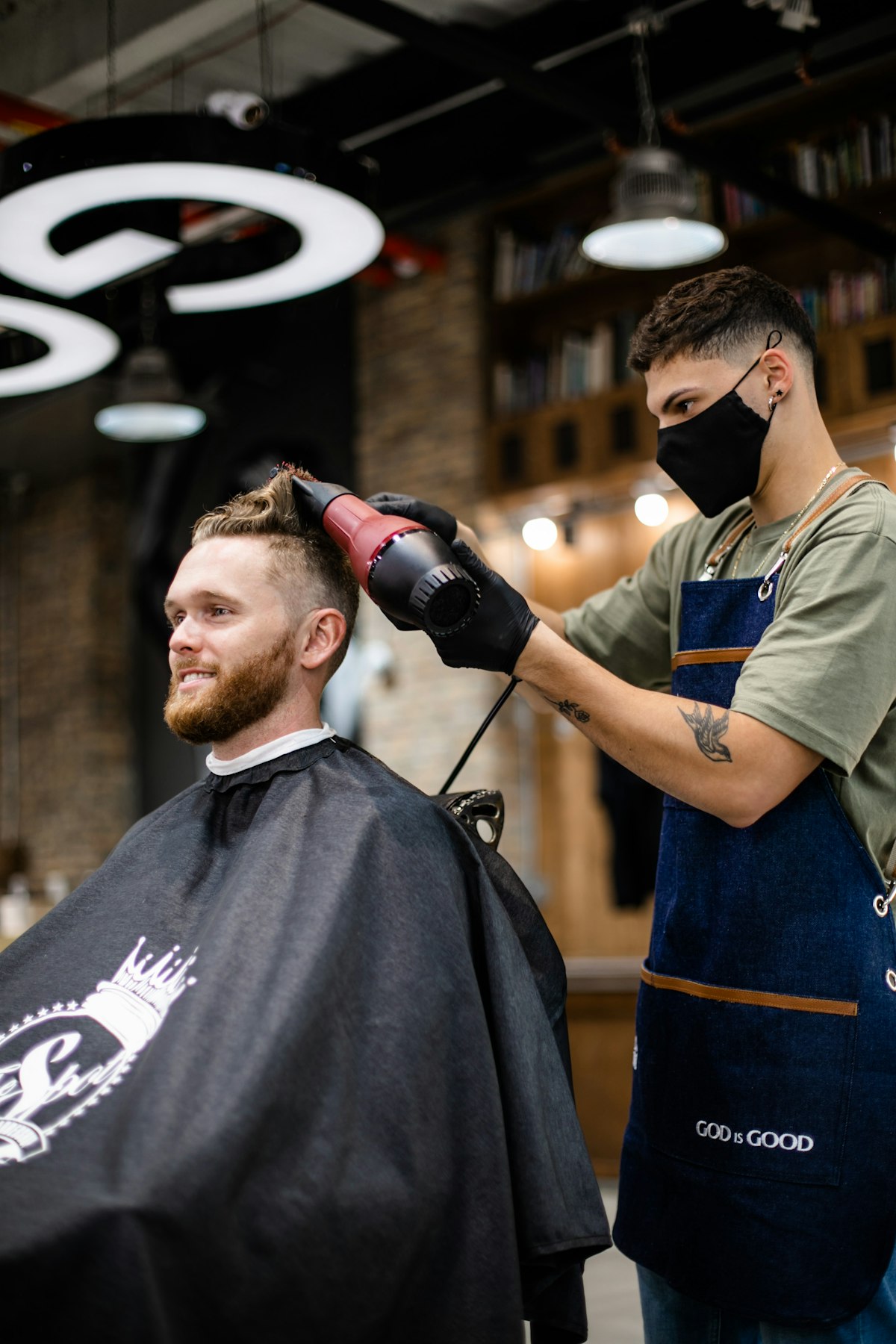
Barbershop Profit Margin: What to Expect and What Affects It
Barbershop Profit Margin: What to Expect and What Affects It
Most new barbershop owners underestimate their costs and overestimate their take-home. Gross revenue looks good. Net profit, after rent, payroll, supplies, software, payment processing, and insurance, is what determines whether the shop is actually a viable business.
Here is what the numbers look like in practice and which operational decisions move them in the right direction.
Typical Barbershop Revenue and Cost Structure
A single-chair barbershop in Ontario with full bookings might generate $80,000 to $120,000 in gross annual revenue at $45 to $65 per service. A 3-chair shop at good occupancy can generate $200,000 to $400,000+. These are rough benchmarks, not guarantees.
The cost structure that most shops run:
- Rent: 10 to 20% of revenue in most GTA markets. High-traffic retail space can push this higher. This is the single largest fixed cost and the hardest to reduce once signed.
- Barber pay (commission or wages): typically 40 to 55% of revenue on the services those barbers produce. For a commission model, if a barber generates $80,000 in revenue and takes 50%, your share before other costs is $40,000 from that chair.
- Supplies and products: 5 to 10%. Clippers, blades, disposables, shaving products, neck strips, capes, Barbicide.
- Booking software, payment processing, marketing: 3 to 7%.
- Insurance, accountant, licensing: 2 to 4%.
- Owner's time as a producing barber: this is often uncosted, which distorts the actual profitability picture. If the owner is cutting 6 days a week, the "profit" includes the value of their own labour. Remove that and the shop may be barely break-even.
Net profit margins for barbershops that are well-run typically fall between 10 and 20% after all costs including reasonable owner compensation. Shops below 10% are surviving, not prospering. Shops above 20% are typically operating with low rent relative to revenue, high ticket averages, or a strong retail product attach rate.
The Booth Rental vs. Commission Decision
The model you choose fundamentally changes the financial profile of the shop.
Under a commission model, you control all revenue, pay barbers a percentage, and carry the full risk of a slow week. If a barber calls in sick or a slow week hits, you absorb it. But you also own the client relationship, the data, and the upside if the barber performs well.
Under a booth rental model, each barber pays you a fixed weekly or monthly rent regardless of how much they cut. Your income is more predictable, but your ceiling is lower. The booth rental price has to be set correctly relative to market rates or you either cannot fill chairs or you leave revenue on the table.
Many Ontario shops use a hybrid: some chairs on commission (newer barbers you are developing) and some on booth rental (proven producers who want autonomy). The split depends on the business stage and the owner's risk tolerance.
What Moves the Margin Up
The highest-leverage margin drivers, in order:
- Average ticket price. Moving from a $45 average to a $55 average across 200 clients per month is $2,000/month in additional revenue with no change in chair count or hours. Pricing is where most shop owners leave the most money.
- Retail product sales. A client who books a $50 haircut and buys a $25 pomade generates 50% more revenue from the same appointment slot. Retail margins are typically 40 to 60% for the shop. A shop doing $1,000/month in product sales is adding $400 to $600 in margin every month with zero additional chair time.
- Chair utilization. An empty chair costs you rent without producing revenue. Chair occupancy is the most direct operational lever. Add chairs only when existing chairs are consistently full.
- Staff retention. Replacing a barber costs months of lost production from that chair plus training time. A shop with low turnover has a structural advantage over a shop constantly recruiting. Pay, culture, and working conditions determine retention.
The Owner's Role and Time Cost
A shop where the owner cuts full-time is not a scalable business. It is a job that also has payroll, lease obligations, and compliance requirements. The goal is a shop that produces owner income whether the owner is cutting or not. That requires systems: documented booking processes, trained staff who maintain quality standards, and a marketing operation that fills chairs without constant owner attention.
Getting there from a one-person shop is the operational challenge most owners face and most coaching programs do not address in enough depth. CADMEN's owner coaching program is built around exactly this transition. $4,000 USD. Apply at academy.cadmen.ca/business-coaching.
Frequently Asked Questions
How much profit does a barbershop make?
A well-run single-location barbershop in Ontario typically generates 10 to 20% net profit margin after all costs including reasonable owner compensation. On $300,000 in gross revenue, that is $30,000 to $60,000 in profit. Shops with lower rent relative to revenue, strong retail sales, and high ticket averages can exceed this range. Shops with high rent or low chair utilization frequently operate at less than 5% margin.
Is a barbershop a good investment?
As a business to operate, yes, if you understand the cost structure before signing a lease and have a realistic plan to fill chairs. As a passive investment with no operational involvement, barbershops are hard to operate well from a distance. The model that works best is owner-operator or owner who transitions to full management of proven staff within the first 2 to 3 years.
What is the average revenue of a barbershop in Canada?
A single-chair shop in a GTA market at full occupancy might generate $80,000 to $120,000 per year in gross revenue. A 3 to 4 chair shop at good occupancy is typically $250,000 to $500,000+. These figures vary significantly by market, service pricing, and the portion of the week each chair is actively producing. Actual reported averages are difficult to verify because most barbershops are owner-operated and do not disclose financials publicly.
What are the biggest costs for a barbershop?
In descending order for most Ontario barbershops: barber payroll or booth rental revenue split, rent, supplies and products, software and payment processing, and insurance. Payroll and rent together typically account for 50 to 65% of gross revenue. Getting rent below 15% of projected revenue before signing is the most impactful financial decision a new shop owner can make.
Can a barbershop be profitable without the owner cutting hair?
Yes, but it requires hiring at least one or two strong producing barbers, a booking system that fills those chairs consistently, and management discipline to maintain quality and retention without the owner on the floor. Most shop owners reach this point 2 to 4 years into operation after building the systems and the staff. It is the target, not the starting point.
Related Reading From CADMEN Barber Academy
- Barbershop Employment vs. Booth Rental: Which Model Fits Your Shop
- Barbershop Pricing: Why Haircuts Cost What They Do
- Barbershop POS Systems: What to Look for in a Point of Sale and Booking Platform
- Multiple Revenue Streams for Barbers and Barbershop Owners
- How to Price Your Barbershop Services
- Barbershop Space: Rent vs. Buy the Building and When Each Makes Sense
- Barbering Topics Index: Every Guide by Subject

5 Best Haircuts for Men with
Early Hair Thinning
Losing your hair is never a good feeling, most men tend to feel self-conscious about it. Some men decide to completely shave off their heads or constantly wear a hat. One of the most common insecurities men face is hair thinning; for some men, it starts as early as in their 20s. The loss of confidence really starts to affect the way men do their hair and the types of hair cuts they get. Men start to worry about how they will be perceived by friends, family, and colleagues. Hair thinning should not be the cause of self distraughtness, and it should not limit men to have to continuously cover their heads. CADMEN Barbershop has compiled a list of the top 5 best haircuts for men experiencing early hair loss.


For any request, please contact us at info@cadmen.ca