
Barber Tips & Tricks
Follow us for the latest barber techniques and tips
Barber Tips & Tricks
Follow us for the latest barber techniques and tips
Top 7 Reasons Why Your Clients
Aren't Returning
Stay Ahead in the Barbering Game: Nurturing
Lifelong Clientele
You might have come across the saying “give a client a good cut at a reasonable price, and they'll be yours for life.” Unfortunately in reality this is not always the case. That’s where we come in! Check out some of the reasons why your clients may not be returning, whether they were long-term customers or a first-time appointment, below.

Top 7 Reasons Why Your Clients
Aren't Returning
Stay Ahead in the Barbering Game: Nurturing
Lifelong Clientele
You might have come across the saying “give a client a good cut at a reasonable price, and they'll be yours for life.” Unfortunately in reality this is not always the case. That’s where we come in! Check out some of the reasons why your clients may not be returning, whether they were long-term customers or a first-time appointment, below.
Career in Mobile Barbering: Key
Things You Need to Know about
While most barbers work in physical barbershops or hair salons, there are a growing number of barbers who work on-call. What does it mean to be a mobile barber? What are their primary responsibilities? Where to find them? In this blog, we will explain some key terms you should know about mobile barbering and how you can start a new career in it.

Career in Mobile Barbering: Key
Things You Need to Know about
While most barbers work in physical barbershops or hair salons, there are a growing number of barbers who work on-call. What does it mean to be a mobile barber? What are their primary responsibilities? Where to find them? In this blog, we will explain some key terms you should know about mobile barbering and how you can start a new career in it.
Top 4 Ways for Barbers to
Promote Themselves
Marketing is key. Knowing how to market yourself as a barber can be the difference between having 5 to 20 clients a day. If you are interested in boosting the number of your customers and furthering your advertising skills, read the list below with four ways to promote yourself as a barber.

Top 4 Ways for Barbers to
Promote Themselves
Marketing is key. Knowing how to market yourself as a barber can be the difference between having 5 to 20 clients a day. If you are interested in boosting the number of your customers and furthering your advertising skills, read the list below with four ways to promote yourself as a barber.
5 Tips for Social Media Content
Creating as a Barber
It is next to impossible to find someone who is not on social media today. More than just a tool for connection, social media is key helping barbers market themselves and promote their names and skills. If you want to up your barber game quickly, here are five tips on how to promote content online that you don't want to miss out on.

5 Tips for Social Media Content
Creating as a Barber
It is next to impossible to find someone who is not on social media today. More than just a tool for connection, social media is key helping barbers market themselves and promote their names and skills. If you want to up your barber game quickly, here are five tips on how to promote content online that you don't want to miss out on.
5 Best Haircuts for Men with
Early Hair Thinning
Losing your hair is never a good feeling, most men tend to feel self-conscious about it. Some men decide to completely shave off their heads or constantly wear a hat. One of the most common insecurities men face is hair thinning; for some men, it starts as early as in their 20s. The loss of confidence really starts to affect the way men do their hair and the types of hair cuts they get. Men start to worry about how they will be perceived by friends, family, and colleagues. Hair thinning should not be the cause of self distraughtness, and it should not limit men to have to continuously cover their heads. CADMEN Barbershop has compiled a list of the top 5 best haircuts for men experiencing early hair loss.

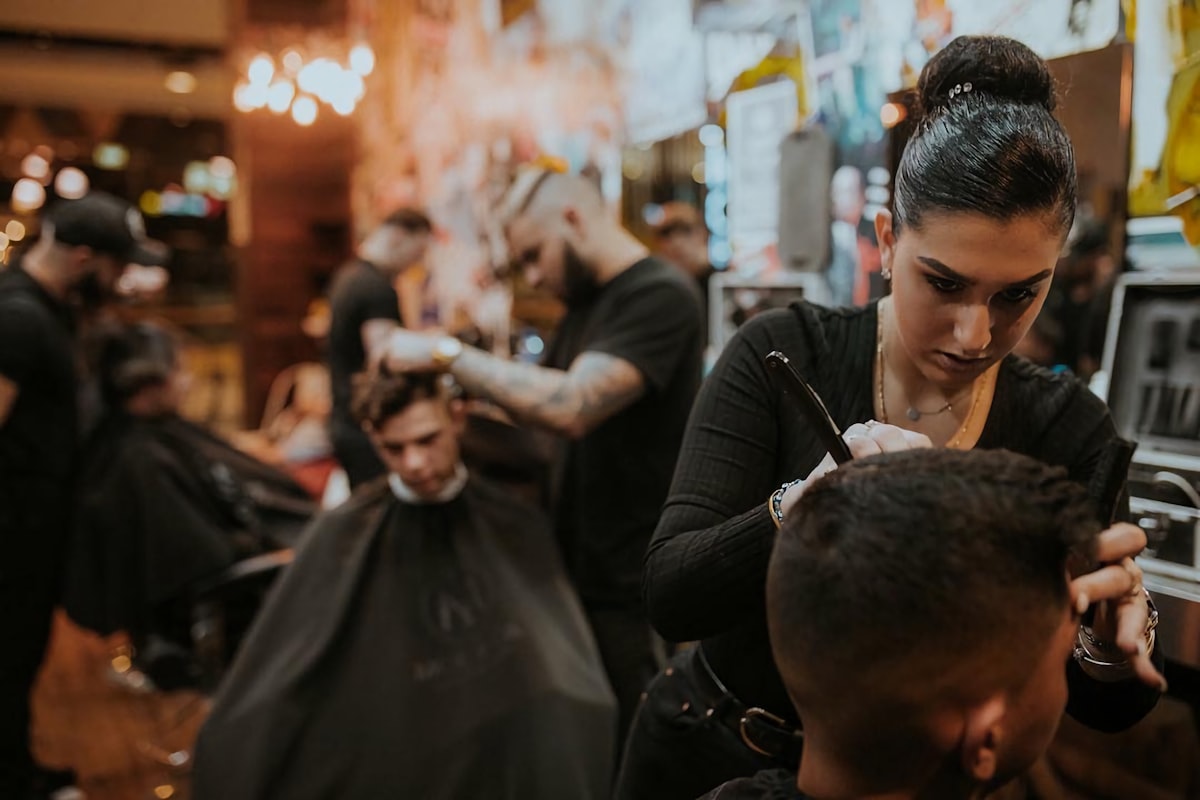
How Much Do Barbershop Owners Make in Canada
How Much Do Barbershop Owners Make in Canada
Barbershop owner income in Canada is not a single number. It depends on ownership model, location, how many chairs the shop runs, and whether the owner still cuts hair themselves.
The realistic range is wide: a single-chair owner-operator in a secondary market might net $40,000 to $60,000 per year after expenses. A multi-chair shop in a major city with a strong booking system, retention model, and product sales can generate $120,000 to $200,000 or more in owner take-home. The gap between the two is not luck. It is structure.
The Four Income Models
1. Owner-operator (cutting every day)
The most common model in Canada. The owner is also a barber in the chair, typically doing 8 to 12 clients per day. Income comes from both chair revenue and any profit from other barbers renting chairs or on commission.
Gross revenue per chair in a busy urban shop: $800 to $1,200 per day. At 5 days per week, 48 weeks per year, a fully booked owner-operator chair generates $192,000 to $288,000 in gross revenue. After rent, supplies, payroll, and overhead, net income for the owner typically lands between $60,000 and $100,000 annually.
2. Booth rental model
The owner charges barbers a flat weekly rate to rent a chair. In Toronto and Vancouver, booth rental rates typically range from $350 to $600 per week per chair. A 5-chair shop at $450/week generates $117,000 in annual booth rental revenue before the owner's own chair production.
In this model, the owner is a landlord as much as a barber. Income from booth rental is more predictable than commission but depends entirely on keeping the chairs filled. Vacancy is the risk.
3. Commission-based shop
Barbers keep 50% to 60% of their gross revenue, with the shop taking the remainder. The owner's income is a share of each barber's production plus their own chair. This model scales better when hiring is strong and volumes are high, but the owner absorbs more operational complexity than in booth rental.
4. Absentee or semi-absentee owner
The owner manages but does not cut. Income depends entirely on how well the business runs without them in the chair. Shops that reach this stage usually have 5+ chairs, strong brand recognition, and a service model that does not require the owner's presence. Net income varies widely. Some absentee-run shops generate $80,000 to $150,000 for the owner. Others lose money when the owner steps out.
The Expense Side: What Most Owner Projections Get Wrong
New barbershop owners consistently underestimate operating costs. The major expense categories in Canada:
- Rent: $3,000 to $8,000/month for most urban locations. Commercial rent in Toronto, Vancouver, and Calgary runs higher. Mississauga, Hamilton, and secondary Ontario cities run lower but have been rising since 2022.
- Payroll and commission: For commission shops, this is the largest variable expense. Budget 50% to 60% of barber-generated revenue going back to the barbers.
- Supplies and products: $800 to $2,000/month depending on volume. Disposable capes, blades, disinfectant, and retail product inventory.
- Software and technology: Booking software, POS, payroll, accounting. Budget $400 to $800/month for a properly equipped shop.
- Marketing: Organic-only shops spend less but grow slower. Shops running Google Ads and local campaigns budget $500 to $2,000/month.
- HST remittance: If your shop does over $30,000 in revenue per year (virtually all viable shops), you are collecting and remitting HST. Build this into cash flow modeling from day one.
What Drives the Difference Between $50,000 and $150,000
The owners generating $150,000+ per year have usually solved four things:
Retention and acquisition: Review repeat visits alongside the actual cost of attracting new clients. Choose a consistent reporting period, document which marketing expenses are included and compare completed, paid visits. When modelling a change in retention, state the client count and spending assumptions instead of assigning a fixed monthly saving to a percentage difference.
Chair utilization: Every hour a chair sits empty is revenue that cannot be recovered. Shops that run online booking, have clear capacity management, and send booking-link reminders to clients consistently outperform shops that rely on walk-ins and phone calls.
Product sales: Track recommendations, purchases, unit prices and inventory costs separately. Build a forecast from expected purchases rather than assuming every recommendation becomes a sale. Review the result for each chair using actual client volume and selling time, and ask your accountant to distinguish sales revenue, gross margin and profit in the report.
Staff structure: Shops with clear staff agreements, predictable scheduling, and low turnover spend less on recruiting, retraining, and gaps in the schedule. Staff turnover is one of the most expensive hidden costs in barbershops.
The CADMEN Business Coaching Program
CADMEN's online barbershop business coaching is built for working shop owners who want to move from guessing to running a structured operation. The program covers pricing strategy, staffing models, retention systems, and the operational framework behind CADMEN's own award-winning locations.
It is $4,000 USD. It is not for someone who has not opened a shop yet. It is for owners who are already running a location and want a clear framework to increase owner take-home without working more hours.
Inquiry at academy.cadmen.ca.
Frequently Asked Questions
How much does a barbershop owner make in Canada?
Income ranges from approximately $40,000 to $200,000+ per year depending on ownership model, number of chairs, location, and whether the owner cuts hair. The most common single-chair owner-operator in an urban market nets $60,000 to $100,000 annually after expenses.
Is owning a barbershop profitable in Canada?
Yes, with the right structure. Shops that manage retention, chair utilization, product sales, and staff agreements consistently generate strong owner income. Shops that rely on walk-ins, have no booking system, and experience high staff turnover typically struggle to break even at more than subsistence margins.
How much does booth rental cost in Canada?
Booth rental rates in major Canadian cities typically range from $350 to $600 per week per chair. Rates in smaller markets are lower, usually $200 to $350 per week. Most booth rental agreements require the barber to supply their own products and handle their own bookings.
What is the biggest expense for a barbershop owner in Canada?
Rent is typically the largest fixed expense, followed by payroll or commission share. For commission-based shops, the commission paid to barbers is usually the single largest expense line, often 50% to 60% of barber-generated revenue.
Do barbershop owners make more cutting hair or managing barbers?
Owner-operators who cut hair themselves typically generate more total income in the early years because they have a chair producing revenue in addition to any rental or commission income. As a shop scales past 3 to 4 chairs, well-structured management income can exceed or match the owner's personal chair production, especially when the owner's time is better spent on growth, hiring, and operations.
Related Reading From CADMEN Barber Academy
- Barbershop Owner Coaching Program: What CADMEN's $4,000 Business Coaching Actually Covers
- How Much Does a Barbershop Owner Make in Canada: Revenue, Costs, and Realistic Net Income
- How Much Does a Barbershop Owner Make in Canada
- Barber Career Earnings in Canada: What Barbers Make at Each Stage and How to Move Up
- Barber Chair Cost in Canada: What to Budget and What to Avoid
- Barber Earnings in Canada: What Barbers Actually Make and What Drives the Range

5 Best Haircuts for Men with
Early Hair Thinning
Losing your hair is never a good feeling, most men tend to feel self-conscious about it. Some men decide to completely shave off their heads or constantly wear a hat. One of the most common insecurities men face is hair thinning; for some men, it starts as early as in their 20s. The loss of confidence really starts to affect the way men do their hair and the types of hair cuts they get. Men start to worry about how they will be perceived by friends, family, and colleagues. Hair thinning should not be the cause of self distraughtness, and it should not limit men to have to continuously cover their heads. CADMEN Barbershop has compiled a list of the top 5 best haircuts for men experiencing early hair loss.


For any request, please contact us at info@cadmen.ca