
Barber Tips & Tricks
Follow us for the latest barber techniques and tips
Barber Tips & Tricks
Follow us for the latest barber techniques and tips
Top 7 Reasons Why Your Clients
Aren't Returning
Stay Ahead in the Barbering Game: Nurturing
Lifelong Clientele
You might have come across the saying “give a client a good cut at a reasonable price, and they'll be yours for life.” Unfortunately in reality this is not always the case. That’s where we come in! Check out some of the reasons why your clients may not be returning, whether they were long-term customers or a first-time appointment, below.

Top 7 Reasons Why Your Clients
Aren't Returning
Stay Ahead in the Barbering Game: Nurturing
Lifelong Clientele
You might have come across the saying “give a client a good cut at a reasonable price, and they'll be yours for life.” Unfortunately in reality this is not always the case. That’s where we come in! Check out some of the reasons why your clients may not be returning, whether they were long-term customers or a first-time appointment, below.
Career in Mobile Barbering: Key
Things You Need to Know about
While most barbers work in physical barbershops or hair salons, there are a growing number of barbers who work on-call. What does it mean to be a mobile barber? What are their primary responsibilities? Where to find them? In this blog, we will explain some key terms you should know about mobile barbering and how you can start a new career in it.

Career in Mobile Barbering: Key
Things You Need to Know about
While most barbers work in physical barbershops or hair salons, there are a growing number of barbers who work on-call. What does it mean to be a mobile barber? What are their primary responsibilities? Where to find them? In this blog, we will explain some key terms you should know about mobile barbering and how you can start a new career in it.
Top 4 Ways for Barbers to
Promote Themselves
Marketing is key. Knowing how to market yourself as a barber can be the difference between having 5 to 20 clients a day. If you are interested in boosting the number of your customers and furthering your advertising skills, read the list below with four ways to promote yourself as a barber.

Top 4 Ways for Barbers to
Promote Themselves
Marketing is key. Knowing how to market yourself as a barber can be the difference between having 5 to 20 clients a day. If you are interested in boosting the number of your customers and furthering your advertising skills, read the list below with four ways to promote yourself as a barber.
5 Tips for Social Media Content
Creating as a Barber
It is next to impossible to find someone who is not on social media today. More than just a tool for connection, social media is key helping barbers market themselves and promote their names and skills. If you want to up your barber game quickly, here are five tips on how to promote content online that you don't want to miss out on.

5 Tips for Social Media Content
Creating as a Barber
It is next to impossible to find someone who is not on social media today. More than just a tool for connection, social media is key helping barbers market themselves and promote their names and skills. If you want to up your barber game quickly, here are five tips on how to promote content online that you don't want to miss out on.
5 Best Haircuts for Men with
Early Hair Thinning
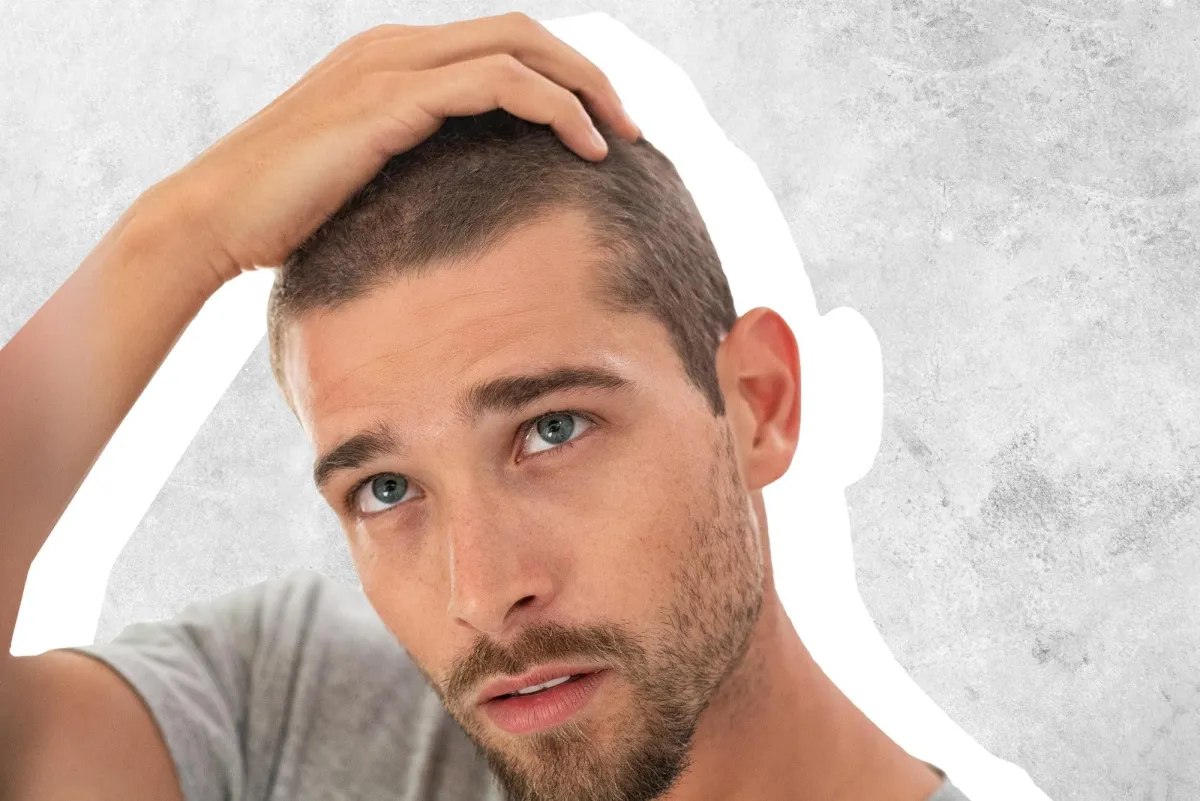
Losing your hair is never a good feeling, most men tend to feel self-conscious about it. Some men decide to completely shave off their heads or constantly wear a hat. One of the most common insecurities men face is hair thinning; for some men, it starts as early as in their 20s. The loss of confidence really starts to affect the way men do their hair and the types of hair cuts they get. Men start to worry about how they will be perceived by friends, family, and colleagues. Hair thinning should not be the cause of self distraughtness, and it should not limit men to have to continuously cover their heads. CADMEN Barbershop has compiled a list of the top 5 best haircuts for men experiencing early hair loss.
What Is a Hot Towel Shave and Is It Worth Getting?
What Is a Hot Towel Shave and Is It Worth Getting?
The hot towel shave is one of the oldest services offered at barbershops. It has survived more than a century of changes in men's grooming because the experience it delivers is difficult to replicate at home. Here is exactly what the service involves, what distinguishes it from a standard shave, and whether the cost is justified.
What Happens During a Hot Towel Shave
The service has a standard sequence at most barbershops. A hot, damp towel is applied to the face for 2 to 3 minutes. The heat opens the pores and softens the beard hair, making it easier to cut close. A pre-shave oil is sometimes applied after the towel. A high-quality shaving cream or lather is applied with a brush. The barber shaves with a straight razor or a safety razor, typically in multiple passes, with the grain first, then across, and sometimes against for maximum closeness. A second hot towel is applied after shaving to remove product and close the pores. An aftershave balm or splash is applied to finish and soothe the skin.
What Makes It Different
The combination of heat, proper pre-shave preparation, lather quality, and razor technique produces a closeness and skin condition that is difficult to achieve with a disposable cartridge razor at home. The straight razor removes hair at a closer angle than most consumer razors, and the preparation process reduces the friction and irritation that cause razor burn.
Who Benefits Most
Men who experience consistent razor burn, irritation, or ingrown hairs from home shaving benefit most from a professional hot towel shave. The preparation and technique differences address the root causes of these problems. Men who shave infrequently and find at-home shaving difficult also benefit, the professional process handles difficult beard angles and thicker growth more effectively.
Cost and Frequency
Hot towel shaves at most barbershops range from $25 to $75 depending on location and shop tier. Most men who enjoy the service treat it as a periodic experience rather than a regular replacement for at-home shaving, a few times per year or for specific occasions.
CADMEN Training
CADMEN Barber Academy trains barbers in straight razor technique and shaving services. academy.cadmen.ca/in-person-training.
Frequently Asked Questions
Is a hot towel shave safe with sensitive skin?
It can be, but sensitive skin requires specific communication before the service starts. The honest answer: a hot towel shave done correctly is often better for sensitive skin than at-home shaving with a cartridge razor, because the preparation reduces mechanical friction and the technique reduces the multiple-pass dragging that causes irritation. What makes it safe or unsafe for sensitive skin: the skill of the barber with the razor is the most significant factor. A straight razor pressed at the wrong angle, with too much pressure, or against the grain on skin that cannot tolerate it will cause significant irritation. An experienced barber who knows how to read skin response and adjust their technique in real time produces a clean, close shave without burning. What to tell the barber: "I have sensitive skin" before the service starts. Mention specific areas that are consistently more reactive (the neck below the jaw is the most common problem zone). Ask whether they typically do a full against-the-grain pass or whether they can skip that for sensitive skin. Most experienced barbers have a modified approach for sensitive clients that reduces the pass count or adjusts the direction on problematic zones. Products to mention: if you are currently using any prescription topicals, retinoids, or acids on your face, mention it. Active skincare ingredients can make the skin significantly more sensitive to mechanical exfoliation, and the barber should know before applying heat and a razor to those areas. A patch test or conversation before your first hot towel shave at a new shop is a reasonable precaution for highly reactive skin.
Can you shave your head at a barbershop the same way you shave a face?
Head shaves at a barbershop use the same straight razor technique as a face shave. The service is available at most barbershops that offer straight razor work. The process: the scalp is prepared with a hot towel (same as the face), lather is applied, and the barber shaves the scalp clean with a straight razor. A post-shave product closes the pores and conditions the scalp. The result is a closer shave than a safety or cartridge razor typically achieves at home, with better skin preparation that reduces irritation. What is different from a face shave: the head has more surface area and more varied contours than the face, and the blade work is more complex. The nape of the neck, the crown, and the area around the ears each require different technique adjustments. This is work for an experienced barber who does head shaves regularly, not a first-time experiment. Cost: head shaves at barbershops are typically priced similarly to or slightly higher than face shaves, reflecting the additional time and skill required. Frequency: men who shave their heads regularly often come in every 1 to 2 weeks for a professional shave or maintain the shave themselves between barber visits. The at-home maintenance option for head-shaved men: a high-quality safety razor with proper lather can produce close results at home. The barbershop service is the baseline for what the finished result should look and feel like, and many men use it occasionally when they want the closest possible result or when they want to avoid the time investment of a thorough home shave.
What is the difference between a straight razor and a safety razor at the barbershop?
Both are professional tools used in barbershop shaving services. The differences matter for understanding what a barber is working with and what result to expect. The straight razor: a single blade with a long exposed cutting edge. Requires significant skill to use safely, the blade angle, pressure, and stroke direction all need to be controlled precisely by the barber's hand without any mechanical guide. In skilled hands, a straight razor produces the closest possible shave because the blade can be positioned and angled precisely for any contour of the face or scalp. The learning curve for barbers using a straight razor is significant; barbershop-trained barbers who work with straight razors daily develop skill that takes years to build. The safety razor (at a barbershop, typically a "shavette" or single-blade safety razor): uses a disposable blade in a holder that provides a fixed angle guide. Less variable than a straight razor in technique, the blade angle is mechanically constrained, which reduces the skill ceiling needed to achieve a safe shave. Many barbershops have moved to safety razors for sanitation reasons, the disposable blade is replaced between each client, eliminating cross-contamination risk. The experience difference for the client: both produce a significantly closer shave than cartridge razors. The straight razor in skilled hands is often considered to produce the smoothest result, but the difference between a well-executed safety razor shave and a straight razor shave is subtle for most clients. The barber's skill matters more than the specific tool for the quality of the result.
Related Reading From CADMEN Barber Academy
- Hot Towel Shave: The Process, the Benefits, and What Separates a Good One From a Bad One
- The Hot Towel Shave: What the Service Actually Involves
- Hot Towel Shave: Why Barbers Use It and What It Actually Does
- Hot Towel Shave at the Barbershop: What to Expect
- Hot Towel Shave: What It Is and Why It Is Worth It
- The Hot Towel Shave: What to Expect and Why It Is Different

5 Best Haircuts for Men with
Early Hair Thinning
Losing your hair is never a good feeling, most men tend to feel self-conscious about it. Some men decide to completely shave off their heads or constantly wear a hat. One of the most common insecurities men face is hair thinning; for some men, it starts as early as in their 20s. The loss of confidence really starts to affect the way men do their hair and the types of hair cuts they get. Men start to worry about how they will be perceived by friends, family, and colleagues. Hair thinning should not be the cause of self distraughtness, and it should not limit men to have to continuously cover their heads. CADMEN Barbershop has compiled a list of the top 5 best haircuts for men experiencing early hair loss.


For any request, please contact us at info@cadmen.ca