
Barber Tips & Tricks
Follow us for the latest barber techniques and tips
Barber Tips & Tricks
Follow us for the latest barber techniques and tips
Top 7 Reasons Why Your Clients
Aren't Returning
Stay Ahead in the Barbering Game: Nurturing
Lifelong Clientele
You might have come across the saying “give a client a good cut at a reasonable price, and they'll be yours for life.” Unfortunately in reality this is not always the case. That’s where we come in! Check out some of the reasons why your clients may not be returning, whether they were long-term customers or a first-time appointment, below.

Top 7 Reasons Why Your Clients
Aren't Returning
Stay Ahead in the Barbering Game: Nurturing
Lifelong Clientele
You might have come across the saying “give a client a good cut at a reasonable price, and they'll be yours for life.” Unfortunately in reality this is not always the case. That’s where we come in! Check out some of the reasons why your clients may not be returning, whether they were long-term customers or a first-time appointment, below.
Career in Mobile Barbering: Key
Things You Need to Know about
While most barbers work in physical barbershops or hair salons, there are a growing number of barbers who work on-call. What does it mean to be a mobile barber? What are their primary responsibilities? Where to find them? In this blog, we will explain some key terms you should know about mobile barbering and how you can start a new career in it.

Career in Mobile Barbering: Key
Things You Need to Know about
While most barbers work in physical barbershops or hair salons, there are a growing number of barbers who work on-call. What does it mean to be a mobile barber? What are their primary responsibilities? Where to find them? In this blog, we will explain some key terms you should know about mobile barbering and how you can start a new career in it.
Top 4 Ways for Barbers to
Promote Themselves
Marketing is key. Knowing how to market yourself as a barber can be the difference between having 5 to 20 clients a day. If you are interested in boosting the number of your customers and furthering your advertising skills, read the list below with four ways to promote yourself as a barber.

Top 4 Ways for Barbers to
Promote Themselves
Marketing is key. Knowing how to market yourself as a barber can be the difference between having 5 to 20 clients a day. If you are interested in boosting the number of your customers and furthering your advertising skills, read the list below with four ways to promote yourself as a barber.
5 Tips for Social Media Content
Creating as a Barber
It is next to impossible to find someone who is not on social media today. More than just a tool for connection, social media is key helping barbers market themselves and promote their names and skills. If you want to up your barber game quickly, here are five tips on how to promote content online that you don't want to miss out on.

5 Tips for Social Media Content
Creating as a Barber
It is next to impossible to find someone who is not on social media today. More than just a tool for connection, social media is key helping barbers market themselves and promote their names and skills. If you want to up your barber game quickly, here are five tips on how to promote content online that you don't want to miss out on.
5 Best Haircuts for Men with
Early Hair Thinning
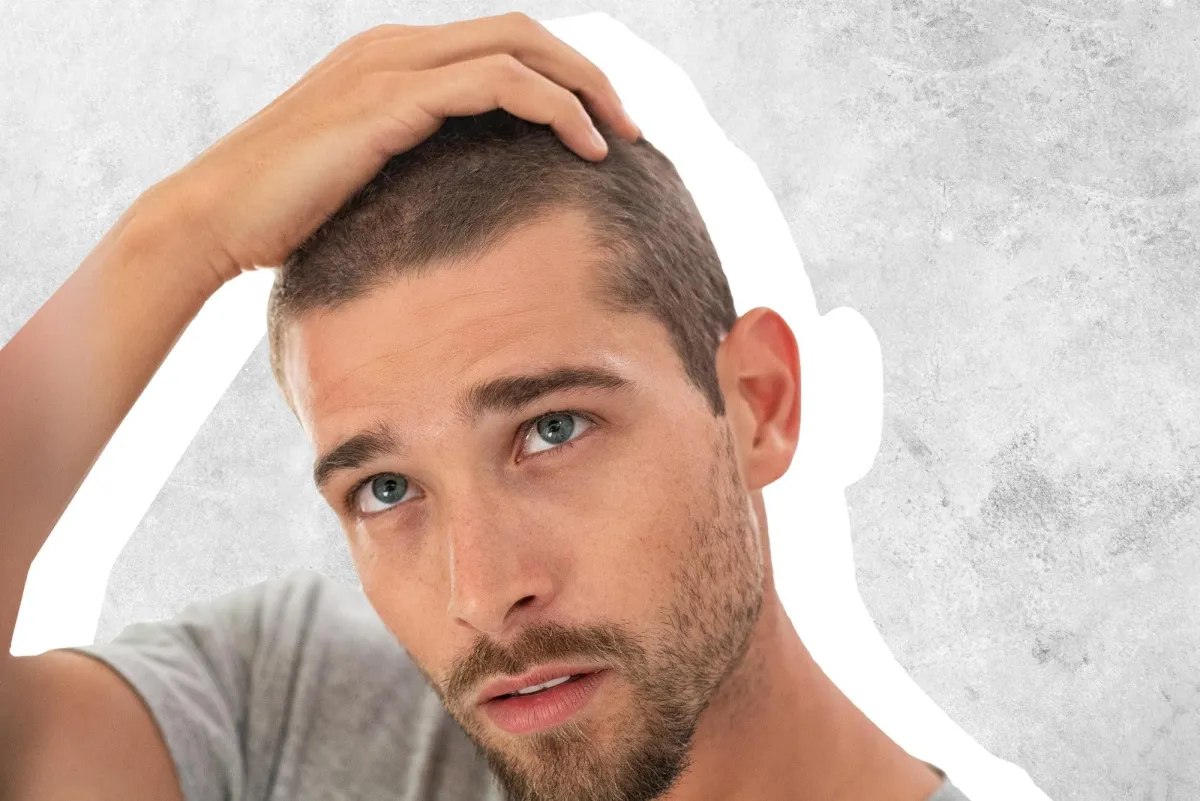
Losing your hair is never a good feeling, most men tend to feel self-conscious about it. Some men decide to completely shave off their heads or constantly wear a hat. One of the most common insecurities men face is hair thinning; for some men, it starts as early as in their 20s. The loss of confidence really starts to affect the way men do their hair and the types of hair cuts they get. Men start to worry about how they will be perceived by friends, family, and colleagues. Hair thinning should not be the cause of self distraughtness, and it should not limit men to have to continuously cover their heads. CADMEN Barbershop has compiled a list of the top 5 best haircuts for men experiencing early hair loss.

The Side Part Haircut: How to Get It and Style It
The Side Part Haircut: How to Get It and Style It
The side part is among the most enduring men's haircuts because it works across nearly every hair type, age, and setting. The cut is defined by a line drawn at a natural part location on one side of the head, with the hair swept in opposite directions from that line. It is simultaneously classic and modern, depending entirely on the length, taper, and styling choice. Here is how it is constructed and how to maintain it.
What Makes a Side Part Work
The side part haircut works through contrast and direction. The part line creates a defined boundary, and the hair on either side of that line goes in different directions, one section swept over, one section cut shorter underneath. The contrast between the longer top and the shorter sides is what makes the style visible and polished. Without that contrast, the part looks like nothing more than a preference for which direction the hair sits.
The stronger the taper or fade on the sides, the more defined and modern the side part reads. A low skin fade with a hard side part is a current barbershop style. A classic low taper with a natural part is the same structure, conservative and appropriate in professional settings.
Asking for a Side Part at the Barbershop
Tell the barber which side you part on (left or right, if you do not have a natural part, the barber will identify the best one for your hair's growth direction). Specify whether you want a hard part (a shaved or closely cut line defining the part) or a natural part (no defined line, the hair simply combs in that direction). Specify fade height and top length. Reference photos eliminate all ambiguity.
Styling a Side Part at Home
A side part requires a comb and a hold product for most hair types. Apply a small amount of pomade, wax, or clay to damp hair, comb the part line first with a fine-tooth comb, then direct each side in its intended direction. Use a blow dryer for volume at the top if needed. The product should hold the direction without looking stiff.
CADMEN Training
Side part construction and taper technique are covered in CADMEN's hands-on program. academy.cadmen.ca/in-person-training.
Frequently Asked Questions
What is a side part haircut?
A side part haircut is a men's cut where the hair is divided along a part line on one side of the head, with the longer top section combed or styled to one side and the opposite side kept shorter. The cut is typically paired with a taper or fade on the sides and back. The part can be natural (following the hair's growth pattern to find the most natural division point) or hard (a barber cuts or shaves a precise, defined line into the scalp at the part location). The side part is one of the oldest and most continuously popular men's haircut structures because it is versatile: worn short with a high skin fade it reads as current and sharp; worn medium-length with a classic taper it reads as professional and conservative; worn longer with a comb-over it reads as refined and European. The cut works across most hair types. Straight hair holds the part most easily with minimal product. Wavy hair benefits from a heavier product to keep the part defined throughout the day. Fine hair benefits from a shorter length to prevent the top section from going flat. Thick or coarse hair benefits from internal texturizing to prevent the swept section from sitting too heavily on the side.
What is the difference between a natural part and a hard part?
A natural part and a hard part are two interpretations of the same side part structure, with different visual intensity. A natural part: the barber identifies and follows the natural growth direction of the hair to create a parting that forms along the line the hair naturally wants to divide. No line is cut or shaved into the scalp. The part is defined by styling direction alone. The look is clean but soft, the part is visible without being geometric or dramatic. A hard part (also called a shaved part or razor part): the barber uses a razor, trimmer, or the corner of clipper blades to cut a precise, defined line into the scalp at the part location. The line is typically 1 to 2 millimeters wide. The skin (or very short stubble) is visible at the line, creating a high-contrast, geometric division between the two sections of hair. The hard part reads as more deliberate, modern, and barbershop-forward than a natural part. It requires more maintenance, the shaved line grows back within 1 to 2 weeks and needs to be re-cut at each visit to stay sharp. A natural part does not require this additional maintenance step. Most barbers can execute both and will ask your preference, reference photos are the most efficient way to communicate which look you want.
Does a side part suit all face shapes?
The side part is one of the most universally flattering haircut structures because it can be modified in length and direction to work with most face shapes. For oval faces: the side part is naturally flattering, the asymmetry of the part adds visual interest to the balanced proportions. For round faces: the side part creates asymmetry and vertical line that break up the roundness. A higher fade on the sides and more volume at the top elongates the face further. For square faces: a natural soft part with a medium fade reduces the angularity compared to very symmetrical cuts. The swept top section softens the corners of the face. For long or rectangular faces: the side part with a lower fade and medium top length (not too much top volume) maintains horizontal width, which is flattering for longer face shapes. For heart or diamond shapes: the side part with medium volume at the top and a mid-to-low fade balances the wider forehead. Avoid very high fades that add width at the temples on face shapes that are already widest there. The barber who cuts your hair regularly learns how the side part interacts with your specific face shape and can adjust fade height, top length, and the styling direction of the part accordingly.
Related Reading From CADMEN Barber Academy
- How to Cut a Side Part Haircut: Classic Technique for a Timeless Style
- The Side Part: A Classic Haircut That Still Works
- The Side Part for Men: How to Get It Right and Make It Last
- Side Part vs. Middle Part for Men: Which One to Choose
- Side Part Haircut for Men: Classic and Modern Versions
- Gray Hair in Men: When to Embrace It and How to Style It

5 Best Haircuts for Men with
Early Hair Thinning
Losing your hair is never a good feeling, most men tend to feel self-conscious about it. Some men decide to completely shave off their heads or constantly wear a hat. One of the most common insecurities men face is hair thinning; for some men, it starts as early as in their 20s. The loss of confidence really starts to affect the way men do their hair and the types of hair cuts they get. Men start to worry about how they will be perceived by friends, family, and colleagues. Hair thinning should not be the cause of self distraughtness, and it should not limit men to have to continuously cover their heads. CADMEN Barbershop has compiled a list of the top 5 best haircuts for men experiencing early hair loss.


For any request, please contact us at info@cadmen.ca