
Barber Tips & Tricks
Follow us for the latest barber techniques and tips
Barber Tips & Tricks
Follow us for the latest barber techniques and tips
You might have come across the saying “give a client a good cut at a reasonable price, and they'll be yours for life.” Unfortunately in reality this is not always the case. That’s where we come in! Check out some of the reasons why your clients may not be returning, whether they were long-term customers or a first-time appointment, below.

You might have come across the saying “give a client a good cut at a reasonable price, and they'll be yours for life.” Unfortunately in reality this is not always the case. That’s where we come in! Check out some of the reasons why your clients may not be returning, whether they were long-term customers or a first-time appointment, below.

While most barbers work in physical barbershops or hair salons, there are a growing number of barbers who work on-call. What does it mean to be a mobile barber? What are their primary responsibilities? Where to find them? In this blog, we will explain some key terms you should know about mobile barbering and how you can start a new career in it.

While most barbers work in physical barbershops or hair salons, there are a growing number of barbers who work on-call. What does it mean to be a mobile barber? What are their primary responsibilities? Where to find them? In this blog, we will explain some key terms you should know about mobile barbering and how you can start a new career in it.

Marketing is key. Knowing how to market yourself as a barber can be the difference between having 5 to 20 clients a day. If you are interested in boosting the number of your customers and furthering your advertising skills, read the list below with four ways to promote yourself as a barber.

Marketing is key. Knowing how to market yourself as a barber can be the difference between having 5 to 20 clients a day. If you are interested in boosting the number of your customers and furthering your advertising skills, read the list below with four ways to promote yourself as a barber.

It is next to impossible to find someone who is not on social media today. More than just a tool for connection, social media is key helping barbers market themselves and promote their names and skills. If you want to up your barber game quickly, here are five tips on how to promote content online that you don't want to miss out on.

It is next to impossible to find someone who is not on social media today. More than just a tool for connection, social media is key helping barbers market themselves and promote their names and skills. If you want to up your barber game quickly, here are five tips on how to promote content online that you don't want to miss out on.

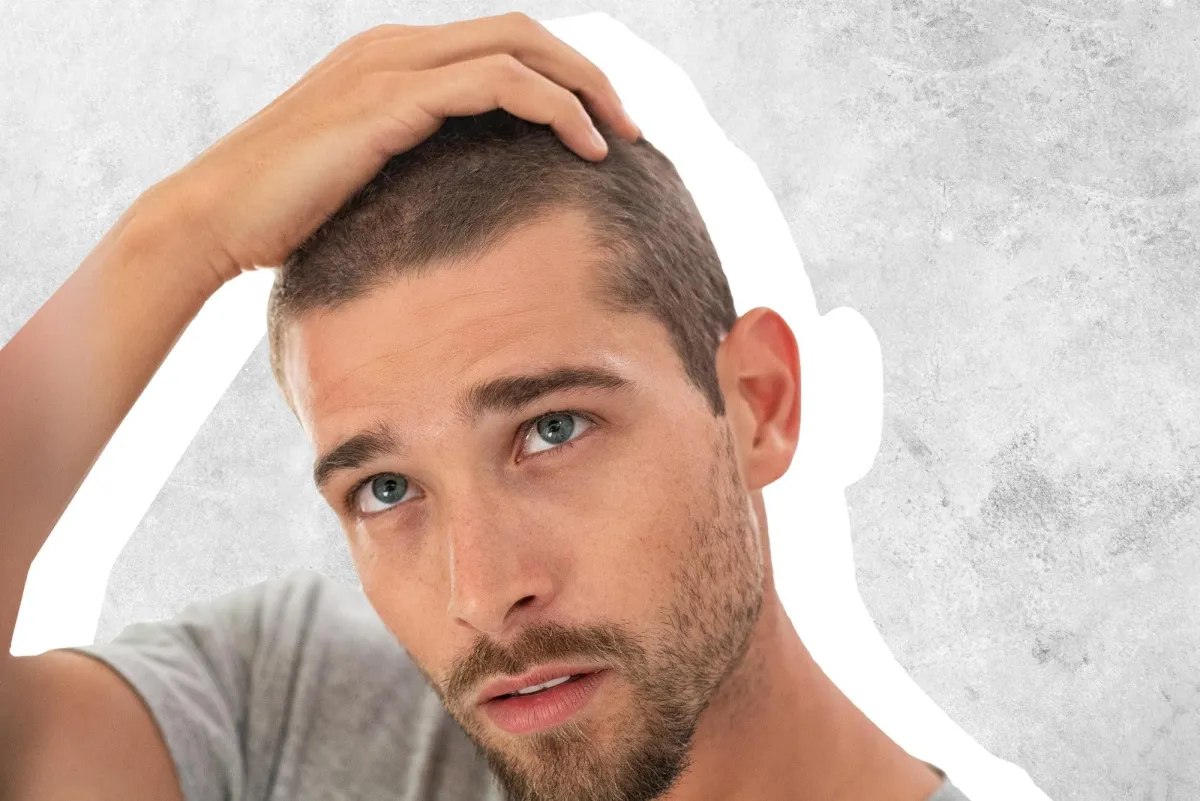
Losing your hair is never a good feeling, most men tend to feel self-conscious about it. Some men decide to completely shave off their heads or constantly wear a hat. One of the most common insecurities men face is hair thinning; for some men, it starts as early as in their 20s. The loss of confidence really starts to affect the way men do their hair and the types of hair cuts they get. Men start to worry about how they will be perceived by friends, family, and colleagues. Hair thinning should not be the cause of self distraughtness, and it should not limit men to have to continuously cover their heads. CADMEN Barbershop has compiled a list of the top 5 best haircuts for men experiencing early hair loss.
The average barbershop loses a barber every 14 months. When that barber walks, they take 60 to 80% of their book with them. If that chair sat at $258,000 in annual revenue, the shop just lost roughly $180,000 in client value and has 90 days to refill it before the lease eats the margin. In 2025, the industry lost an estimated $412 million to empty chairs. Over 50% of those barbers did not quit the trade. They left for suite rentals.
A retention system is not a pizza party. It is the operating mechanism that makes leaving more expensive than staying.
Most shop owners think their retention problem is a culture problem. It is not. It is a structure problem dressed up as a culture problem.
Here is what the numbers look like across the industry. Average barbershop revenue sits at $258,000. Top-performing single-location shops hit $477,000. Net margin across the industry runs 8 to 20%. On a $258K shop running 12% margin, the owner clears $31,000 before taxes. One barber leaving with their book can turn that 12% margin into a 2% margin overnight.
Now look at why barbers leave. The suite rental industry grew over 40% in the last five years for one reason. A barber paying $300 a week in suite rent on $1,800 a week in revenue keeps $1,500. That same barber on a 60/40 commission split in a traditional shop keeps $1,080 on the same gross. The suite wins by $420 a week. That is $21,000 a year the barber is leaving on the table by staying in your shop.
Money is the surface reason. The deeper reasons stack underneath:
When a shop owner says "my barbers keep leaving," what they are actually saying is "my shop offers no structural advantage over a $300-a-week suite." Retention is not loyalty. Retention is math plus structure plus path.
A barber retention system is the documented combination of compensation structure, career progression, client-ownership rules, and operational SOPs that makes staying at your shop more profitable and more sustainable than leaving for a suite rental or a competitor. It is built, written down, and enforced. It is not a vibe.
A complete retention system has five parts working together. Compensation logic with clear tiers. A written career path with revenue and skill milestones. Defined client-ownership rules in the contract. Operational SOPs that remove friction the barber would otherwise solve by leaving. And a quarterly review cadence so problems surface before the resignation.
Replacing a mid-level barber costs a shop between $25,000 and $60,000 when you stack the empty-chair revenue loss, the recruiting time, the training ramp, and the client attrition. On a chair generating $250,000 a year, 90 days of vacancy alone is $62,500 in lost gross revenue. Most owners only count the recruiting cost and miss the real number.
The hidden costs are where shops bleed. When a barber leaves with their book, 60 to 80% of those clients go with them. If the barber serviced 400 unique clients, you lose 240 to 320 of them. At a $45 average ticket and 12 visits a year, that is $130,000 to $172,000 in annual client value walking out the door.
This is why a retention system is cheaper than a recruiting system. You are not replacing labor. You are replacing a revenue stream you spent two years building.
The best compensation structure for retaining barbers is a tiered hybrid model that starts at 50/50 commission and graduates to a sliding scale up to 70/30 based on revenue milestones, with a path to chair rental at year three for top performers. This rewards production, gives the barber a visible ladder, and matches suite economics without losing the shop.
The structure has to be written, not verbal. Every barber knows the tier, the milestone, and the date they qualify for the next bump. No favorites. No backroom deals. A typical tier structure runs like this:
Walk into any barber Instagram coach's content and you will see the same five things. Pay more. Build culture. Run team dinners. Buy them tools. Post their work. None of this is wrong. All of it is incomplete.
The 6FB-style framing treats retention as a relationship problem. The advice is essentially "be a better boss." The problem is a shop owner who is a great boss with a broken compensation structure still loses barbers to a worse boss who pays better and writes things down. Personality cannot beat math.
Generic advice also ignores the suite rental threat directly. A coach selling motivation cannot tell you why a $300-a-week suite beats your 60/40 split, because the answer is uncomfortable. Your shop is not a community for a barber clearing $90,000 a year. It is an overhead structure they are subsidizing.
The other failure point is timing. Generic advice treats retention as something you fix when a barber threatens to leave. By then it is over. Real retention is a system installed before the first hire, audited every quarter, and enforced through documents. It is operational, not emotional.
CADMEN built the operating system because we lived this. We built shops, scaled them, sold one, and designed a franchise model. We watched barbers leave and we watched barbers stay. The ones who stayed did not stay because of pizza. They stayed because the math made sense and the path was visible.
The CADMEN system has five installed components. Each one is a document, an SOP, or a recurring meeting cadence. None of them are vibes.
One page. Five tiers. Revenue milestone, time-at-tier requirement, split percentage, and benefits at each level. Every barber gets a copy at onboarding and a copy at every quarterly review. The document includes the math worked out at sample revenue levels so the barber can see what they take home at each tier.
Critical rule: the document is the same for every barber. No off-the-books exceptions. The moment one barber finds out another got a custom deal, your retention system is dead.
Three tracks documented in the operator manual. Master Barber track for those who want to cut forever. Educator track for those who want to teach and earn from training new hires. Owner-Operator track for those who want to run a chair like a business and eventually buy in or open a location.
Each track has named milestones at year 1, year 2, year 3, and year 5. The barber picks a track at month 6. The track is reviewed annually. This is the single biggest reason barbers leave for suites: they cannot see what year 5 looks like inside your shop. Show them.
Written into the contract. Defines who owns the client relationship, what happens to the book if the barber leaves, and what non-solicit terms apply. Most shops either have nothing in writing or have a clause so aggressive it scares barbers off in the interview.
The CADMEN clause splits ownership: clients booked through shop marketing channels belong to the shop. Clients the barber brought in from outside (with documented proof) belong to the barber. On departure, a 90-day non-solicit applies to shop-booked clients only. This is fair. Fair is retainable.
Quarterly. Thirty minutes per barber. One question: "What is the most annoying part of working here?" Then a written list of every operational friction point: booking software glitches, supply runs, schedule confusion, payout delays. The owner commits to fixing three items per quarter, in writing, with deadlines.
Suite life looks attractive because it removes friction. If you remove friction faster than a suite can, you win on operations, not just money.
Sixty minutes per barber, every 90 days. Pull their numbers. Show them their tier, their distance to the next tier, their retention rate on their own clients, and their average ticket trend. End the meeting with one of three outcomes: tier promotion, stay-the-course plan, or improvement plan with named metrics.
Barbers do not leave shops where they get a documented quarterly review of their business. They leave shops where they have no idea where they stand.
A three-chair shop in Calgary running $340,000 in annual revenue. Owner had lost two barbers to suite rentals in 18 months. Both took roughly 70% of their books with them. The shop dropped from $410K to $340K in one year.
The owner installed the five components over 60 days. Tiered comp document written and signed by all three remaining barbers. Career tracks chosen (one Master, one Educator, one Owner-Operator). Client ownership clause rewritten and signed. Quarterly friction audits started in month two.
Twelve months later: zero departures. Two of the three barbers hit Tier 3 (65/35 split plus product commission), which raised their take-home by an average of $14,000 each. Shop revenue climbed back to $398,000 because the chairs stayed full and the existing barbers grew their books knowing the upside was theirs. The owner's net margin held at 14% on a higher revenue base. The retention system paid for itself in the first quarter through the avoided cost of one replacement hire.
Sixty to ninety days for the documents and contracts. Six months to see retention results. The compensation document and career ladder can be written in a weekend. The contracts take two weeks with a lawyer. The quarterly review cadence takes one full cycle (90 days) before barbers trust it is permanent. Most shops see the first "I was going to leave but stayed" conversation around month four.
Yes, and you should. The cheapest time to install the system is when your team is small. Write the documents now, get them signed by your one barber, and apply the same framework to every future hire. Shops that try to install retention systems at five or six barbers face revolt because veteran barbers feel the new rules are aimed at them. Install early, enforce always.
Refusal is information. A barber who will not sign a fair client-ownership clause is telling you they are planning to leave with the book. Better to know now. The CADMEN clause is intentionally fair (shop owns shop-booked clients, barber owns externally-sourced clients with proof), so refusal usually means the barber wants to claim every client regardless of source. That is not a retention conversation. That is a separation conversation.
You usually cannot match suite take-home dollar for dollar at high revenue levels, and you should stop trying. Compete on the package: included marketing, included booking software, included supplies, included education, a career path beyond cutting, and a Tier 5 path that gives top performers a below-market chair rental inside your shop. A top barber will trade $50 a week for those operational supports if they trust the system.
Lump-sum loyalty bonuses ("stay one more year and get $5,000") do not work. They feel like bribes and they reset the clock without solving the underlying problem. What works is structural retention: tier-based comp increases, product commission unlocked at Tier 3, and revenue-share on apprentices the senior barber trains. Tie the money to ongoing production, not to time served. Production-tied retention is the only retention that compounds.
Verbal agreements. "I told him I would bump him to 65/35 when he hit $7K months." Six months later the barber hits $7K, the owner forgets or stalls, and the barber starts touring suites the next weekend. If it is not written, it does not exist. Every comp tier, every milestone, every promise gets documented and dated. The document is the system.
Directly. A shop with documented retention systems, signed contracts, and a track record of barbers staying 3+ years sells at a 2 to 3x multiple of EBITDA. A shop with no contracts, no documentation, and 14-month average tenure sells at 0.5 to 1x or does not sell at all. Buyers are not buying revenue. They are buying the probability that the revenue stays after closing. Retention systems are the proof.
CADMEN Academy is the barbershop industry's operating system. Built by operators who have built, scaled, sold a barbershop, and designed a franchise. The tiered comp document, the career ladder, the client ownership clause, the friction audit SOP, and the quarterly review template all live inside the academy. We don't sell motivation. We install operating systems for barbershops. If you want to see the SOPs, the academy is open.
Sixty to ninety days for the documents and contracts. Six months to see retention results. The compensation document and career ladder can be written in a weekend. The contracts take two weeks with a lawyer. The quarterly review cadence takes one full cycle (90 days) before barbers trust it is permanent. Most shops see the first stay conversation around month four.
Yes, and you should. The cheapest time to install the system is when your team is small. Write the documents now, get them signed by your one barber, and apply the same framework to every future hire. Shops that try to install retention systems at five or six barbers face revolt because veteran barbers feel the new rules are aimed at them.
Refusal is information. A barber who will not sign a fair client-ownership clause is telling you they are planning to leave with the book. The CADMEN clause is intentionally fair: shop owns shop-booked clients, barber owns externally-sourced clients with proof. Refusal usually means the barber wants to claim every client regardless of source. That is a separation conversation.
You usually cannot match suite take-home dollar for dollar at high revenue levels. Compete on the package: included marketing, included booking software, included supplies, included education, a career path beyond cutting, and a Tier 5 path that gives top performers a below-market chair rental inside your shop. A top barber will trade $50 a week for those operational supports if they trust the system.
Lump-sum loyalty bonuses do not work. They feel like bribes and they reset the clock without solving the underlying problem. What works is structural retention: tier-based comp increases, product commission unlocked at Tier 3, and revenue-share on apprentices the senior barber trains. Tie the money to ongoing production, not to time served. Production-tied retention is the only retention that compounds.
Verbal agreements. An owner promises a tier bump at $7K months, six months later the barber hits it, the owner stalls, and the barber starts touring suites the next weekend. If it is not written, it does not exist. Every comp tier, every milestone, every promise gets documented and dated. The document is the system.
Directly. A shop with documented retention systems, signed contracts, and a track record of barbers staying 3+ years sells at a 2 to 3x multiple of EBITDA. A shop with no contracts and 14-month average tenure sells at 0.5 to 1x or does not sell at all. Buyers are not buying revenue. They are buying the probability that the revenue stays after closing.
Losing your hair is never a good feeling, most men tend to feel self-conscious about it. Some men decide to completely shave off their heads or constantly wear a hat. One of the most common insecurities men face is hair thinning; for some men, it starts as early as in their 20s. The loss of confidence really starts to affect the way men do their hair and the types of hair cuts they get. Men start to worry about how they will be perceived by friends, family, and colleagues. Hair thinning should not be the cause of self distraughtness, and it should not limit men to have to continuously cover their heads. CADMEN Barbershop has compiled a list of the top 5 best haircuts for men experiencing early hair loss.


For any request, please contact us at info@cadmen.ca