
Barber Tips & Tricks
Follow us for the latest barber techniques and tips
Barber Tips & Tricks
Follow us for the latest barber techniques and tips
Top 7 Reasons Why Your Clients
Aren't Returning
Stay Ahead in the Barbering Game: Nurturing
Lifelong Clientele
You might have come across the saying “give a client a good cut at a reasonable price, and they'll be yours for life.” Unfortunately in reality this is not always the case. That’s where we come in! Check out some of the reasons why your clients may not be returning, whether they were long-term customers or a first-time appointment, below.

Top 7 Reasons Why Your Clients
Aren't Returning
Stay Ahead in the Barbering Game: Nurturing
Lifelong Clientele
You might have come across the saying “give a client a good cut at a reasonable price, and they'll be yours for life.” Unfortunately in reality this is not always the case. That’s where we come in! Check out some of the reasons why your clients may not be returning, whether they were long-term customers or a first-time appointment, below.
Career in Mobile Barbering: Key
Things You Need to Know about
While most barbers work in physical barbershops or hair salons, there are a growing number of barbers who work on-call. What does it mean to be a mobile barber? What are their primary responsibilities? Where to find them? In this blog, we will explain some key terms you should know about mobile barbering and how you can start a new career in it.

Career in Mobile Barbering: Key
Things You Need to Know about
While most barbers work in physical barbershops or hair salons, there are a growing number of barbers who work on-call. What does it mean to be a mobile barber? What are their primary responsibilities? Where to find them? In this blog, we will explain some key terms you should know about mobile barbering and how you can start a new career in it.
Top 4 Ways for Barbers to
Promote Themselves
Marketing is key. Knowing how to market yourself as a barber can be the difference between having 5 to 20 clients a day. If you are interested in boosting the number of your customers and furthering your advertising skills, read the list below with four ways to promote yourself as a barber.

Top 4 Ways for Barbers to
Promote Themselves
Marketing is key. Knowing how to market yourself as a barber can be the difference between having 5 to 20 clients a day. If you are interested in boosting the number of your customers and furthering your advertising skills, read the list below with four ways to promote yourself as a barber.
5 Tips for Social Media Content
Creating as a Barber
It is next to impossible to find someone who is not on social media today. More than just a tool for connection, social media is key helping barbers market themselves and promote their names and skills. If you want to up your barber game quickly, here are five tips on how to promote content online that you don't want to miss out on.

5 Tips for Social Media Content
Creating as a Barber
It is next to impossible to find someone who is not on social media today. More than just a tool for connection, social media is key helping barbers market themselves and promote their names and skills. If you want to up your barber game quickly, here are five tips on how to promote content online that you don't want to miss out on.
5 Best Haircuts for Men with
Early Hair Thinning
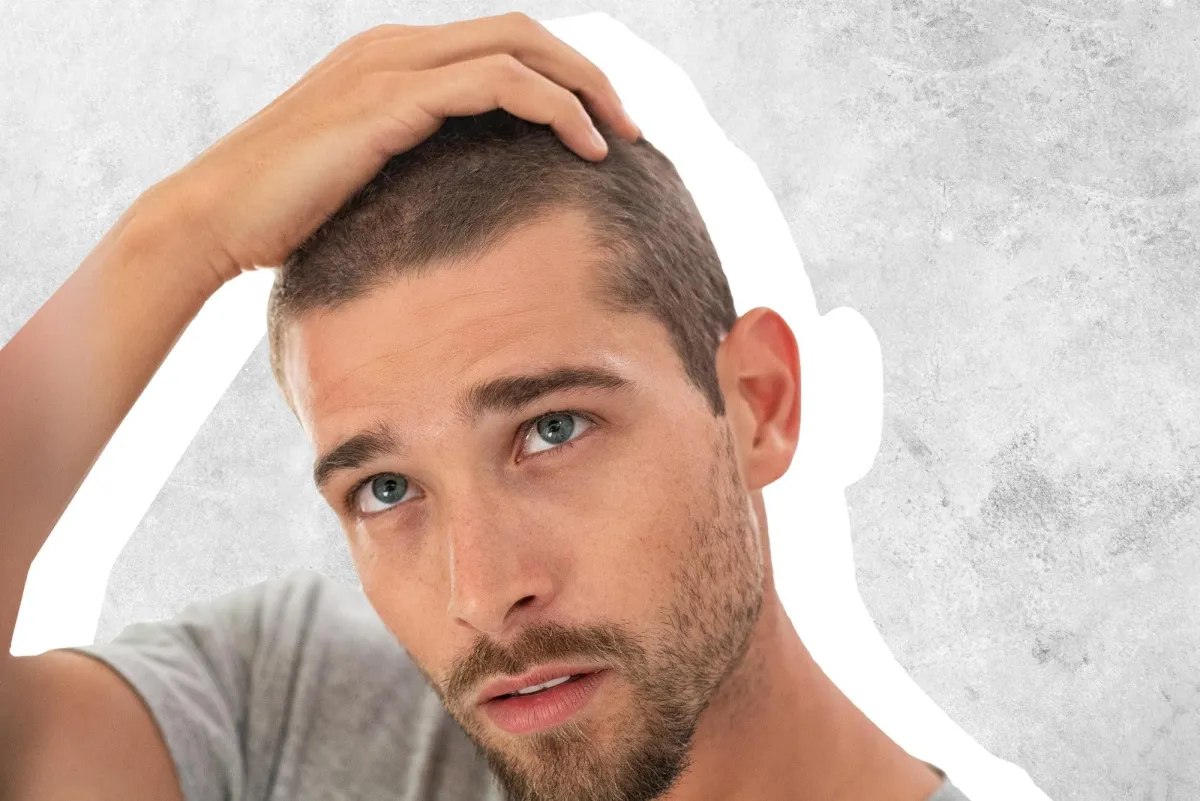
Losing your hair is never a good feeling, most men tend to feel self-conscious about it. Some men decide to completely shave off their heads or constantly wear a hat. One of the most common insecurities men face is hair thinning; for some men, it starts as early as in their 20s. The loss of confidence really starts to affect the way men do their hair and the types of hair cuts they get. Men start to worry about how they will be perceived by friends, family, and colleagues. Hair thinning should not be the cause of self distraughtness, and it should not limit men to have to continuously cover their heads. CADMEN Barbershop has compiled a list of the top 5 best haircuts for men experiencing early hair loss.
The Pompadour: What Makes It Work and How to Style It
The Pompadour: What Makes It Work and How to Style It
The pompadour is a men's hairstyle defined by hair swept upward and backward from the forehead, building volume above the hairline. The front section is the focal point, hair is lifted from the roots and directed back, creating height that tapers toward the crown and back of the head. The sides and back are typically shorter or faded to create contrast with the taller front section.
The Cut Structure
A pompadour requires significant length on the front section, at minimum 2 to 3 inches to achieve the upward sweep. The barber leaves the most length at the front and transitions to shorter lengths toward the back and crown. The sides can be faded (skin or mid-fade for the modern version) or tapered for a more conservative profile. The front section is sometimes cut with some internal layering to help it hold the upward direction without being too heavy.
The Modern vs. Classic Pompadour
The classic pompadour (associated with 1950s style, Elvis Presley, rockabilly) uses high-shine oil-based pomade and a comb to create a very slick, structured, high-volume backward sweep. The hair lies in neat, directed waves or a smooth arc. The modern pompadour uses matte products and is often more textured and less rigidly combed, the backward sweep is present but the result looks casual rather than deliberately coiffed. Skin fades on the sides are common in the modern version; taper cuts were standard in the classic.
CADMEN Training
Volumizing cuts and advanced styling are part of CADMEN's hands-on barbering curriculum. academy.cadmen.ca/in-person-training.
Frequently Asked Questions
How do I style a pompadour at home?
Styling a pompadour consistently requires a blow-dryer, the right product, and a specific technique. Without a blow-dryer, the pompadour's volume and direction will not hold through the day because the hair's natural fall direction will reassert itself as it dries flat. The step-by-step process: start with damp hair after washing. Not soaking wet (too heavy to lift) and not dry (too resistant to reshaping). Towel-dry to approximately 70 to 80 percent dry. Apply product. For a matte modern pompadour: a medium-hold clay distributed through the front section. For a classic pompadour: a medium-shine water-based pomade worked through the front section with fingers or a comb. The product should be distributed from the roots outward to ensure the roots have hold, if only the ends have product, the root lift will not hold. Blow-dry while directing the hair backward and upward. Use the blow-dryer nozzle pointed from the front of the hairline backward, with your fingers or a round brush lifting the front section away from the scalp. The heat sets the direction. Spend 60 to 90 seconds on this step, it is the most important step. The blow-dryer is doing more work than the product alone. Let it cool while holding the direction. Once the hair reaches the shape you want, hold it in place for 15 to 20 seconds as it cools from the blow-dry heat. The cooling locks in the shape. Finish with a comb (for the classic version) or fingers (for the textured modern version). For the classic: use a fine-tooth comb to smooth the surface, clean up the direction, and define the backward sweep. For the modern: use fingers to add texture and break up any overly structured areas. Product tip: if the hold fades by midday, the likely cause is not enough product at the roots or not enough blow-dry direction. Apply a small additional amount to the fingertips, press into the roots of the front section, and use your fingers to re-lift and direct while the product is warm from your hands.
What products do I need for a pompadour?
The product you need depends on whether you want the classic high-shine pompadour or the matte modern version. Classic slick pompadour: oil-based or water-based pomade with medium to high shine. Oil-based pomades (Brylcreem, Murray's, Layrite Supershine) provide strong hold and high shine. The drawback is they require thorough shampooing to remove and can build up with repeated use. Water-based pomades (Layrite Natural Matte Cream, Imperial Barber Products Classic Pomade, Suavecito Original Hold) provide strong hold with easier wash-out. They wash out with warm water. Most professional barbers recommend water-based over oil-based for daily use. Modern textured pompadour: a medium-hold matte clay. Clays provide hold without shine and create a textured, natural look rather than the slick classic pompadour finish. The tradeoff is slightly less hold than a heavy pomade, so the blow-dry technique becomes more important to establish the shape before the clay sets it. Suitable for both: hair cream with hold is a middle-ground option. Less hold than pomade or clay but adds weight and direction without significant shine or matte. Works for men with naturally cooperative hair that holds the pompadour direction without heavy product. What does NOT work for a pompadour: lightweight leave-in conditioners or volumizing spray alone, insufficient hold. Gel at high hold levels, dries stiff and does not allow reshaping through the day. Heavy butters or oils on top, adds weight that pulls the front section down rather than letting it lift. The product amount: start with a dime to quarter-sized amount worked between the palms to warm it, then distributed through the front section. More product than needed weighs the section down; less product than needed fails to hold the direction. Adjust from session to session until you find the right amount for your specific hair density.
Does a pompadour work for all hair types?
A pompadour works best on straight to wavy hair (Types 1 and 2). It becomes progressively more challenging to achieve on curlier hair types, though adapted versions exist. Type 1 (straight hair): the most pompadour-compatible hair type. Straight hair holds the backward sweep cleanly, lies in the smooth arcs the classic pompadour requires, and responds predictably to blow-dry direction. The main challenge with very fine Type 1 hair is that it lacks the density to create a full pompadour profile, volumizing products and careful technique compensate partially. Type 2 (wavy hair): wavy hair can work well for a pompadour, especially the modern textured version. The natural wave adds volume and texture that suits the looser modern interpretation. The classic slick version is harder to achieve because the wave pattern reasserts itself. With blow-drying in the backward direction, the wave can be directed into the pompadour shape successfully. Type 3 (curly hair): a traditional pompadour is difficult on curly hair because the curl pattern works against the directed backward sweep. Curly hair can achieve volume at the front, but the result reads differently from the directed, swept appearance of the standard pompadour. Some men with Type 3 hair use chemical relaxers to straighten the front section for a more traditional pompadour result. Alternatively, a curl-adapted "curly pompadour" embraces the curl texture while building height at the front. Type 4 (coily hair): the tightest coil patterns have the most shrinkage and the most resistance to directional styling. Achieving a classic pompadour profile on Type 4 hair typically requires chemical processing. A natural or textured front that builds upward height, sometimes called a "shape-up pomp", is an adapted version that works with the natural coil rather than against it. In summary: pompadour is a natural fit for Types 1-2, achievable with technique for Type 2C-3, and requires adaptation or processing for Type 4.
Related Reading From CADMEN Barber Academy
- The Pompadour Haircut: How to Cut and Style It
- The Pompadour Fade: How to Get It and Keep It Sharp
- The Pompadour for Men: What It Is, Where It Came From, and How Barbers Build It
- The Pompadour Haircut: How It Works and How to Style It
- The Pompadour Haircut: How to Cut and Style the Volume-Dependent Classic
- The Pompadour Haircut: What It Is, Its Variations, and How to Ask for One
Want to learn to cut a pompadour yourself? CADMEN Barber Academy teaches cutting hands-on, with an educator beside you. See the barber academy in Mississauga or view in-person classes and send an enquiry.
Watch the free Barbering for Beginners playlist on YouTube.

5 Best Haircuts for Men with
Early Hair Thinning
Losing your hair is never a good feeling, most men tend to feel self-conscious about it. Some men decide to completely shave off their heads or constantly wear a hat. One of the most common insecurities men face is hair thinning; for some men, it starts as early as in their 20s. The loss of confidence really starts to affect the way men do their hair and the types of hair cuts they get. Men start to worry about how they will be perceived by friends, family, and colleagues. Hair thinning should not be the cause of self distraughtness, and it should not limit men to have to continuously cover their heads. CADMEN Barbershop has compiled a list of the top 5 best haircuts for men experiencing early hair loss.


For any request, please contact us at info@cadmen.ca