
Barber Tips & Tricks
Follow us for the latest barber techniques and tips
Barber Tips & Tricks
Follow us for the latest barber techniques and tips
Top 7 Reasons Why Your Clients
Aren't Returning
Stay Ahead in the Barbering Game: Nurturing
Lifelong Clientele
You might have come across the saying “give a client a good cut at a reasonable price, and they'll be yours for life.” Unfortunately in reality this is not always the case. That’s where we come in! Check out some of the reasons why your clients may not be returning, whether they were long-term customers or a first-time appointment, below.

Top 7 Reasons Why Your Clients
Aren't Returning
Stay Ahead in the Barbering Game: Nurturing
Lifelong Clientele
You might have come across the saying “give a client a good cut at a reasonable price, and they'll be yours for life.” Unfortunately in reality this is not always the case. That’s where we come in! Check out some of the reasons why your clients may not be returning, whether they were long-term customers or a first-time appointment, below.
Career in Mobile Barbering: Key
Things You Need to Know about
While most barbers work in physical barbershops or hair salons, there are a growing number of barbers who work on-call. What does it mean to be a mobile barber? What are their primary responsibilities? Where to find them? In this blog, we will explain some key terms you should know about mobile barbering and how you can start a new career in it.

Career in Mobile Barbering: Key
Things You Need to Know about
While most barbers work in physical barbershops or hair salons, there are a growing number of barbers who work on-call. What does it mean to be a mobile barber? What are their primary responsibilities? Where to find them? In this blog, we will explain some key terms you should know about mobile barbering and how you can start a new career in it.
Top 4 Ways for Barbers to
Promote Themselves
Marketing is key. Knowing how to market yourself as a barber can be the difference between having 5 to 20 clients a day. If you are interested in boosting the number of your customers and furthering your advertising skills, read the list below with four ways to promote yourself as a barber.

Top 4 Ways for Barbers to
Promote Themselves
Marketing is key. Knowing how to market yourself as a barber can be the difference between having 5 to 20 clients a day. If you are interested in boosting the number of your customers and furthering your advertising skills, read the list below with four ways to promote yourself as a barber.
5 Tips for Social Media Content
Creating as a Barber
It is next to impossible to find someone who is not on social media today. More than just a tool for connection, social media is key helping barbers market themselves and promote their names and skills. If you want to up your barber game quickly, here are five tips on how to promote content online that you don't want to miss out on.

5 Tips for Social Media Content
Creating as a Barber
It is next to impossible to find someone who is not on social media today. More than just a tool for connection, social media is key helping barbers market themselves and promote their names and skills. If you want to up your barber game quickly, here are five tips on how to promote content online that you don't want to miss out on.
5 Best Haircuts for Men with
Early Hair Thinning
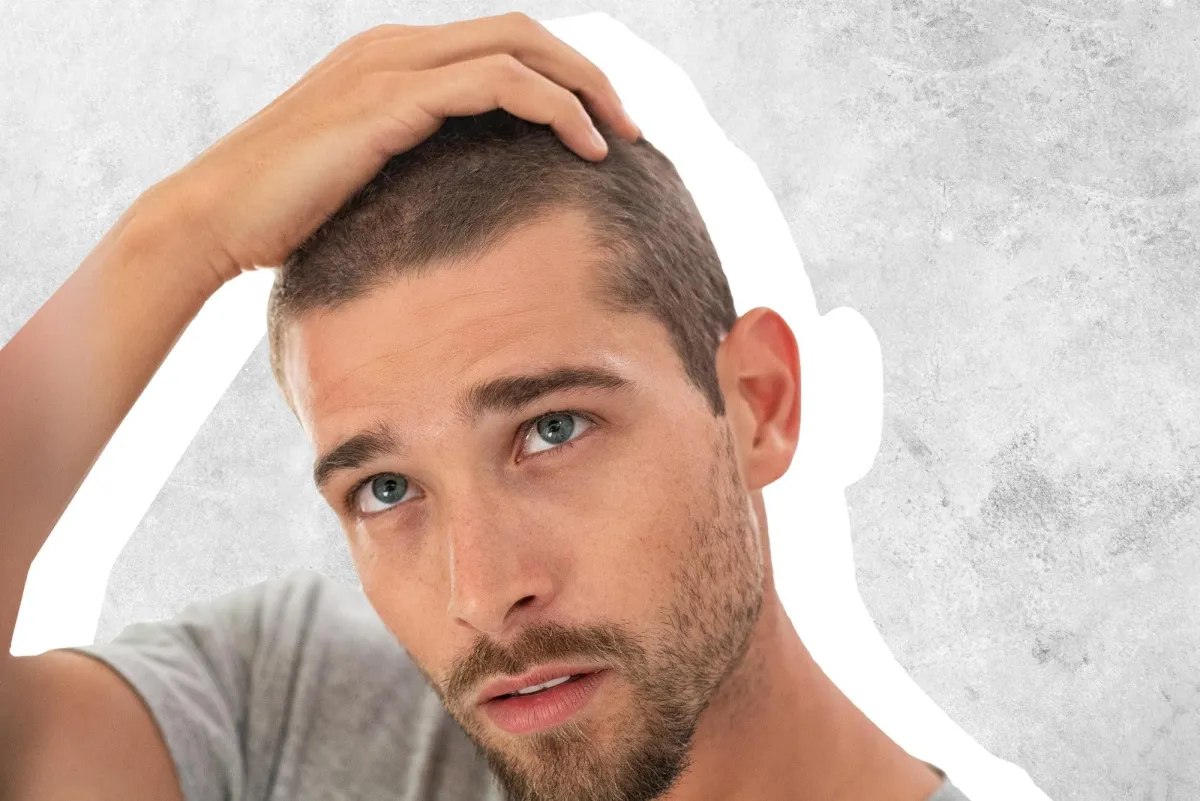
Losing your hair is never a good feeling, most men tend to feel self-conscious about it. Some men decide to completely shave off their heads or constantly wear a hat. One of the most common insecurities men face is hair thinning; for some men, it starts as early as in their 20s. The loss of confidence really starts to affect the way men do their hair and the types of hair cuts they get. Men start to worry about how they will be perceived by friends, family, and colleagues. Hair thinning should not be the cause of self distraughtness, and it should not limit men to have to continuously cover their heads. CADMEN Barbershop has compiled a list of the top 5 best haircuts for men experiencing early hair loss.
The Fringe Haircut: What It Is and How It's Cut
The Fringe Haircut: What It Is and How It's Cut
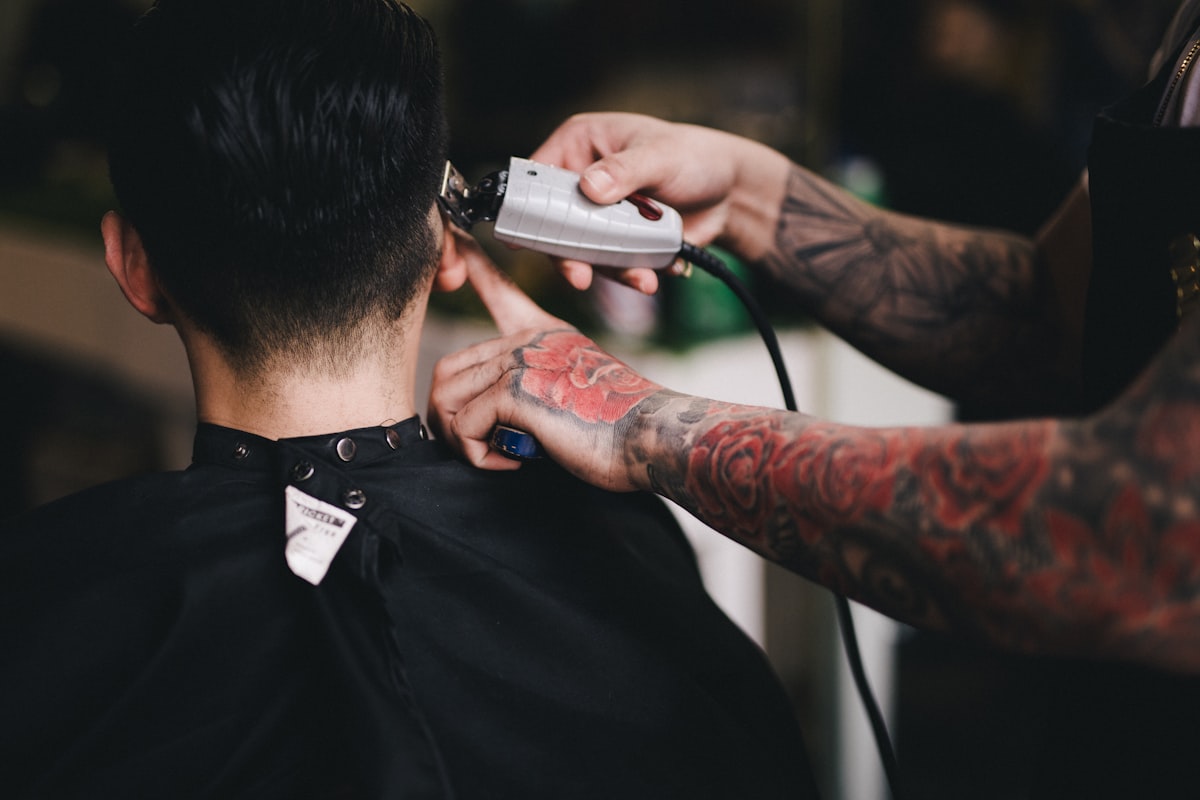
The fringe haircut for men describes any style where the front section of hair falls forward onto or toward the forehead. It covers a wide range of specific styles from the textured French crop fringe to the classic curtain fringe to the heavy European-style bowl fringe. The common element across all variations is intentional forward-directed length at the front that creates a visible fringe.
The Textured Fringe (French Crop Variation)
The most commonly requested fringe variation in North American barbershops. The top section is cut at 2 to 3 inches, with the front directed forward and the ends point-cut for texture. Paired with a fade (low, mid, or high) on the sides, the textured fringe sits slightly on or just above the forehead, moving naturally rather than lying in a defined shape.
Cutting it: the top section is divided into front, middle, and crown segments. The front section is cut with the hair directed forward, establishing the fringe length. The scissor work uses point-cutting extensively to remove weight without reducing length, allowing the front to fall with movement. The sides are faded to the desired height.
The Curtain Fringe (Middle Part)
A fringe parted at the middle, falling in two curtain-like sections on either side of the forehead, framing the face. The curtain fringe requires more length than the textured fringe, typically 3 to 5 inches at the front section, and relies on the natural center part to hold its shape.
This style has had significant popularity since approximately 2020. It suits oval and longer faces well because the parted fringe adds width at the forehead level, balancing longer face shapes. For round faces, the center part can emphasize the circular proportions rather than flattering them.
The Heavy European Fringe
A dense, straight-cut fringe that falls across the forehead at eyebrow level, reminiscent of 1960s and 1970s European fashion. Requires 3 to 4 inches of growth at the front section and is cut with a blunter end, less point-cutting than the textured variation. Creates a more dramatic, fashion-forward look and requires more styling attention to maintain the straight, blunt-edged fall.
Maintenance
The fringe section grows faster relative to other parts of the cut because the length there is longer. Many men get their fringe trimmed between full haircut visits, a standalone fringe trim takes 5 to 10 minutes and keeps the style looking intentional. Without maintenance, the fringe grows to the point where it touches the eyes and loses the deliberate effect of the style.
CADMEN Training
Scissor technique including fringe cutting is covered in CADMEN's hands-on barbering program. academy.cadmen.ca/in-person-training.
Frequently Asked Questions
What is a fringe haircut for men?
A fringe haircut is any men's hairstyle where the front section of hair is cut or directed to fall forward onto or toward the forehead, creating a visible fringe. The term covers a wide range of specific styles: the textured fringe (short, textured front section falling loosely over the forehead, usually paired with a fade on the sides), the curtain fringe (longer front section parted at the middle and falling in two sections on either side of the forehead), the heavy straight fringe (blunt-cut fringe at eyebrow level), and the side-swept fringe (front section directed to one side rather than straight forward). The fringe is defined by the front section's length and direction, not by the side treatment, the same fringe style can be paired with a skin fade, a mid fade, a taper, or a longer disconnected side.
Does a fringe suit all face shapes?
Different fringe styles suit different face shapes. For round faces: a side-swept or asymmetric fringe that directs hair to one side adds asymmetry and a vertical element that flatters. Center-parted curtain fringe on round faces can emphasize the circular proportions. For oval faces: most fringe styles work well. Oval faces have balanced proportions that accept most cuts. For long or narrow faces: a heavy, full fringe across the forehead adds horizontal width, which reduces the elongated proportion, this face shape is one of the few that genuinely benefits from the heaviest, most forward fringe. For square faces: a textured, slightly side-swept fringe softens the angular jaw without adding harsh horizontal emphasis. For heart-shaped faces (wider at the forehead, narrowing to the chin): a center-parted curtain fringe or side-swept fringe reduces the forehead prominence.
How long does hair need to be for a fringe?
The minimum top length for a basic textured fringe is approximately 2 to 2.5 inches at the front section. Below that, the hair is too short to fall forward in a readable fringe and will instead stand up or lay in whatever direction it grows. A curtain fringe needs 3 to 5 inches to part cleanly at the middle and fall convincingly on either side. A heavy European-style fringe needs 3 to 4 inches at the front section for the full fringe length to reach the eyebrows at a typical hairline position. Men growing from a short or closely cropped style typically need 2 to 4 months of growth before the front section is long enough for a basic fringe. The sides can be maintained at their desired short length during the grow-out period.
How do you style a men's fringe?
For a textured fringe: apply a small amount of matte clay or paste to slightly damp hair, work it through the front section, and push the hair forward with the hands or a comb. Air dry or use a dryer on low heat directed forward. The texture does most of the work, heavy product application is counter-productive and weighs the fringe down. For a curtain fringe: apply a light product (cream or light pomade) and part in the middle with a fine-tooth comb. A small amount of blow-dry directed outward from the center part sets the curtain shape. For a heavy straight fringe: apply a medium-hold product and comb straight forward. Blow-dry on medium heat with a comb directing the front section forward and down to set the shape flat.
How often should you trim a men's fringe?
A fringe grows at the same rate as all hair (approximately half an inch per month on average), but because the fringe section starts at a specific designed length, any growth makes it read as longer faster than the rest of the cut. Most men maintaining a fringe haircut need a fringe trim or full haircut every 4 to 6 weeks. The practical signal: when the fringe starts touching the eyes or the lower eyelids, it has grown past its intended length. Some barbershops offer standalone fringe trims (5 to 10 minutes, low cost) for clients who want to maintain the fringe length between full services. Men who grow their hair slowly can often stretch this to 6 to 8 weeks; fast growers may need 3 to 4 weeks between trims to keep the fringe at its correct length.
Related Reading From CADMEN Barber Academy
- Fringe Haircuts for Men: When They Work and How to Style Them
- The Fringe in Men's Haircuts: Types, Lengths, and What Works
- Cutting Afro and Type 4 Hair: Techniques for Barbers Working with Coily Textures
- The Blowout Haircut: What It Is and How to Maintain It
- The Brush Up Haircut: What It Is and How to Style It
- The Caesar Haircut: What Makes It a Caesar and How to Cut It Cleanly
Want to learn to cut a textured fringe yourself? CADMEN Barber Academy teaches cutting hands-on, with an educator beside you. See the barber academy in Mississauga or view in-person classes and send an enquiry.
Watch the free Barbering for Beginners playlist on YouTube.

5 Best Haircuts for Men with
Early Hair Thinning
Losing your hair is never a good feeling, most men tend to feel self-conscious about it. Some men decide to completely shave off their heads or constantly wear a hat. One of the most common insecurities men face is hair thinning; for some men, it starts as early as in their 20s. The loss of confidence really starts to affect the way men do their hair and the types of hair cuts they get. Men start to worry about how they will be perceived by friends, family, and colleagues. Hair thinning should not be the cause of self distraughtness, and it should not limit men to have to continuously cover their heads. CADMEN Barbershop has compiled a list of the top 5 best haircuts for men experiencing early hair loss.


For any request, please contact us at info@cadmen.ca