
Barber Tips & Tricks
Follow us for the latest barber techniques and tips
Barber Tips & Tricks
Follow us for the latest barber techniques and tips
Top 7 Reasons Why Your Clients
Aren't Returning
Stay Ahead in the Barbering Game: Nurturing
Lifelong Clientele
You might have come across the saying “give a client a good cut at a reasonable price, and they'll be yours for life.” Unfortunately in reality this is not always the case. That’s where we come in! Check out some of the reasons why your clients may not be returning, whether they were long-term customers or a first-time appointment, below.

Top 7 Reasons Why Your Clients
Aren't Returning
Stay Ahead in the Barbering Game: Nurturing
Lifelong Clientele
You might have come across the saying “give a client a good cut at a reasonable price, and they'll be yours for life.” Unfortunately in reality this is not always the case. That’s where we come in! Check out some of the reasons why your clients may not be returning, whether they were long-term customers or a first-time appointment, below.
Career in Mobile Barbering: Key
Things You Need to Know about
While most barbers work in physical barbershops or hair salons, there are a growing number of barbers who work on-call. What does it mean to be a mobile barber? What are their primary responsibilities? Where to find them? In this blog, we will explain some key terms you should know about mobile barbering and how you can start a new career in it.

Career in Mobile Barbering: Key
Things You Need to Know about
While most barbers work in physical barbershops or hair salons, there are a growing number of barbers who work on-call. What does it mean to be a mobile barber? What are their primary responsibilities? Where to find them? In this blog, we will explain some key terms you should know about mobile barbering and how you can start a new career in it.
Top 4 Ways for Barbers to
Promote Themselves
Marketing is key. Knowing how to market yourself as a barber can be the difference between having 5 to 20 clients a day. If you are interested in boosting the number of your customers and furthering your advertising skills, read the list below with four ways to promote yourself as a barber.

Top 4 Ways for Barbers to
Promote Themselves
Marketing is key. Knowing how to market yourself as a barber can be the difference between having 5 to 20 clients a day. If you are interested in boosting the number of your customers and furthering your advertising skills, read the list below with four ways to promote yourself as a barber.
5 Tips for Social Media Content
Creating as a Barber
It is next to impossible to find someone who is not on social media today. More than just a tool for connection, social media is key helping barbers market themselves and promote their names and skills. If you want to up your barber game quickly, here are five tips on how to promote content online that you don't want to miss out on.

5 Tips for Social Media Content
Creating as a Barber
It is next to impossible to find someone who is not on social media today. More than just a tool for connection, social media is key helping barbers market themselves and promote their names and skills. If you want to up your barber game quickly, here are five tips on how to promote content online that you don't want to miss out on.
5 Best Haircuts for Men with
Early Hair Thinning
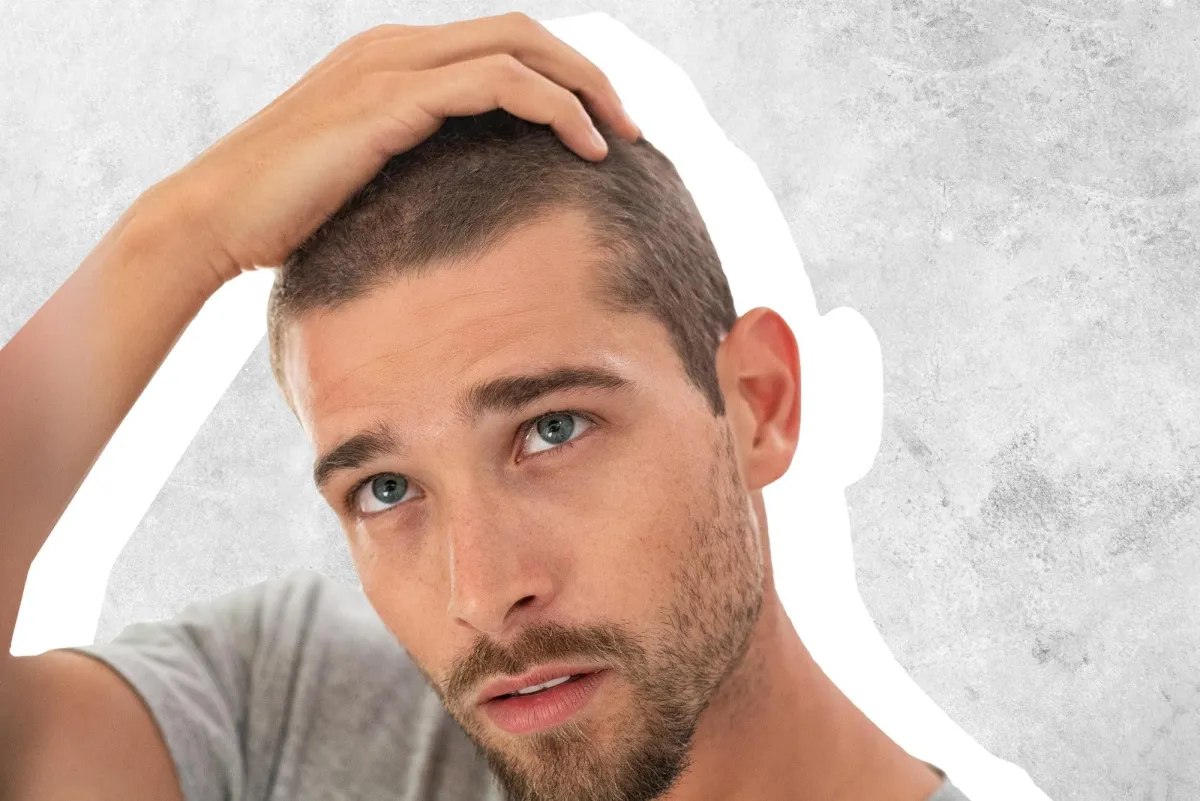
Losing your hair is never a good feeling, most men tend to feel self-conscious about it. Some men decide to completely shave off their heads or constantly wear a hat. One of the most common insecurities men face is hair thinning; for some men, it starts as early as in their 20s. The loss of confidence really starts to affect the way men do their hair and the types of hair cuts they get. Men start to worry about how they will be perceived by friends, family, and colleagues. Hair thinning should not be the cause of self distraughtness, and it should not limit men to have to continuously cover their heads. CADMEN Barbershop has compiled a list of the top 5 best haircuts for men experiencing early hair loss.
How to Blow Dry Men's Hair at the Barbershop
How to Blow Dry Men's Hair at the Barbershop
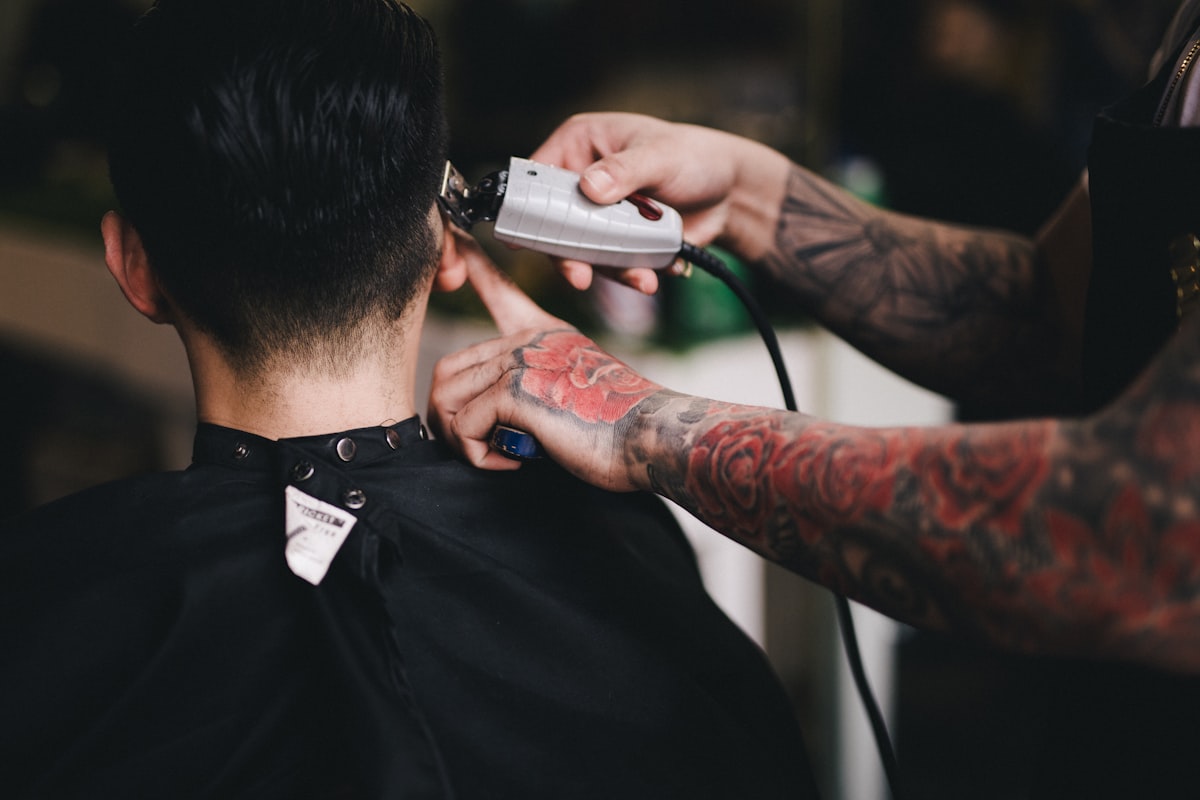
The blow dry is one of the most meaningful service add-ons in a barbershop. A client who receives a well-executed blow dry at the end of a haircut leaves looking noticeably better than a client with the same cut who air-dried. The volume, shape, and definition a blow dry adds are not replicable with product alone, they require heat and tension to set into the hair.
Despite this, many barbershops skip the blow dry or treat it as a quick rough-dry that gets hair out of the way before styling. The barbers who deliver a proper blow dry differentiate their service and command higher prices.
Tools
- Hair dryer: 1800W minimum for efficient heat output. Ionic dryers reduce frizz and drying time. A concentrator nozzle is essential, it focuses the airflow for directional styling.
- Round brush: for volume and curl. Size depends on the hair length, larger diameter for longer hair, smaller diameter for shorter styles. A paddle brush is used for straightening and smoothing longer styles.
- Comb: for sectioning and initial rough dry pass.
Step 1: Rough Dry
Start with a rough dry before any shaping. Use the dryer on medium heat without the concentrator nozzle (or with the diffuser) to remove the excess moisture from the hair quickly. Work with the fingers, pushing the hair in the direction of the final style. Get the hair to approximately 70% dry before moving to the styling pass. Blow-drying from fully wet to styled in one pass takes significantly longer and tends to produce less definition than the two-stage approach.
Step 2: Directional Styling Pass
Attach the concentrator nozzle. Work in sections from the lower back of the head upward. For each section:
- Hold the brush under the section, pulling the hair in the desired direction with tension
- Direct the dryer at the brush, moving from roots to ends
- The heat and tension together set the direction and shape into the section
- Move to the next section; allow the previous to cool before releasing (the shape sets as the hair cools)
For volume on the top: use the round brush to lift the roots upward and backward while directing the dryer at the root zone. The root lift from this technique is the difference between flat, product-dependent styling and genuinely voluminous hair.
For a forward-falling style (textured crop or fringe): direct the hair forward toward the face during the blow dry pass. The shape will hold this direction after styling.
Step 3: Finish and Product
When the hair is fully dry and shaped, apply styling product. A product applied to blow-dried hair goes further, distributes more evenly, and produces more definition than the same product applied to air-dried or damp hair. The blow dry is the foundation; the product is the finish.
Blow Dry as a Service Add-On
Charging separately for a blow dry style ($10 to $20 in most Canadian markets) increases average ticket value on longer-hair services. Clients with medium-to-long hair, textured cuts, or styles that benefit from directional volume are the best candidates. Introduce it by doing it once as part of the standard service, when the client sees the result, they often ask for it every time.
CADMEN Training
Blow dry technique, styling methods, and the full service finishing range are covered in the CADMEN hands-on program. academy.cadmen.ca/in-person-training.
Frequently Asked Questions
Do barbers blow dry hair?
Yes, many do, particularly for medium and longer haircuts where the blow dry is necessary to achieve the proper finish, and in upmarket barbershops where a complete styled finish is standard. In barbershops that focus heavily on short fade-and-lineup services, the blow dry is less common because short fade cuts air-dry quickly and the final look is not significantly affected by blow drying technique. The blow dry is most impactful on cuts with 2+ inches on top: pompadours, textured crops, side parts, and any style where shape and volume are part of the result. Barbers who offer it as a standard or optional service step differentiate their quality level from barbershops that skip it.
How do you add volume when blow drying men's hair?
Root lift is the key technique. Using a round brush positioned under a section of hair at the roots and directing the dryer heat at the root zone while pulling the brush upward and backward stretches the root area against the direction of natural fall, setting volume into the roots as the hair cools under tension. This technique is the same principle used in women's salon blowouts. For very short men's hair (under 2 inches on top), a finger-lifting technique, pushing the roots upward with the fingers while directing the dryer heat at the scalp zone, achieves similar root volume without the round brush.
Is blow drying bad for hair?
Frequent blow drying on high heat without heat protection can cause cumulative damage to the hair shaft over time, particularly for fine or chemically treated hair. For the average male client at the barbershop, a professional blow dry with the dryer at medium-to-high heat for the duration of one service appointment is not a significant concern. The damage risk is primarily to clients who blow dry daily at home on high heat without heat protectant. A barber blow drying after a haircut once every 2 to 6 weeks is negligible in terms of cumulative heat exposure. For clients with very fine or fragile hair, medium heat and keeping the dryer moving (not stationary on one section) reduces any risk.
What dryer do professional barbers use?
Professional barbers commonly use ionic hair dryers from brands including Parlux, Babyliss Pro, and Wahl. Ionic technology produces negative ions that break down water molecules faster and reduce the positive-charge static that causes frizz, resulting in faster drying time and smoother results. 1800W to 2200W is the professional-grade power range. Consumer-grade dryers typically run 1200W to 1500W, which is notably slower for professional service use. For barbershop service, having a dedicated professional dryer with a concentrator nozzle is standard equipment for any barber who offers finishing as part of their service menu.
How long does a blow dry take in a barbershop?
10 to 20 minutes as a standalone finishing step for medium-length men's hair. Shorter styles (under 2 inches on top) rough-dry quickly and can be finished in 5 to 10 minutes. Longer styles or styles requiring significant directional shaping take 15 to 25 minutes. As part of a full haircut appointment, the blow dry adds 10 to 15 minutes to the total service time. Barbershops that charge separately for a blow dry style typically price it at $10 to $20, which compensates for the additional service time and positions the service as a premium finish rather than an assumed inclusion.
Related Reading From CADMEN Barber Academy
- Men's Hair Care for Dry and Damaged Hair
- Dry Shampoo for Men: What It Actually Does and When to Use It
- Dry Scalp in Men: What Causes It and What Helps
- Why How You Dry Your Hair Matters: Towel-Drying Without Causing Damage
- Wet Cut vs. Dry Cut: What Men Should Know
- Men's Dry Shampoo: How to Use It Without Making Things Worse

5 Best Haircuts for Men with
Early Hair Thinning
Losing your hair is never a good feeling, most men tend to feel self-conscious about it. Some men decide to completely shave off their heads or constantly wear a hat. One of the most common insecurities men face is hair thinning; for some men, it starts as early as in their 20s. The loss of confidence really starts to affect the way men do their hair and the types of hair cuts they get. Men start to worry about how they will be perceived by friends, family, and colleagues. Hair thinning should not be the cause of self distraughtness, and it should not limit men to have to continuously cover their heads. CADMEN Barbershop has compiled a list of the top 5 best haircuts for men experiencing early hair loss.


For any request, please contact us at info@cadmen.ca