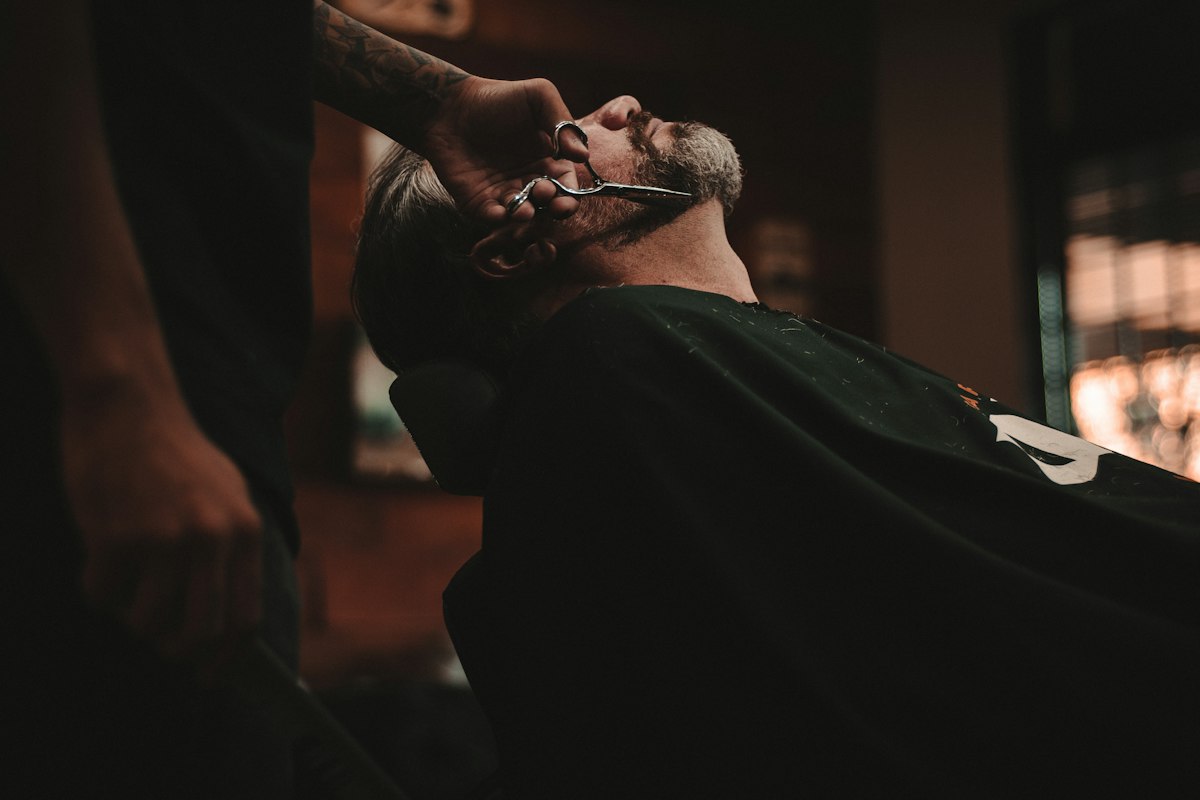
Skin Fade: What It Is, How It's Cut, and Why It Remains One of the Most Requested Styles
Skin Fade: What It Is, How It's Cut, and Why It Remains One of the Most Requested Styles
The skin fade has been the dominant men's haircut style in North America for over a decade. The demand has not slowed. It is routinely the first cut a new barber learns and consistently the hardest one to do well. Clean skin fades book appointments. Rough ones lose clients.
What a Skin Fade Actually Is
A skin fade graduates the hair on the sides and back from the client's natural length at the top of the sides down to bare skin at the lowest zone. The defining characteristic is the seamlessness of the transition: no visible lines between guard lengths, just a smooth visual gradient from full hair to skin.
The skin fade is also called a bald fade. Both terms describe the same cut. "Bald" refers to the fact that the lowest zone reaches actual skin rather than leaving a short but visible stubble layer (as a taper fade does).
Skin fade variations by level
- Low skin fade: the graduation starts just above the natural hairline and ear. Most of the side length is preserved above the fade. The skin appears only in the bottom quarter of the sides.
- Mid skin fade: the graduation starts at approximately the temple midpoint. A larger portion of the side is included in the fade zone. This is the most requested level in most barbershops.
- High skin fade: the graduation starts near the top of the sides. Almost the entire side is faded. Only the top section retains full length. Creates the most dramatic contrast.
The level is a client preference decision. Most clients who ask for "a fade" without specifying want a mid skin fade based on what they have seen on social media and on other clients in the shop. Always confirm before cutting.
Technical Execution
The zone structure
A skin fade is cut in defined zones from the bottom of the head upward. Each zone transitions seamlessly into the next through a blending pass before moving to the next guard length.
- Zone 1 (skin): balding clipper or zero guard. Covers the lowest section of the sides, typically the bottom inch to inch and a half above the hairline. The clipper runs flat against the skin with consistent pressure.
- Zone 2 (transition): half guard or 0.5 guard. Overlaps with zone 1 and blends the edge of the skin zone into a slightly longer length. The blending motion at the top of this zone is a flicking outward motion that feathers the line.
- Zone 3 and beyond: 1 guard, 1.5 guard, 2 guard, continuing upward to the natural body of the cut. Each zone overlaps the one below it. Each transition is blended before moving to the next length.
The quality of the skin fade is determined entirely by how well each transition is blended. Visible lines between guard lengths are the most common technical failure in barbers learning the cut. A visible line means one of two things: the blending pass at that transition was insufficient, or the clipper angle changed inconsistently during the pass.
The blending technique
Blending between guard lengths uses a consistent outward flick at the top of each zone. The clipper is held at a low angle at the bottom of the zone, then gradually rotated outward as it approaches the top, creating a feathered edge that connects smoothly to the longer length above it. The speed of the flick determines how gradual or abrupt the transition appears.
In denser or coarser hair textures, more passes through each transition are required to blend fully. Finer hair textures blend more easily but show any inconsistency in clipper pressure more clearly because the hair is thinner and more transparent.
Detail and perimeter work
Once the fade is blended to satisfaction, the perimeter (neckline, behind ears, temple edges) is cleaned with a detailing trimmer or the corner edge of the balding clipper used freehand. The shape of the neckline (squared, rounded, or tapered) is a client preference. The temple lines above the ears require particular care on skin fades because the recession and curve of the head in that area create a natural reference point. An uneven temple line on a skin fade is immediately visible from the front.
What Separates a Clean Skin Fade from a Rough One
Experienced clients can identify a poor skin fade in seconds. The signals:
- Visible line or "shelf" where two guard lengths meet without proper blending
- Inconsistent width of the skin zone on the two sides of the head
- Uneven perimeter: one side of the neckline shaped differently than the other
- Choppy graduation: the transition looks like steps rather than a gradient
All of these problems have the same root cause: insufficient blending passes and inconsistent clipper pressure. The correction is not a different technique. It is more deliberate, more thorough execution of the standard technique with better attention to symmetry at each step.
Building Skin Fade Technique at CADMEN
CADMEN offers a two-day fade course in Mississauga with demonstrations, supervised practice on live models and educator feedback. Small-group classes have up to three students, and one-on-one training is also available. Confirm the skill you want to practise with our team before booking. View current details.
Investment: $1,750 + HST (small group) or $1,950 + HST (1-on-1). $300 deposit. Book at academy.cadmen.ca/in-person-training.
CADMEN Barber Academy is a private training institution in Mississauga, Ontario. It does not provide Skilled Trades Ontario apprenticeship hours or Certificate of Qualification pathways.
Frequently Asked Questions
What is a skin fade haircut?
A skin fade graduates the hair from full length at the top down to bare skin at the sides and back. The graduation is seamless with no visible lines between zones. The level (low, mid, or high) describes where on the head the graduation begins. A mid skin fade is the most commonly requested level in most barbershops.
How do barbers execute a skin fade?
Using a zone-based approach: balding clipper pass at the lowest zone, then guard sequence upward (half, 1, 1.5, 2 guard), blending each transition with an outward flick before moving to the next length. The quality of the fade is determined by how thoroughly each guard transition is blended. Visible lines between zones indicate insufficient blending passes.
How often do you need to get a skin fade touched up?
Most skin fade clients return every 2 to 3 weeks to maintain the look. The cut is sharpest in the first 1 to 2 weeks then grows out noticeably. Clients who want the fresh-cut appearance more consistently sometimes return weekly or biweekly for a shape-up and fade refresh.
Want to learn to cut a skin fade yourself? CADMEN Barber Academy teaches cutting hands-on, with an educator beside you. See the barber academy in Mississauga or view in-person classes and send an enquiry.
Learn this fade step by step in our free Fade Tutorials playlist on YouTube.
