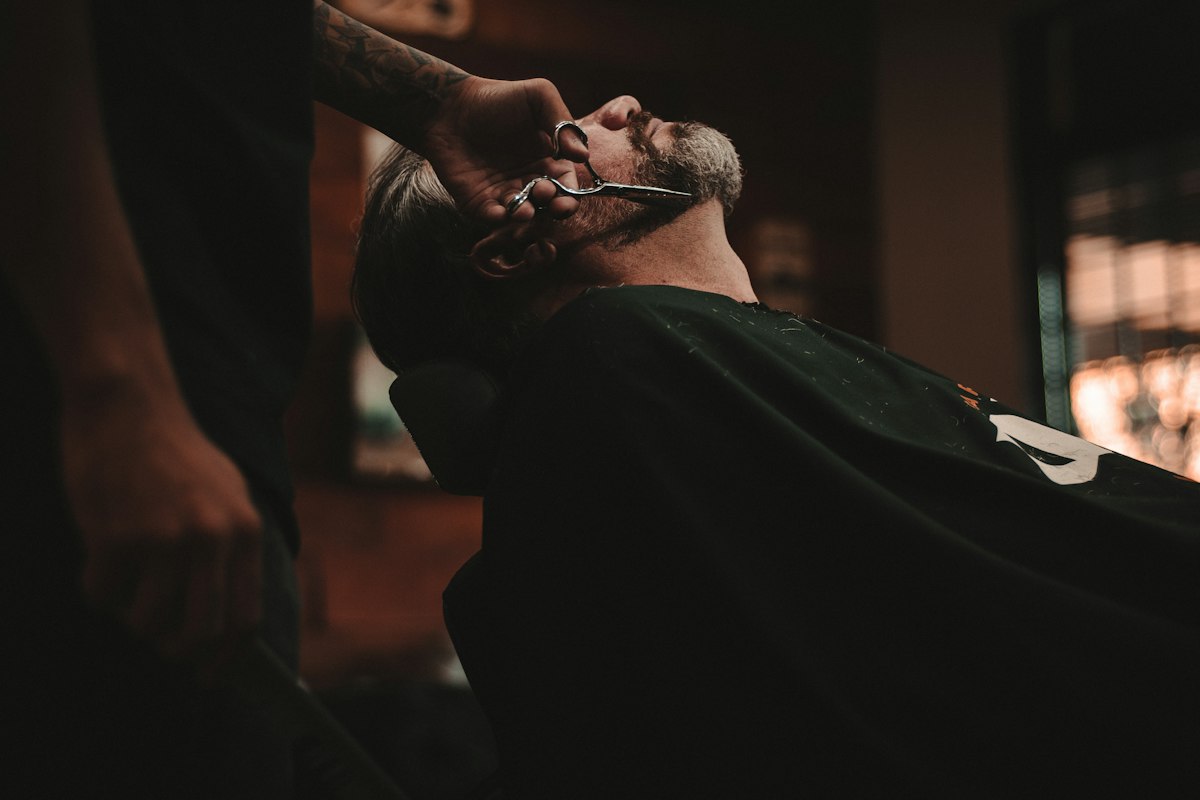
How to Do a Skin Fade: The Technique Behind a Clean Bald Fade
How to Do a Skin Fade: The Technique Behind a Clean Bald Fade
A skin fade is a zero-length fade that pushes all the way to the skin at the base. Done correctly, there are no visible lines, no patchy sections, and the transition from skin to length above it reads as smooth. Done incorrectly, there are bands, lines, or an uneven boundary between the zero section and the first length above it.
Here is the full technique sequence and where most barbers run into problems.
Tools Required
- Cordless clippers with a full guard set
- A zero-gapped trimmer (blade adjusted flush to the skin)
- A T-blade outliner for edge definition
- Optional: foil shaver for clean skin finish below the neckline
The zero-gap trimmer is the tool that produces the actual skin appearance. Standard trimmers sitting at factory gap will not cut close enough to give the bald look at the base. If your skin fades are leaving a slight shadow at the base rather than going fully to skin, the trimmer gap is the likely cause.
Guard Progression for a Skin Fade
The principle of any fade is a gradual transition. Skin fades start that transition from zero. A standard guard progression for a low-to-mid skin fade:
- Zero-gap trimmer: establishes the skin line at the base
- Guard 0.5 or closed lever (no guard): first length above the skin line
- Guard 1: blending above the 0.5 zone
- Guard 1.5: midpoint of the transition
- Guard 2: upper boundary of the fade zone, where it blends into the longer hair above
The exact guards depend on how long the hair is above the fade and how high the fade rides on the head. Higher fades use the same progression pushed further up. The principle is the same: each guard level blends with the one above and below it.
The Technique Sequence
Step 1: Establish the skin line
Use the zero-gap trimmer to define the lowest boundary of the fade. Work around the entire perimeter. The neckline, the sides, and above the ear. This line becomes the anchor point for everything above it.
Take your time here. The skin line is the most visible part of the fade. A crooked or inconsistent skin line reads immediately on the finished cut. Use a steady hand and keep the trimmer flat against the skin.
Step 2: Build the transition with guards
Starting with guard 0.5 or a closed lever on the clipper (depending on the clipper model), work a fading motion upward from just above the skin line. The fading motion is a scooping arc: press the clipper to the skin at the base of the zone, arc away from the head as you move upward, and lift off cleanly at the top of the zone.
The height at which you lift off determines the top of that guard's zone. Consistency of the lift point on both sides of the head is what creates symmetry. Most symmetry problems in fades come from lifting at inconsistent heights, not from guard selection errors.
Work through guards 1, 1.5, and 2, each zone overlapping the previous one to create a continuous blend. The overlap is the key: each guard should reach into the zone below it slightly, not just sit above it.
Step 3: Check and refine the transition
After working through the full guard progression, check the transition zone with a hand mirror and comb. Common issues at this step:
- A visible line at any guard transition point: soften with a half-guard or the clipper lever adjustment
- An asymmetric zone height on left vs. right: re-work the lower side up to match
- A gap between the skin line and the start of the first guard zone: bring the trimmer work up slightly or bring the guard work down to meet it
Step 4: Clean the skin line
After the blend is complete, return to the T-blade outliner to clean and sharpen the neckline, hairline, and sideburns. The skin fade creates the base; the outliner defines the perimeter. The cleanliness of the perimeter is what makes the fade read as professional rather than rough.
Foil shaver work below the neckline (on the neck skin) is optional but produces a clean skin appearance below the cut line that many clients prefer and that photographs well.
Where Most Skin Fades Go Wrong
The four most common problems in skin fades and their causes:
- Visible line between skin and first guard length: the zero-gap trimmer did not go high enough or the first guard did not overlap the trimmer zone. Bring them closer together.
- Patchy section mid-fade: the lift-off point was inconsistent across passes. Re-work the patchy section with a half-guard or the lever adjustment to smooth it.
- Asymmetric fade height: the left and right zones started or ended at different heights. Check with the client facing straight ahead, identify which side is higher, and bring it down to match or bring the lower side up.
- Skin line appears gray or shadowy rather than clean: the trimmer is not zero-gapped. Adjust the blade before the next cut.
Building Skin Fade Skill Through Corrected Reps
The sequence above is the mechanics. The skill comes from executing the mechanics on dozens of different heads: different hair densities, different growth patterns, different head shapes. Each variable changes the way the fade reads and the micro-adjustments required.
CADMEN offers a two-day fade course in Mississauga with demonstrations, supervised practice on live models and educator feedback. Small-group classes have up to three students, and one-on-one training is also available. Confirm the skill you want to practise with our team before booking. View current details.
$1,750 + HST (small group) or $1,950 + HST (1-on-1). Book at academy.cadmen.ca/in-person-training.
CADMEN Barber Academy is a private training institution in Mississauga, Ontario. It does not provide Skilled Trades Ontario apprenticeship hours or Certificate of Qualification pathways.
Frequently Asked Questions
What is the difference between a skin fade and a zero fade?
They refer to the same thing. A skin fade and a zero fade (also called a bald fade) are cuts where the hair at the base transitions all the way down to exposed skin with no visible length at the lowest point.
What guard do you start with for a skin fade?
The skin itself, using a zero-gapped trimmer to establish the base. Then guard 0.5 or a closed clipper lever as the first length above the skin, followed by guards 1, 1.5, and 2 as the transition builds upward into the hair above.
How do you make a skin fade look smooth?
Consistency of the clipper lift-off point on every pass, half-guard overlap between each guard transition, and returning the zero-gap trimmer to push the skin line into the lowest guard zone where they meet. Lines in a skin fade almost always come from one of these three areas.
How do you zero-gap a trimmer?
Loosen the blade screw slightly, slide the cutting blade down until the teeth are flush with or just below the guide comb teeth, then retighten. This allows the blade to cut flush to the skin. Different trimmer models have slightly different blade adjustment mechanisms. The goal is the same: teeth aligned or cutting blade slightly below the guide teeth.
Can a skin fade work on all hair types?
Yes, with technique adjustments for each. Curly hair requires fading dry (to avoid shrinkage read errors) and longer blending passes. Thicker or coarser hair may need more passes per zone. The guard progression and technique sequence work across hair types; the execution variables change with each client.
Want to learn to cut a skin fade yourself? CADMEN Barber Academy teaches cutting hands-on, with an educator beside you. See the barber academy in Mississauga or view in-person classes and send an enquiry.
Learn this fade step by step in our free Fade Tutorials playlist on YouTube.
