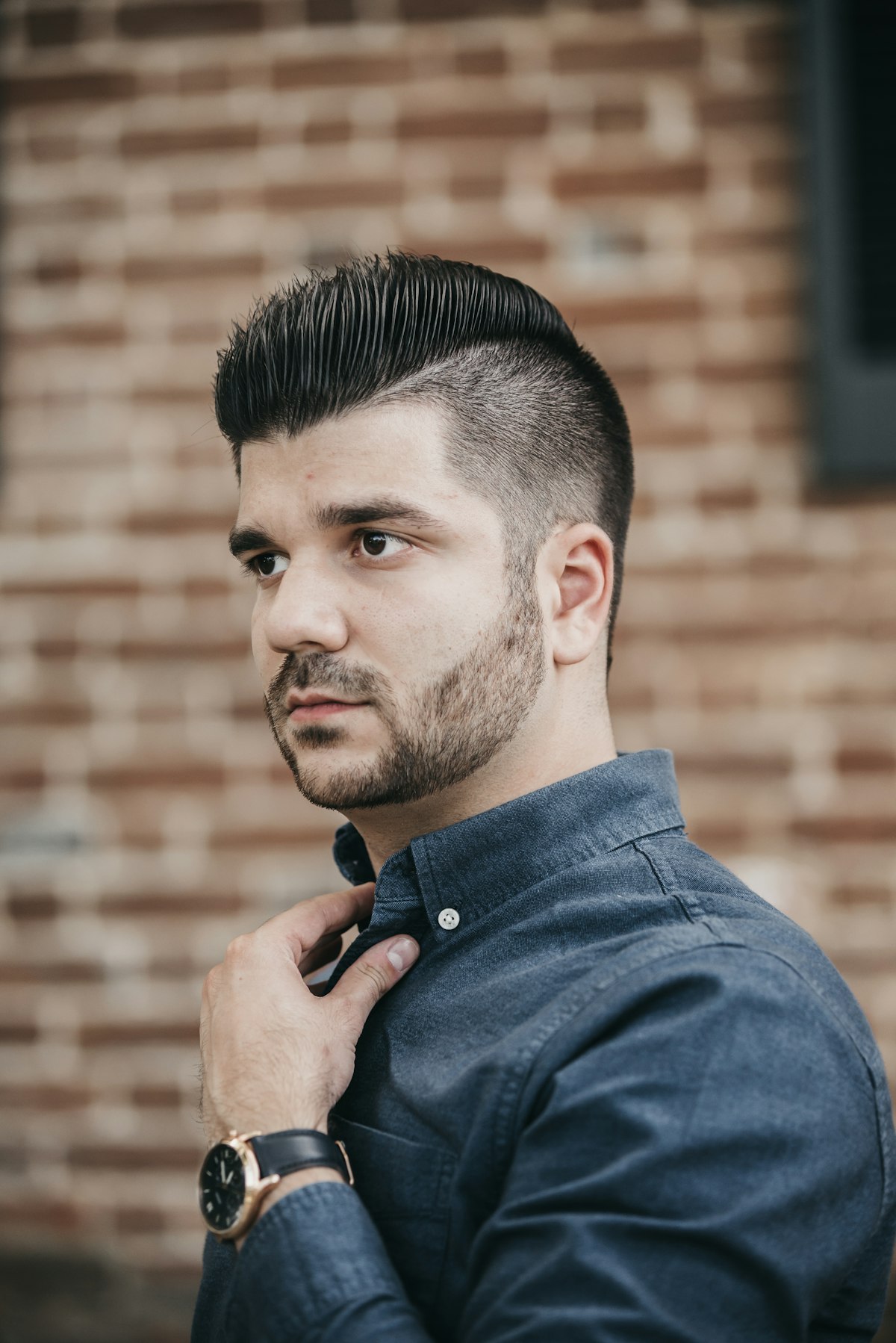
Slicked Back Hair for Men: The Cut, the Product, and the Style
Slicked Back Hair for Men: The Cut, the Product, and the Style
Slicked back hair is a men's style where the hair on top is swept backward from the forehead in a smooth, controlled motion, exposing the forehead and creating a clean line from the hairline backward. The style can range from a high-shine, perfectly smooth finish to a more matte, textured interpretation. The sides are typically shorter, either faded or tapered, to create contrast with the swept-back top.
What the Haircut Requires
Slicked back hair needs enough length on top to be swept and held in the backward direction. A minimum of about 2 to 3 inches on top is typically needed for the hair to stay in place when swept back. With less length, the hair does not have enough weight and fall to hold the backward direction without significant product. The classic slicked back look uses 3 to 4 inches or more on top. The sides are cut shorter, typically a low to mid taper or fade, to provide the contrast that makes the swept top stand out.
Product Determines the Finish
High-shine, smooth finish: water-based pomade. Matte, textured slick-back: matte clay or pomade. Natural, flexible hold: hair cream or balm. Strong hold that locks the hair in place all day: strong-hold pomade or gel. The product choice changes the aesthetic significantly, the same haircut can look 1940s formal with a high-shine pomade or contemporary and casual with a matte clay.
CADMEN Training
Classic and contemporary styling techniques are part of CADMEN's professional barbering curriculum. academy.cadmen.ca/in-person-training.
Frequently Asked Questions
How do I style hair slicked back?
Styling hair slicked back at home is a straightforward process once you understand the product and technique. The step-by-step: start with damp, towel-dried hair. Hair is most malleable when slightly wet, and product distributes more evenly on damp hair than completely dry hair. For the cleanest slicked back result, blow-dry the hair backward before applying product, the blow-dryer directed from the front hairline backward while using a comb or your fingers to sweep the hair backward. This sets the general direction before any product is applied and makes the final styling easier. Choose product based on the finish you want (matte clay for contemporary, pomade for traditional, cream for flexible hold). Take a small amount, less than you think you need. Work it between your palms to warm it and distribute it, then apply from the hairline backward. Run both hands from front to back through the hair, pressing the hair flat against the head as you go. Use a comb for a clean, defined look. A fine-toothed comb pulled from the front hairline straight back creates the most polished version. A wide-toothed comb or just fingers creates a more casual, slightly textured version. Finish details: some men define the sides with a brush or comb to press the side sections smoothly against the head, rather than leaving them textured. For the classic fully slicked look, the sides and back are also swept back and pressed flat. Optional: a light-hold spray over the finished style adds longevity, particularly in humid conditions. What makes it hold through the day: the product choice and the blow-drying step before styling are the two factors that determine how long slicked back hair stays in position. Product alone without the blow-dry direction tends to result in the hair partially reverting to its natural direction within a few hours. Blow-dry plus medium-hold product creates a combination that holds reliably through most of the day.
Does slicked back hair work for all hair types?
Slicked back hair works with most hair types, but the execution and product requirements vary significantly depending on texture, thickness, and natural growth pattern. Straight hair: the easiest texture to slick back. Straight hair offers minimal resistance to being swept in one direction and holds the slicked back position with moderate amounts of product. The full range of finishes (high-shine pomade to matte clay) works well on straight hair. Wavy hair: workable for slicked back styles, but requires more product to control the wave and keep the hair in the backward direction. A stronger-hold product or a blow-dry-before-styling approach is more important for wavy hair. The natural wave can actually add body to the slicked back style, and some men with wavy hair find the "wave slick" or "wavy slicked back" look more distinctive than a perfectly smooth version. Curly hair: more challenging. Curly hair is fighting its natural pattern when swept back, which requires significant product and effort. Some men with curly hair use a gel or strong-hold pomade to slick the hair back for formal occasions with good results. For everyday styling, the effort required is higher than for straight or wavy hair. A blow-out (straightening the hair with heat before styling) is sometimes used to temporarily straighten the hair before slicking back, but this adds time and requires regular heat application. Thick hair: works well overall but may require more product than fine hair to fully control. The weight of thick hair can actually help it stay in the backward direction once product is applied. Fine hair: can be slicked back effectively, but the thin strands may lie more flatly and with less volume than thick hair. For fine hair, a light-hold product that adds some lift at the roots before sweeping back can give more body to the finished look. Very fine hair on a thinning scalp may show the scalp through the slicked back position, which is worth considering before committing to the style.
What face shapes suit slicked back hair?
Slicked back hair exposes the full forehead and creates a clean, swept silhouette with volume primarily at the top and back of the head. This profile interacts differently with different face shapes. Face shapes where slicked back hair works particularly well: oval face shapes. The slicked back style is compatible with oval faces across a wide range of variations. The exposed forehead and backward-swept profile suit the balanced proportions of an oval face. Square face shapes. Slicked back hair with short, clean sides creates a strong, angular profile that complements the jawline. The clean lines of a slicked back style tend to look intentional and confident on square face shapes. Diamond face shapes. The backward sweep adds height and draws the eye upward, and combined with close sides, reduces the visual width at the cheekbones that defines a diamond face. Rectangular face shapes. Longer rectangular faces are less well suited to slicked back styles in their classic form, sweeping the hair back and up adds height to an already-longer face shape. For rectangular faces, a version with more volume at the sides (less close-cut fade) and less height on top reduces the elongation effect. Round face shapes. The standard slicked back style with close sides and height at the top is actually one of the more flattering approaches for round faces, as the vertical visual direction from height on top adds the perception of length that balances roundness. The key is keeping the sides close to avoid adding width. Heart face shapes. The exposed forehead of a slicked back style draws attention to the widest part of a heart face. For some men with heart face shapes, this is fine. For those who want to reduce the visual width of the forehead, a style with some fringe or forward fall is more flattering. The broader point: slicked back styles have enough variation (volume, height, product finish, side length) that most face shapes can find a version that works. The classic version with close sides suits the widest range of face shapes.
Related Reading From CADMEN Barber Academy
- The Slicked-Back Hairstyle: How to Wear It and What to Use
- How to Slick Back Men's Hair: Technique and Product Guide
- The Slick Back for Men: Products, Technique, and How to Make It Last
- Slicked Back Undercut for Men: Style Guide and Product Tips
- The Slicked Back Hairstyle for Men: How to Execute It Correctly
- 7 Reasons Why You’re Clients Aren’t Coming Back
