What's on a Barbershop Service Menu: A Plain-Language Guide
What's on a Barbershop Service Menu: A Plain-Language Guide
Barbershop service menus can be confusing if you are not already familiar with the terminology. "Executive taper," "bald fade," "lineup," "hot lather shave" — these terms describe specific services that clients who have been going to the same shop for years understand without thinking. For everyone else, decoding the menu is the first step to getting what you actually want.
The Core Haircut Services
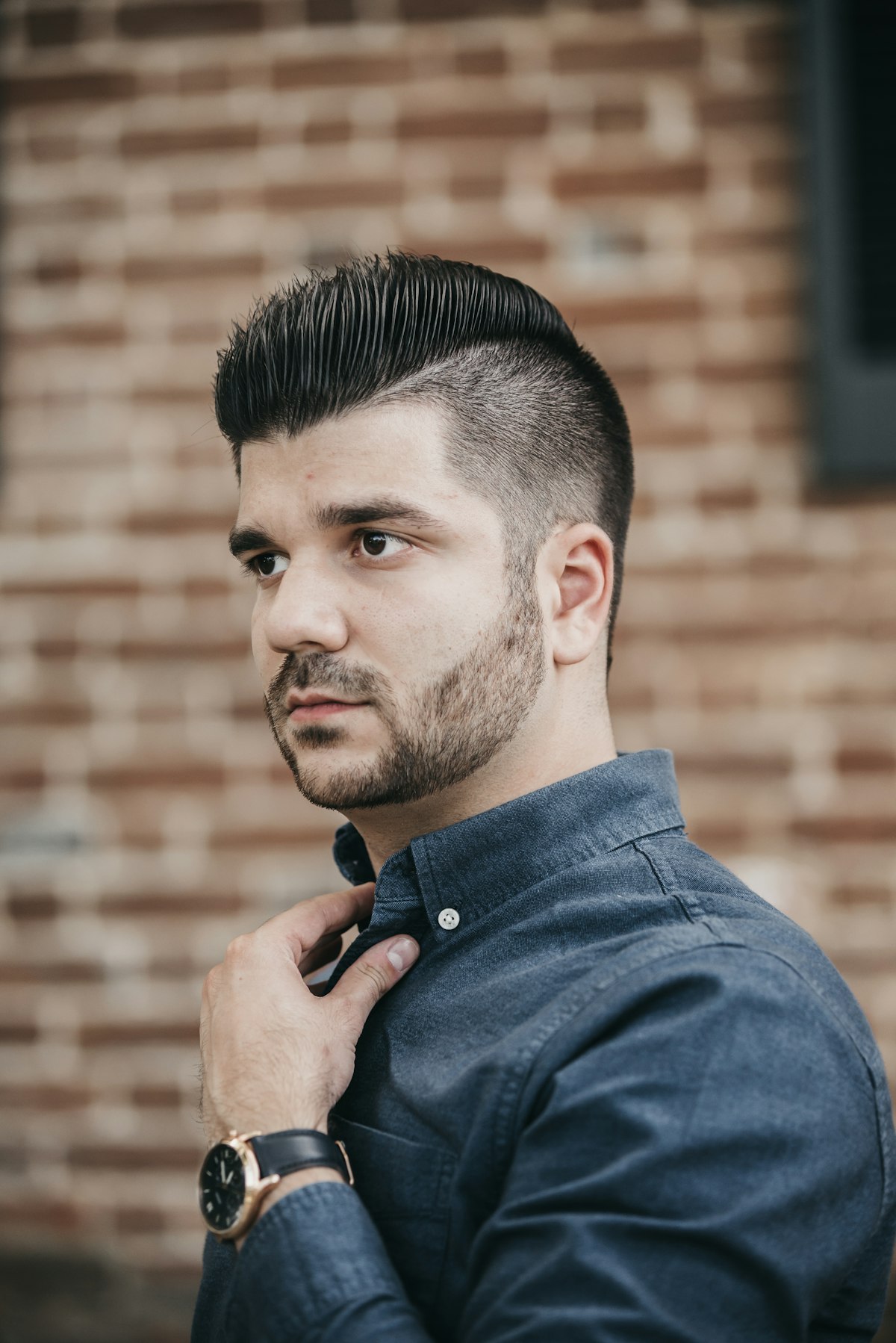
A "regular" or "classic" cut typically means a taper on the sides (graduated shorter toward the bottom, not fully faded) with the top cut to a clean length. An "executive" cut is a clean, professional version of the regular — typically with a defined part and a conservative profile. A "fade" means the sides graduate from a very short or skin-level bottom to longer hair above, blending without a visible line. The word before "fade" describes how high the fade goes: "low" means it transitions near the ears, "mid" means at or above the ear, "high" means above the temple. A "taper" describes a more gradual graduation from shorter to longer, usually without going to skin.
Additional Services
A "lineup" or "edge up" is the sharpening of the hairline perimeter at the forehead, temples, and neckline. Often listed as a standalone or add-on. A "hot lather shave" or "straight razor shave" is a full face shave using a straight or shavette razor, typically with a hot towel preparation. A "beard trim" is a shaping of the beard to a styled length. A "beard design" is a specific shaped outline cut into the beard.
CADMEN Training
Executing all standard barbershop services to a professional standard is the core of CADMEN's barbering curriculum. academy.cadmen.ca/in-person-training.
Frequently Asked Questions
What is the difference between a taper and a fade on a barbershop menu?
A taper and a fade are both techniques that transition hair from shorter at the bottom to longer above, but they differ in how short the hair gets and how sharp the transition is. The taper: a taper is a gradual decrease in hair length from a longer section above to a shorter section below. The hair at the bottom of a taper may be short (a guard 1 or 2) but typically does not go to skin. The transition is gradual and blended but not necessarily completely invisible — there may be a visible graduation. The taper is a classic barbering technique and is the foundation of many traditional men's haircuts. The executive cut, the gentleman's cut, and most classic professional styles include a taper on the sides. The fade: a fade takes the taper concept further — the transition from short to long is executed to be as smooth and seamless as possible (no visible lines between lengths), and the bottom of the fade often goes to skin or very close to it. The "skin fade" (also called a "bald fade") goes all the way to the skin. Other fades start from a guard 0.5 or 1 rather than actual skin. The key visual difference: a taper has a visible graduation that reads as "shorter at the bottom, longer at the top." A fade ideally has no visible graduation — the length transitions are imperceptible, creating what looks like the hair simply grows from the skin. When they overlap: the terms are sometimes used interchangeably in casual conversation. In practical barbershop contexts: if you want some graduation but the hair does not need to go to skin, ask for a taper. If you want a seamless blend to skin or near-skin at the bottom, ask for a fade and specify the height (low, mid, or high).
What is a hot lather shave at a barbershop?
A hot lather shave (also called a barbershop shave or straight razor shave) is a full face shave service performed by the barber using a straight razor or shavette (a replaceable-blade straight-razor style tool), typically with warm towel preparation. What happens during the service: the barber starts by applying a warm (hot) towel to the face. The heat opens the pores and softens the beard hair, making it easier to cut at the root and reducing razor drag and irritation. After the towel, a shaving cream or foam is applied using a brush. The barber then uses the straight razor or shavette to shave the face. The blade angle and technique required for straight razor work is different from a safety razor or cartridge razor. The barber typically makes one or more passes depending on the desired closeness. A second warm towel may be applied between passes. The service finishes with aftershave or a post-shave balm to close the pores and soothe the skin. What makes it different from shaving at home: the precision and closeness achievable with a straight razor in a skilled barber's hands is typically greater than a home safety razor. The warm towel prep is more thorough. The relaxation of lying back in the chair while someone else performs the service is a distinctly different experience from a bathroom mirror shave. How often to get it: a hot lather shave is not necessarily a weekly maintenance service for most people — it functions more as an occasional grooming upgrade or a specific experience. Some clients get one as part of a significant event preparation (wedding, job interview, photo shoot). Others integrate it as part of their regular barbershop routine. Who benefits most: clients who struggle with irritation from home shaving may find the barber shave technique with proper preparation reduces irritation. Clients who maintain a clean-shaven face and appreciate a very close result. Clients who want the complete traditional barbershop experience.
What does a signature or deluxe haircut mean at a barbershop?
Barbershops use terms like "signature cut," "deluxe cut," "premium cut," or "executive cut" to describe a service tier above their standard haircut. The specific content varies by shop, but these terms typically indicate a longer service with additional elements compared to the basic haircut. Common additions in a premium or signature cut tier: extended consultation — more time to discuss the style before starting, allowing the barber to fully understand the desired result. A line up or edge up included — the standard cut plus sharper hairline definition at no additional charge. Hot towel service — warm towel on the neck or face as part of the service. Shampoo and scalp massage — wash before the cut or as part of the finishing. Styling product applied by the barber — the barber styles the hair to the finished look using product before you leave. Extended finishing — more attention to detail work, including precise outlining, clean-up of stray hairs, and a more thorough finishing step. What it typically costs: a standard cut plus 15 to 30 dollars at most shops, reflecting the additional time and included services. Why it exists: it allows shops to offer a tiered service model — clients who want the basic efficient cut get it at a standard price, while clients who want a more thorough, complete experience pay for the extended version. Whether it is worth the premium: it depends on what the upgrade actually includes at the specific shop and whether those additions matter to you. Call or ask what the deluxe includes at the shop you are visiting before booking — the specific content varies enough between shops that the term alone does not tell you what you are getting.
