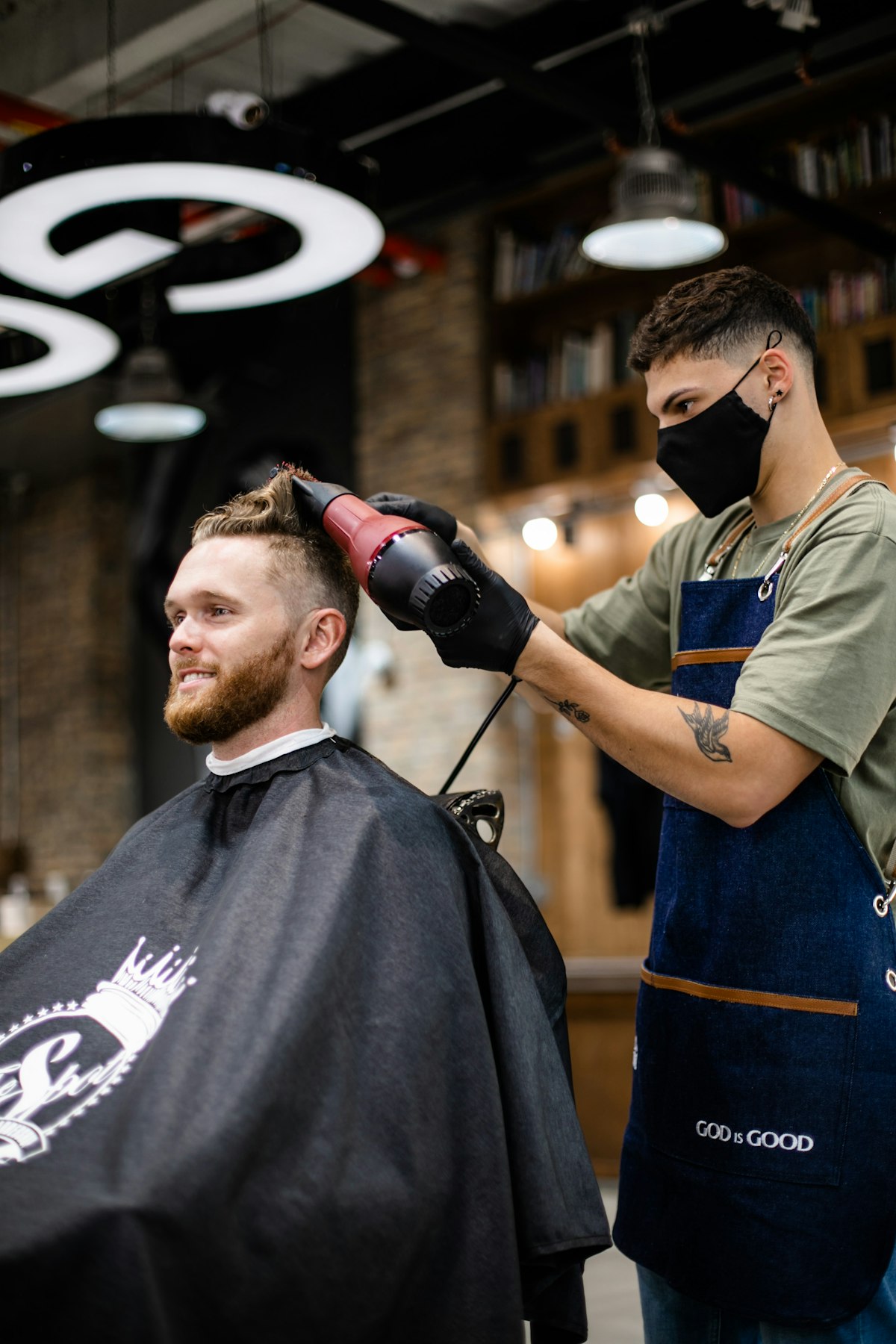
Hair Color for Men at the Barbershop: What to Know
Hair Color for Men at the Barbershop: What to Know
Men's hair color services have grown significantly over the past decade. The range of services has expanded beyond simple all-over color to include gray blending, highlights, fashion colors, and more subtle techniques that do not produce an obviously colored result. Here is what the main options are and what each involves.
Gray Blending and Gray Coverage
The most common color service for men is gray blending or gray coverage. Gray blending uses semi-permanent color to soften the contrast between gray and pigmented hair, the result is not full coverage of the gray, but a more diffused, natural-looking integration. The salt-and-pepper look is preserved but the harsh contrast between stark white and dark hair is reduced. Gray coverage uses permanent color to fully restore the hair to its original (or a chosen) color, eliminating gray entirely. Both services require regular maintenance: semi-permanent color fades over 6 to 8 weeks; permanent color grows out and shows a visible root line.
Highlights and Low Lights
Men's highlights add lighter sections throughout the hair, creating dimension and a sun-kissed appearance. Low lights add darker sections for depth. Both are typically done more subtly for men than for women, the goal is texture and dimension rather than dramatically different sections. Foiling or balayage techniques produce highlights at varying intensities. At the subtle end, highlights look like natural sun lightening. At the more dramatic end, the color change is clearly intentional and visible.
Fashion Colors
Vivid colors (bleached and toned to blue, green, silver, or similar) are a smaller segment of men's color services but have mainstream presence. These require pre-lightening (bleaching) the hair before applying the fashion color, making them the most technically demanding and the most damaging to hair health.
CADMEN Training
Color services and chemical treatments are covered in CADMEN's barbering curriculum. academy.cadmen.ca/in-person-training.
Frequently Asked Questions
Do barbershops do hair color for men?
Some barbershops offer hair color services and some do not, it depends on the shop's focus and the training of the barbers on staff. Traditional barbershops that focus exclusively on haircuts, fades, and beard services typically do not offer color. Full-service barbershops or shops positioned as hybrid barber-and-stylist studios typically do offer color. Cosmetology-licensed practitioners (whether in a barbershop or a salon) are authorized to perform chemical services including color in most US states and Canadian provinces. Barber-licensed practitioners in states where the barber license does not include chemical services authorization may not be permitted to apply color professionally. If color is a priority, confirm with the shop before booking whether they offer the specific service and whether their practitioners are licensed for chemical services in your state or province. Most barbershops in major markets that cater to a broad male clientele have at least one practitioner who offers gray blending or highlight services as part of their menu.
How often do men need to touch up hair color?
Touch-up frequency for men's hair color depends on the type of color applied. All-over permanent color (gray coverage): roots become visible as new natural hair grows in, typically within 3 to 5 weeks. Most men on permanent color maintenance book every 4 to 6 weeks for root touch-ups. The touch-up timeline can be extended by choosing a color close to the natural shade (less contrast between colored hair and regrowth) and by blending rather than fully covering the gray. Semi-permanent color (gray blending): fades progressively over 6 to 8 weeks without a hard regrowth line. The blended result degrades gradually rather than showing an obvious root. Touch-ups every 6 to 8 weeks maintain the look without the urgency of permanent color maintenance. Highlights and low lights: regrowth is less visible than all-over color because the color is applied in sections rather than uniformly. Most men on highlight maintenance book every 8 to 12 weeks. Low-contrast subtle highlights may not require touch-ups for 3 to 4 months before the look has noticeably faded. Fashion colors: the most maintenance-intensive. Vivid colors on bleached hair fade quickly, often within 3 to 4 weeks for the most saturated colors, due to the porous nature of bleached hair. Color-protecting shampoos, cold water washing, and UV protection extend the vibrancy between sessions.
Is hair color damaging for men?
Hair color causes varying degrees of damage depending on the type of service. The damage range: gray blending with semi-permanent color (low to minimal damage, semi-permanent color does not use the high-peroxide developers that penetrate and alter the hair structure. It deposits color on the surface of the cuticle rather than opening the cuticle to change the hair's natural pigment), all-over permanent color with low developer (moderate damage, permanent color uses hydrogen peroxide to open the cuticle and deposit new color molecules. This process temporarily lifts the cuticle and causes some structural change, but at low developer strengths (10 to 20 volume) the damage is manageable with proper conditioning), highlights with bleach (significant damage in the highlighted sections, lightening requires opening the cuticle more aggressively than standard color to remove natural pigment. Highlighted sections are structurally weaker than unprocessed sections and require targeted conditioning to prevent breakage), full bleach for fashion colors (highest damage category, full-head bleaching is the most aggressive chemical process applied to hair. The resulting porosity and fragility require dedicated damage-repair care). Men who are concerned about hair damage from color should start with the least damaging option for their goal (gray blending rather than full coverage, for example) and assess the condition of their hair after a few cycles before moving to more intensive services.
Related Reading From CADMEN Barber Academy
- Men's Hair Color at the Barbershop: What Services Are Available and What to Expect
- Hair Color for Men at the Barbershop: What Services Are Available and What to Expect
- Beard Color for Barbers: Services, Techniques, and Adding Color to Your Menu
- Cutting Coily Hair: The Techniques That Work and the Mistakes That Damage the Pattern
- Cutting Curly Hair: What Barbers Do Differently
- How to Cut Curly Hair: Barber Techniques and Approach
