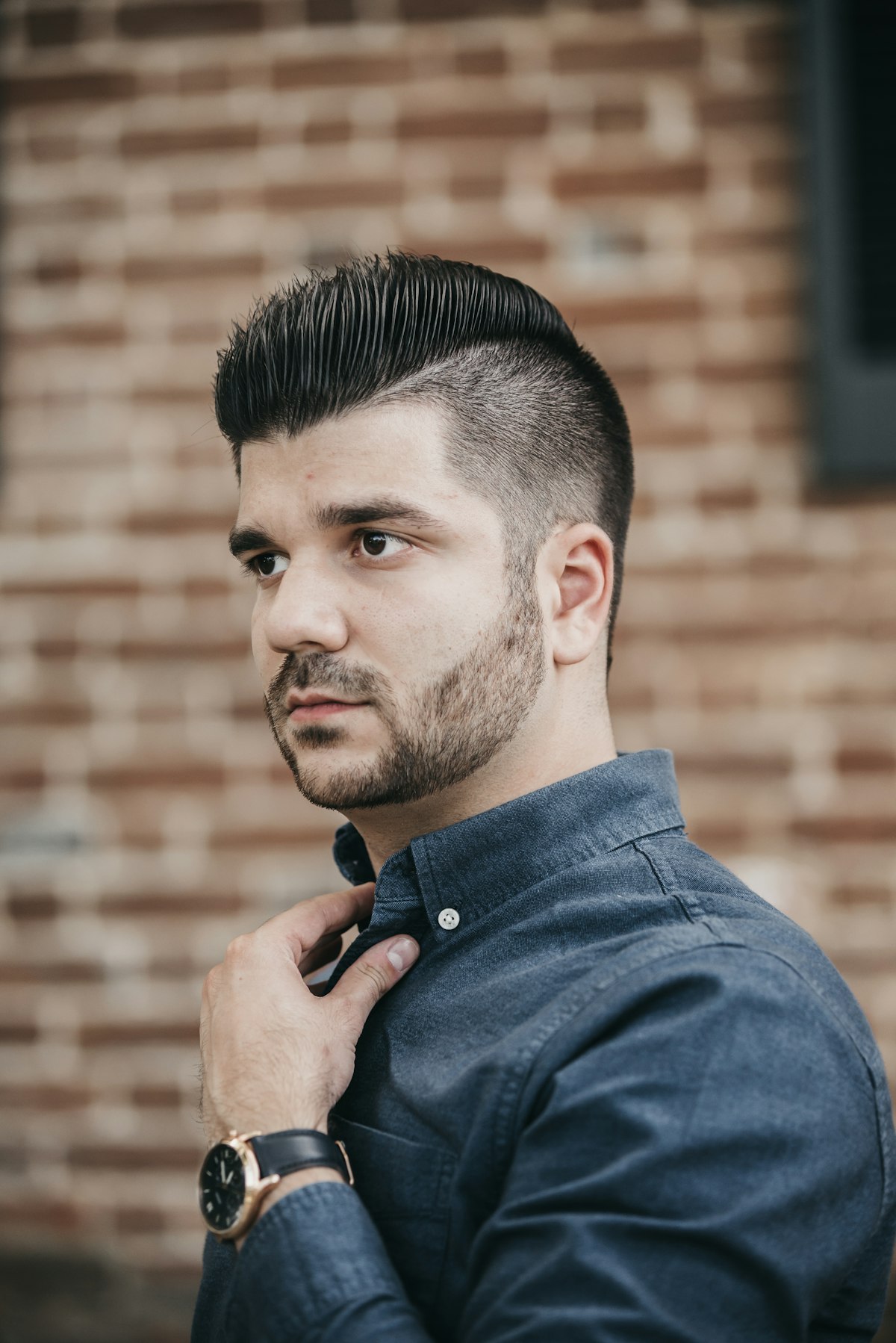
The Lineup Haircut: What It Is and Who Should Get One
The Lineup Haircut: What It Is and Who Should Get One
A lineup, also called an edge-up or shape-up, is a barbershop service that defines the hairline edges with a trimmer or razor. It sharpens the hairline at the forehead (the frontal hairline), the temples, and the sides. It is one of the most commonly requested services in Black barbershop culture and increasingly standard across all men's grooming. Here is exactly what it does and whether it is right for you.
What a Lineup Does
Hair does not grow in a straight, defined line at the hairline. The natural hairline is curved, irregular, and gradual, it fades from dense hair to fine hair to skin over a visible transition zone. A lineup takes a trimmer (usually a T-outliner or detail trimmer) and creates a crisp, straight edge along the frontal hairline, a sharp corner at the temples, and a clean line along the sides of the head. The result: the border between your hair and your face and scalp is a defined, geometric line rather than a soft, irregular curve.
Who Benefits Most From a Lineup
The lineup has the most visible impact on men with a naturally irregular or ragged hairline, men with a slightly receding hairline where defining a clean edge is more flattering than leaving the irregular recession visible, men with darker hair where the contrast between hair and skin is high (the crisp line is very visible and impactful), and men whose haircuts involve a significant length on top relative to the sides, where the frontal hairline is a focal point of the style.
The Consideration for Straight Hairlines
Men with a naturally straight, well-defined frontal hairline get less benefit from a lineup because the edge is already clean. A lineup on a natural straight hairline can push the hairline back slightly with each visit as the barber creates the edge. Over time this is a minor concern but worth knowing.
Lineup as a Standalone Service
Many barbershops offer lineups as a standalone service (between haircut visits) at a lower price than a full haircut. Getting a lineup 2 to 3 weeks after a haircut extends the fresh, maintained look of the cut without a full haircut appointment.
CADMEN Training
Lineup technique is part of the CADMEN Barber Academy fade and detail curriculum. academy.cadmen.ca/in-person-training.
Frequently Asked Questions
Does getting lineups regularly push your hairline back over time?
This is a legitimate concern and the answer is: yes, over a long time period, repeated aggressive lineups can shift the hairline back. Here is what actually happens. Hair grows from follicles in the skin. When a barber creates a lineup, they are cutting the hair to create a visual edge but not touching the follicles. However, very tight lineups create the edge slightly inside the natural hairline each time. Across many visits over years, where the barber places that edge can gradually move back from the original natural hairline position. The risk factors: very tight, close-to-follicle edging at each visit, done frequently (every 1 to 2 weeks), over many years. Natural hairline recession from androgenetic alopecia (male pattern hair loss) is separate from lineup recession and often gets attributed to the lineup when it is actually genetic hair loss progressing. How to minimize the risk: communicate with your barber about where to place the edge and whether it has moved over time. Looking at photos of your hairline from 1 to 2 years ago versus now gives you useful information. For men with strong natural hairlines who are not experiencing genetic recession, this is not a significant concern at normal maintenance frequency (every 3 to 4 weeks). For men who are already experiencing some recession, being slightly more conservative about the edge placement is worth discussing with the barber.
Can you get a lineup without a full haircut?
Yes. A lineup as a standalone service is offered by most barbershops and is one of the most common maintenance services between full haircuts. Standalone lineups are typically priced at $10 to $20 depending on the market and the shop. What a standalone lineup includes: the frontal hairline edge-up, temple corners, the sides of the head down to the neckline area, and sometimes the neckline cleanup if it is part of the shop's standard service. Some shops include a light mustache trim as part of a standard lineup service. What it does not include: no length is taken off the top, no thinning or texture work, no fade blending. It is purely the edge work. When to get a standalone lineup: typically 2 to 3 weeks after a full haircut when the cut itself still looks good but the edges have grown out and softened. This extends the maintained, fresh appearance of the haircut without needing a full cut every week. Who benefits most: men with haircuts where the defined edges are central to the style's appearance, particularly shorter styles where the contrast between the cut and the hairline is highly visible. Longer hairstyles that fall over the hairline have less to gain from standalone lineups because the edges are not the visual focal point of the style.
What tools do barbers use for a lineup and what makes a clean one?
A clean lineup depends on the tools used and the barber's technique. Tools for lineup work: T-outliners (a trimmer with a T-shaped blade, specifically designed for detail and edge work, this is the primary tool for most lineups), straight razors or safety razors (for an extremely crisp line, barbers sometimes use a razor along the defined edge after the trimmer pass, this gives the sharpest possible finish with no shadow), and in some cases clippers with a zero guard or detail blade for the initial outline before refining with the trimmer. What makes a lineup clean: the straightness of the frontal hairline (a clean lineup has a flat, straight horizontal line from temple to temple, achieving this requires the barber to work from a reference point, often the client's highest natural hair point, and hold the trimmer perfectly level), the sharpness of the temple corners (the right-angle corners where the frontal hairline meets the temples are the most precision-demanding part of a lineup, a slight deviation here is very visible), the definition of the side edges (the transition from the hair to the bare skin above the ear should be a single clean line with no ragged or irregular sections), and whether the barber has followed the client's natural hairline shape or adjusted it. A barber who rushes lineup work or has poor blade control leaves the most evidence, slightly curved lines, uneven temple angles, or a hairline that is visibly not straight when the client looks in the mirror.
Related Reading From CADMEN Barber Academy
- The Lineup Haircut: How It Works and Who It Suits
- Cutting Afro and Type 4 Hair: Techniques for Barbers Working with Coily Textures
- Beard Lineup Technique: How to Edge a Beard Cleanly on Every Face Shape
- The Blowout Haircut: What It Is and How to Maintain It
- The Brush Up Haircut: What It Is and How to Style It
- The Caesar Haircut: What Makes It a Caesar and How to Cut It Cleanly
Want to learn to cut a sharp line-up yourself? CADMEN Barber Academy teaches cutting hands-on, with an educator beside you. See the barber academy in Mississauga or view in-person classes and send an enquiry.
Watch the free Barbering for Beginners playlist on YouTube.
