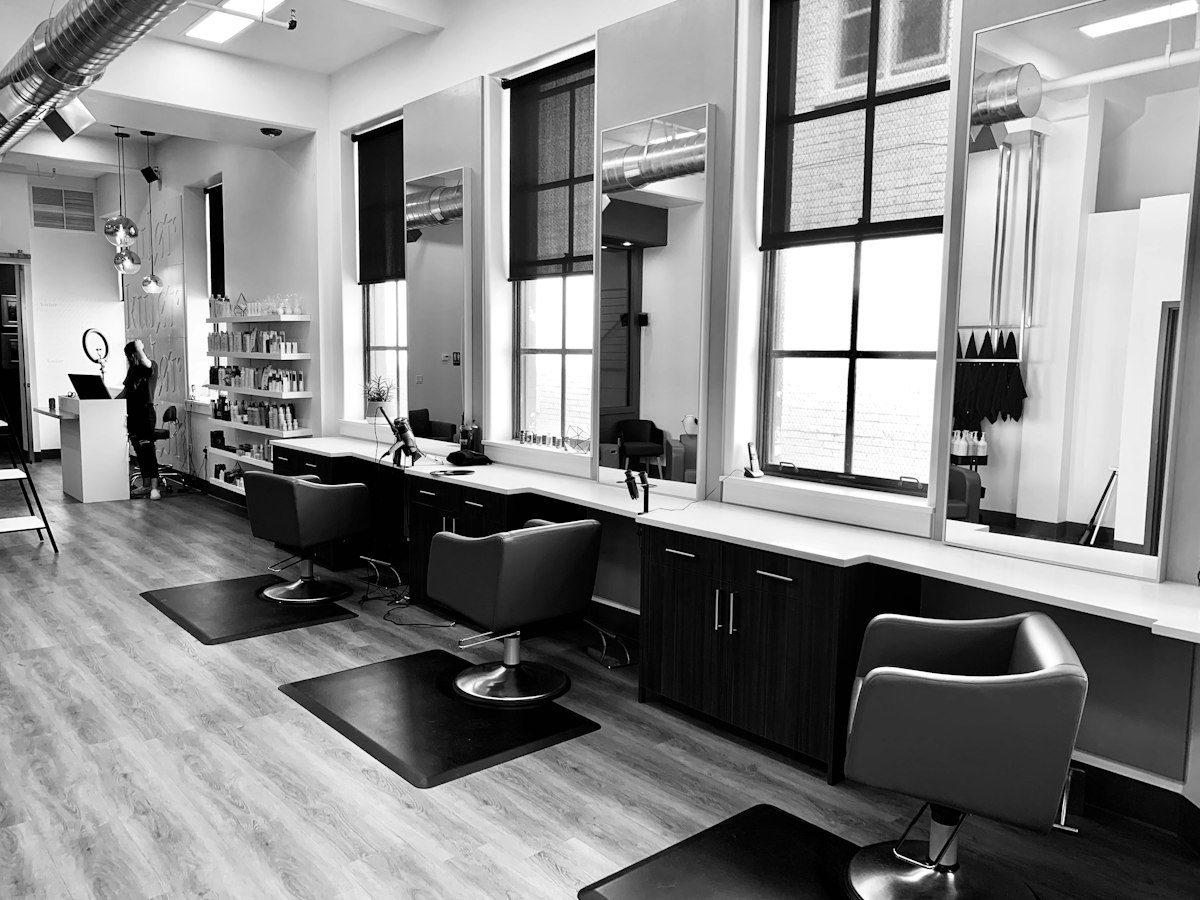
Men's Hair Color at the Barbershop: What Services Are Available
Men's Hair Color at the Barbershop: What Services Are Available
Hair color at the barbershop has grown significantly from the basic gray coverage services of previous decades. Modern barbershops with trained colorists offer a range of color techniques for men, from subtle natural-looking results to high-contrast fashion color. Understanding what is available helps you know what to ask for and what to expect.
Gray Coverage
The most requested color service for men is gray coverage — applying a permanent or semi-permanent color that matches or is close to the natural hair color to cover gray hair. This can be subtle (just covering the gray without obviously changing the color) or more transformative (going darker or changing the tone). Gray coverage requires maintenance every 4 to 6 weeks as the new growth shows the gray line at the roots.
Highlights and Low Lights
Highlights are lighter sections added throughout the hair to create dimension and contrast. For men, natural-looking highlights that mimic the effect of sun exposure are popular. Low lights are the opposite — darker sections added to naturally lighter or highlighted hair to add depth. Foil highlights are the traditional technique. Balayage (hand-painted highlights) produces a more graduated, less uniform result.
Fashion Color and Bleach
Men seeking dramatic color changes (platinum, fashion colors, or bleached sections) require more extensive processing. Bleaching lifts the natural pigment from the hair shaft before depositing color, which requires more careful application and more significant maintenance. Not all barbershops offer this service — it requires specific training and a full salon setup.
CADMEN Training
CADMEN's professional program covers hair service fundamentals alongside core barbering technique. academy.cadmen.ca/in-person-training.
Frequently Asked Questions
Do barbershops do hair color for men?
Many barbershops now offer hair color services for men, though the range of services and the expertise level varies significantly between shops. The landscape has changed considerably from the traditional barbershop model. What most modern barbershops offer: basic gray coverage (semi-permanent and permanent color). Toning services to adjust the warmth or coolness of existing color. Some highlights (foils or balayage) for men who want added dimension. Salt-and-pepper maintenance (selectively coloring or blending gray sections). What fewer barbershops offer without a dedicated colorist: bleach and tone services (platinum, fashion colors). Complex highlighting work requiring significant color knowledge (ombre, balayage with multiple tones). Color correction (fixing a previous color job that went wrong). How to find out if a specific barbershop offers color: the barbershop's social media (Instagram in particular) is the fastest check. Shops that regularly do color work will have visible color results in their portfolio. A direct phone call asking specifically about men's color services will tell you whether they have someone trained in color work. The distinction matters: a barber applying a single gray-coverage color is a different skill set from a colorist doing complex multi-tonal work. For simple gray coverage, a well-trained barber with basic color knowledge can execute the service reliably. For more complex color work, a dedicated colorist or a salon-barber hybrid with specific color training is more appropriate.
What is toner for men's hair and do I need it?
A toner is a semi-permanent color product applied after bleaching or lightening to neutralize unwanted warmth (brassiness, orange, or yellow tones) and achieve a specific final color. Toner does not lift or lighten the hair — it only deposits color to adjust the existing shade. When toner is needed: after bleaching or any lightening process, the hair goes through a visible color spectrum (dark → red → orange → yellow → pale yellow) as the natural pigment is lifted. Stopping the process at any point before pale yellow typically leaves warmth in the hair that is often undesirable. A toner neutralizes this warmth. For men who want cool-toned (silver, ash, platinum, icy blonde) results, toner is essential — the cool ash tones in the toner cancel out the warm orange and yellow tones left by bleaching. Without toner, a bleached result at the orange-to-yellow stage will have significant brassiness regardless of how the cut looks. How long toner lasts: semi-permanent toner fades over 4 to 8 weeks depending on hair porosity, washing frequency, and the specific product. Hair washes out color faster than non-colored hair. Purple or blue shampoos (sometimes called "toning shampoos") are used between salon visits to maintain the cool tone by depositing small amounts of violet pigment that counteract yellow tones between full toning treatments. Who does not need toner: men getting permanent gray coverage with a single color matched to their natural tone. Men maintaining their natural hair color or not doing any lightening work. The barber or colorist applying the color will typically determine whether toner is part of the service based on the result of the lightening process.
How much does men's hair color cost at a barbershop?
Men's hair color pricing at barbershops varies based on the service type, the market (city and neighborhood), and whether the shop has dedicated colorists or barbers with color training. Realistic price ranges (US markets, 2024-2025): single-process color or gray coverage: typically $50 to $120 depending on hair length and the market. This is the most basic color service and covers applying one color to the entire head. Highlights (partial or full): $80 to $180 or more depending on technique, number of foils, and hair length. Balayage or hand-painted highlight work: $100 to $200 or more. Bleach and tone (one service, includes the bleaching and toning steps): $120 to $250 or more. This is the most labor-intensive single-session service. Color correction (fixing a previous color service): priced by time and complexity, often $150 to $300 or more. These ranges are approximations — a barbershop in a high-cost city like New York or Los Angeles will be at or above the top of these ranges. A well-regarded neighborhood barbershop in a lower-cost market will be below the midpoint. Getting an accurate price: call the specific shop and describe what you want. A basic gray coverage consultation takes 30 seconds on the phone. For more complex services, many shops offer a brief in-person consultation before committing to the service. The consultation lets the barber or colorist assess your hair condition, natural color, and the realistic outcome given your starting point. For complex color work, a consultation is worth the time — it prevents misaligned expectations about what is achievable in one session and how much maintenance the result will require.
