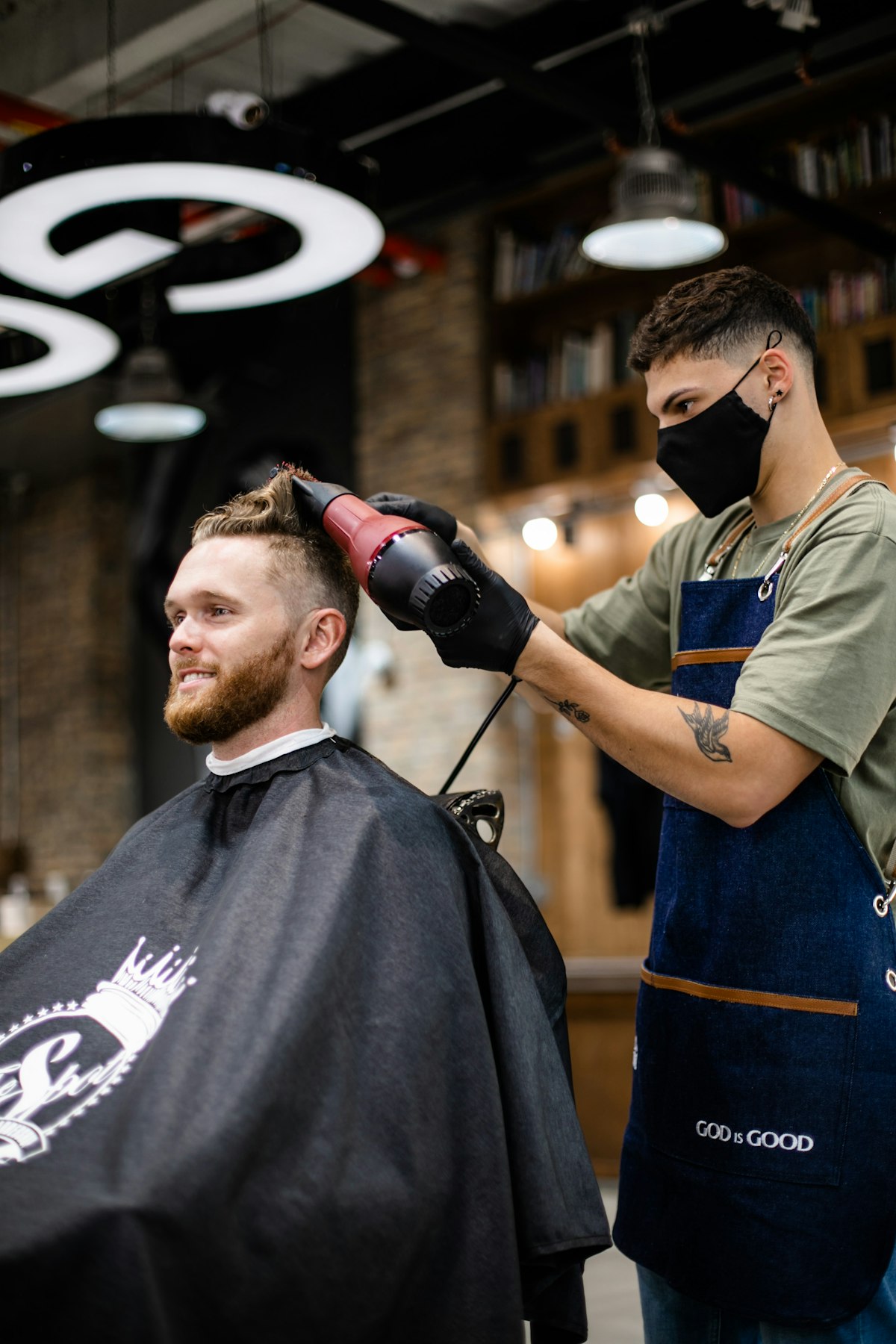
The Zero Fade: What It Is and How It's Cut
The Zero Fade: What It Is and How It's Cut
The zero fade is a specific variation of the skin fade that starts at the lowest possible clipper setting — a bare clipper blade without a guard (the "zero" position) — at the lowest point of the fade zone, usually at the neckline or the lowest visible hairline. From that near-skin starting point, the fade graduates up through progressively longer guard lengths, creating a sharper, higher-contrast fade than a standard taper or low fade.
Zero vs. Bald vs. Skin Fade
These terms are used interchangeably in some shops but have specific meanings in professional barbering. A bald fade or skin fade goes all the way to the skin — the lowest guard lengths or a straight razor are used to take the shortest sections to bare skin, with no visible stubble at the base. A zero fade starts at the bare clipper blade (which leaves approximately 0.4 to 0.5 mm of hair), producing an effect that is extremely close to the skin but not completely bare. In practice, the visual difference between a zero fade and a skin fade is subtle, and many barbers use the terms interchangeably. The distinction matters most to barbers discussing technique, not to clients describing what they want.
Where the Fade Is Placed
A zero fade can be placed at different heights on the head:
Low zero fade: The fade starts at the neckline and the lowest point of the sides. The near-skin section is minimal — approximately 1 to 2 cm from the natural hairline. Above that, the hair graduates quickly to the desired top length. This produces a clean, sharp neckline without the high-contrast look of a skin fade that rides higher on the sides.
Mid zero fade: The fade starts slightly above the neckline and the zero section runs up the sides to approximately temple level. Moderate contrast. Very common request in current barbershop market.
High zero fade: The fade runs up to or above the temples, with the zero section visible on the full side of the head. High contrast, dramatic. Often requested with a flat top or texture crop on top for maximum contrast.
How It Is Cut
The barber establishes the zero line — the lowest point of the fade — with the bare clipper blade. From that line, they graduate upward through guard lengths 0.5, 1, 1.5, 2, and beyond, blending each transition. The blend at each guard change is worked repeatedly, the barber rocking the clipper at the guide line, until the transition between lengths disappears and the graduation reads as smooth. The final pass with a detail trimmer at the very bottom establishes the sharp outline at the neckline and hairline.
Maintenance
Zero fades are high-maintenance styles. At the zero level, the hair is extremely short and any regrowth of 1 to 2 weeks produces visible growth at the fade zone. Most clients maintaining a sharp zero fade return every 2 to 3 weeks to keep the lines fresh.
CADMEN Training
Fade technique including zero, mid, and high fade variations are core curriculum in CADMEN's hands-on barbering program. academy.cadmen.ca/in-person-training.
Frequently Asked Questions
What is a zero fade?
A zero fade is a haircut where the lowest section of the fade gradient starts at the bare clipper blade — the clipper without any guard attachment, which cuts the hair to approximately 0.4 to 0.5 mm. From this very-short starting point, the hair graduates upward through progressively longer lengths, creating a sharp, high-contrast fade. The term "zero" refers to the guard setting (no guard = zero guard, sometimes called "the zero"). A zero fade can be placed at different heights on the head (low, mid, or high), each producing a different level of contrast between the sides and the top section. It is one of the most commonly requested fade variations in contemporary barbershops alongside the skin fade (which goes to completely bare skin) and the taper (which ends at a visible short length rather than near-zero).
What is the difference between a zero fade and a skin fade?
A zero fade starts at the bare clipper blade, leaving approximately 0.4 to 0.5 mm of hair at the lowest point of the fade. A skin fade takes the lowest section further — using the closets clipper settings, a foil shaver, or a straight razor to remove all remaining hair and leave the skin visible with no stubble. The visual difference between the two at a distance is minimal. Close up, the skin fade produces completely bare skin at the base while the zero fade has very faint stubble. Many barbers and clients use these terms interchangeably in practice. If you are requesting a very close, high-contrast fade and want to be precise: specify "skin fade" if you want the base to be completely bare skin, or "zero fade" if you want extremely close but not completely bare at the lowest point. Most barbers will ask clarifying questions or show you photos to confirm which you want.
How long does a zero fade last?
A zero fade shows visible regrowth at the fade zone within 1 to 2 weeks. At that length (0.4 mm starting point), any regrowth is immediately visible as the hard line between the zero section and the graduated section becomes less defined. Most men maintaining a sharp zero fade return to the barbershop every 2 to 3 weeks. Clients who prefer a slightly softer look can extend visits to 3 to 4 weeks. Beyond 4 weeks, a zero fade is typically described as "grown out" — it still looks like a haircut but not a sharp, fresh one. This frequency is the primary consideration when choosing between a zero fade and a lower-maintenance taper: a taper can look good for 5 to 7 weeks; a zero fade requires more frequent investment to maintain its sharpness.
Does a zero fade hurt?
A zero fade does not hurt. The bare clipper blade at the lowest fade point moves close to the skin but does not contact it — the blade is calibrated to leave the minimum guard length of hair without skin contact. The closest sensation to discomfort some clients report is a slight warmth from the blade if the clipper has not been oiled and cooled recently (a properly maintained, oiled, and periodically cooled clipper does not produce noticeable warmth). The area below the zero line — cleaned with a detail trimmer and often finished with a straight razor for the neckline outline — involves razor contact at the finished edge, which is light pressure but not painful. If a client experiences significant discomfort during any part of the fade, it is worth mentioning to the barber so they can adjust technique or check blade temperature.
Is a zero fade good for thinning hair on the sides?
Yes, for the right distribution of thinning. If thinning is concentrated at the sides and the top section is still relatively dense, a zero fade can actually complement the situation by making the thinning sides look intentional rather than patchy. The fade graduates from very short (zero) at the bottom to the side length, which means the naturally thinner side hair blends into the deliberately short fade zone without looking different from a full-density fade. Where a zero fade becomes less effective: when thinning is diffuse and affects the top section as well. In that case, the contrast between a very short fade and a thin, low-density top can exaggerate rather than diminish the thinning effect. A barber can assess the specific density distribution and recommend whether a zero fade is the right choice for a particular client's hair pattern.
Want to learn to cut a zero fade yourself? CADMEN Barber Academy teaches cutting hands-on, with an educator beside you. See the barber academy in Mississauga or view in-person classes and send an enquiry.
Learn this fade step by step in our free Fade Tutorials playlist on YouTube.
