Barbershop vs. Hair Salon for Men: What the Difference Actually Is
Barbershop vs. Hair Salon for Men: What the Difference Actually Is
Men ask their friends which barbershop they go to and often get a salon recommendation. They search for haircuts and find both. The terminology is treated as interchangeable in casual use. The two businesses are actually distinct, different training backgrounds, different licensing, different tool sets, and different service focuses. Here is what the actual differences are.
Training and Licensing
Barbers in North America complete a barbering program (typically 1,000 to 1,500 hours in most states and Canadian provinces) and pass a state or provincial barber licensing exam. The curriculum focuses on hair cutting with clippers, shaving with a straight razor, beard grooming, and scalp health. Cosmetologists (who staff most salons) complete a cosmetology program (typically 1,000 to 1,600 hours in most jurisdictions) and pass a cosmetology licensing exam. The curriculum focuses on a broader range of services: chemical services (color, perms, relaxers), nail care, skin care, and scissors-based cutting. Not all jurisdictions require cosmetologists to learn clipper fading or straight razor shaving. This is the root of the practical difference.
Tool Focus
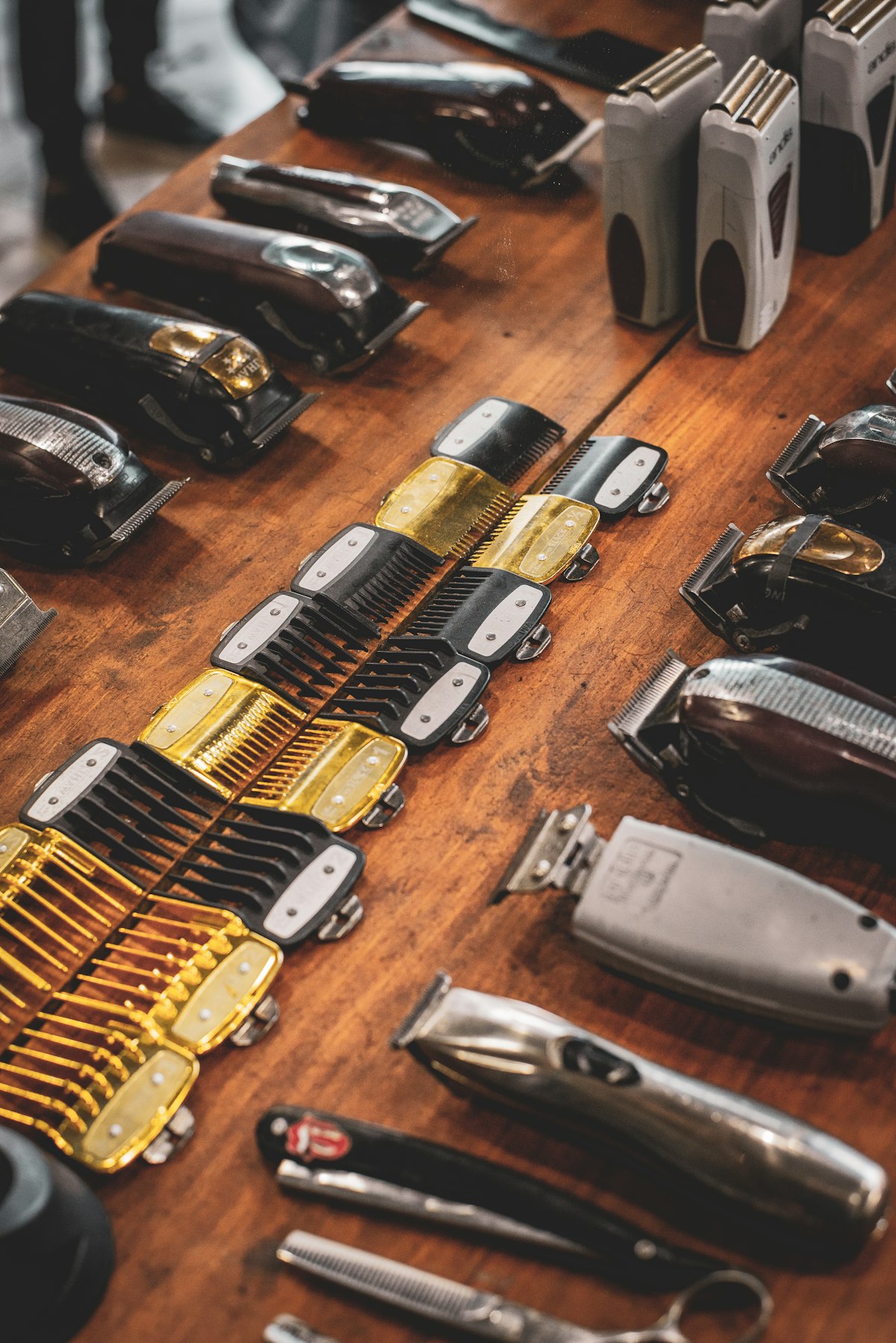
Barbershops are clipper-first environments. The core tool is the electric clipper, used for fades, tapers, and short men's cuts. Straight razors are used for shaving and neckline finishing. Salons are scissor-first environments. The primary tool is the shear, optimized for layering, texturizing, and longer cuts. Clippers may be used at salons for men's cuts, but are typically secondary to scissors in the training background.
Service Focus
Barbershops specialize in men's cuts: fades, tapers, lineup, beard work, shaving. Salons offer a broader range: color, chemical treatments, blowouts, and cuts for all lengths and genders. Salons are often the better choice for medium to long men's hair with complex styling or color needs. Barbershops are almost always the better choice for short cuts with fades and tapers.
CADMEN Training
CADMEN Barber Academy is one of Canada's leading barbering programs. academy.cadmen.ca/in-person-training.
Frequently Asked Questions
Should men with longer hair go to a barbershop or a salon?
It depends on the style and what service is needed. The question is not purely about length, it is about what skills and tools the haircut requires. For longer men's cuts that are primarily scissor-based (medium to long hair with layering, texturizing, and scissor-driven shape): a stylist at a salon with experience in men's cuts is often better equipped than a barber whose training emphasized clippers. For longer men's cuts that include a fade or taper on the sides (the medium or long top with faded sides combination common in modern men's styling): a barber who also has strong scissor skills is the better choice. The fade component requires clipper expertise that salon training typically does not emphasize. For color, bleaching, highlights, or chemical treatments at any length: a salon with a colorist is the right environment. Barbers are generally not trained in chemical services and do not offer them. For scalp treatments, hot oil services, or specialized scalp work: these are more likely to be offered at a barbershop. For men with very long hair (past the shoulders) who want primarily a trim and light shaping: either a barber with long-hair experience or a salon stylist with men's experience. Both can execute a trim; the right choice depends on who in your area has the specific experience. The practical approach: look at the portfolio. Whether the shop is a barbershop or a salon, a practitioner who regularly produces the cut you want is more important than the category of the business.
Are barbershop prices different from salon prices for men's haircuts?
Yes, typically. Barbershops in North America are generally priced lower than salons for equivalent services. The range, based on market data: barbershops commonly range from $20 to $60 for a men's haircut depending on the city and the shop's tier. High-end barbershops in major urban centers can exceed $70 to $100 for a cut with beard work. Salons range more widely depending on the stylist's experience tier: a junior stylist's cut may be $40 to $60; a senior stylist or department head can be $80 to $150 or more. Specialist men's barbershops (with strong brand presence and high demand barbers) can price comparably to mid-range salons. The reason for the general price difference: barbershops have historically served high-volume, lower-price-point markets. The average service time for a barbershop cut (20 to 40 minutes) is shorter than many salon services, which supports higher throughput at a lower per-service price. What you are paying for at higher price points regardless of shop type: the barber or stylist's experience, their specific skill at the cut you want, and how consistently they deliver. A $70 haircut from a barber who has been doing your specific cut for 10 years delivers differently than a $35 haircut from someone who is less practiced in your cut. The value calculation is relative to what you are getting, not the price in isolation.
Can a cosmetologist at a salon do a good fade?
Some can. But on average, barbershop-trained barbers are more consistently skilled at fades because clipper fading is a central part of barbering education and a minor or absent part of many cosmetology curricula. The variation: cosmetologists who have pursued additional training in men's cuts, who work at a salon that specializes in men's services, or who have years of practical experience specifically with fades can execute them well. Cosmetologists in salons that primarily serve women and offer men's cuts as a supplemental service are statistically more likely to produce an average or inconsistent result on a technically demanding fade. The practical way to assess: portfolio. Whether the practitioner is a barber or a cosmetologist, look for recent photos of fades, specifically the blend quality, the skin level work, and the neckline. The credential type is less important than the demonstrable evidence of the specific skill. The trend toward overlap: in many jurisdictions, barber and cosmetology training has been converging. Some schools now offer combined credentials. And many barbers have supplemented their training with scissor and styling skills beyond the traditional barbering curriculum. The binary barber versus salon distinction is less clean than it was 20 years ago. The individual practitioner's skills and training are more relevant than the business category they work in.
Related Reading From CADMEN Barber Academy
- Barbershop vs Hair Salon: What Is the Difference?
- Barbershop vs Hair Salon: What Is the Difference and Which Should You Go To
- Cutting Coily Hair: The Techniques That Work and the Mistakes That Damage the Pattern
- Cutting Curly Hair: What Barbers Do Differently
- How to Cut Curly Hair: Barber Techniques and Approach
- Curly Hair at the Barbershop: What Barbers Do Differently
