The Undercut for Men: What It Is and Why It Works
The Undercut for Men: What It Is and Why It Works
The undercut dominated men's barbershop requests from roughly 2013 to 2019 and remains a consistently strong performer because its core structure, very short or shaved sides, longer top, is highly adaptable. The top can be styled a dozen different ways. Here is what the undercut actually is, how barbers build it, and when it is the right choice.
What Defines an Undercut
The undercut is defined by a "disconnection" between the sides and top. Unlike a fade (where there is a gradual gradient from short sides to longer top), the undercut creates a sharp, distinct line where the short sides end and the longer top begins. The sides are typically clipped very short (skin to grade 2) with no blending into the top. The top section is left significantly longer and styled separately. The contrast between the two sections is the defining visual feature.
How Barbers Build It
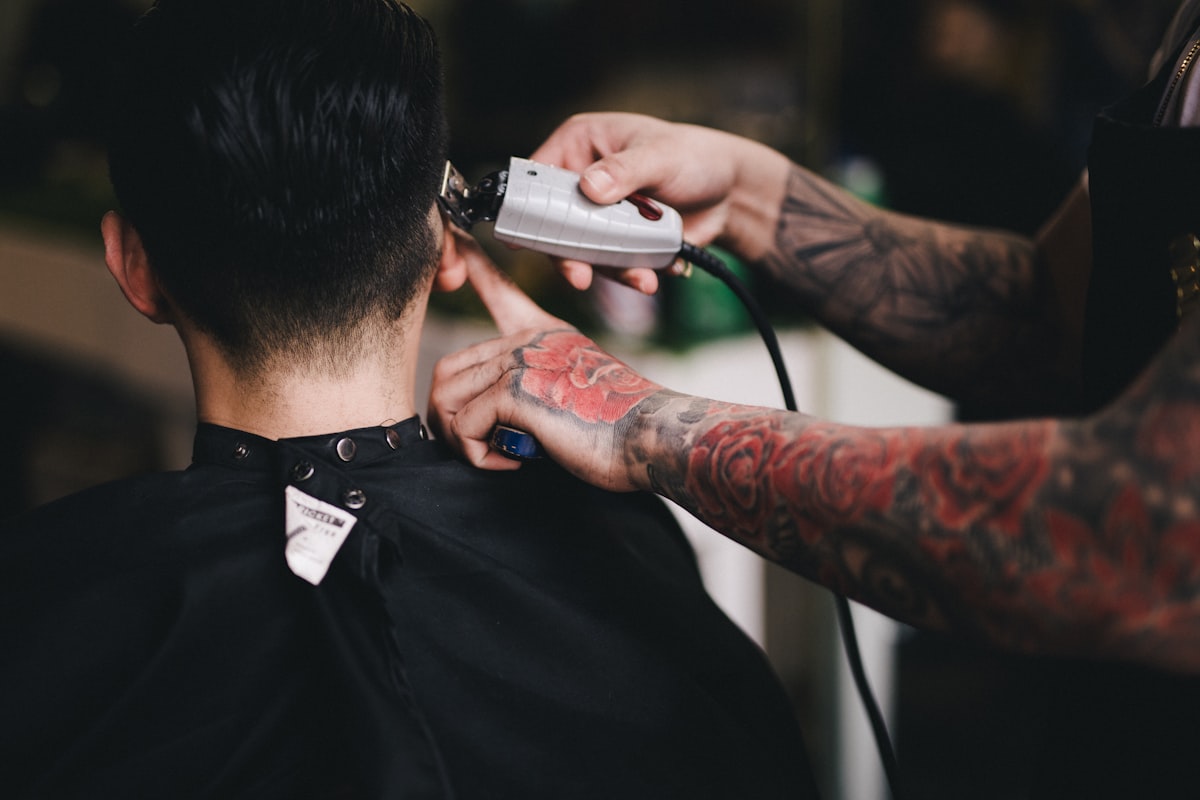
The barber establishes the disconnection line, typically at the temples and following around to the back of the head. Everything below this line is cut very short with clippers (or shaved with a razor for a skin undercut). The top section is cut with scissors to the desired length, which can range from 2 inches to 5+ inches depending on the styling intent. The transition point is clean and intentional, not blended. This is the opposite of the fade technique.
Why the Undercut Works for Many Hair Types
The undercut does not require a specific hair type on the sides because the sides are cut extremely short regardless. The top can take advantage of any texture, straight hair produces a sleek, directional style; wavy hair produces natural movement; curly hair produces a textured, high-volume look. One base cut structure accommodates very different styling approaches, which makes it versatile.
Styling Options
The same undercut can produce a slicked-back look (pomade, backward direction), a quiff (product, upward-forward direction), a textured natural style (clay, no strong direction), or worn loose and unstyled. The sides stay the same regardless of top styling choice.
CADMEN Training
CADMEN Barber Academy trains the full range of men's cuts including disconnected undercut structures. academy.cadmen.ca/in-person-training.
Frequently Asked Questions
Is the undercut still in style or has it peaked?
The undercut reached its peak saturation approximately 2015 to 2017, when it was extremely common to the point of being nearly default at trend-forward barbershops. Since then it has moved from "the current trend" to "an established classic," which is a more durable position. The current status: the undercut is not a trend-leading cut in the way it was at peak saturation, but it is a structurally sound, widely understood cut that works for many clients and is not perceived as dated in the way that cuts from the 1990s or early 2000s now read. The analogy is the taper cut, it peaked in popularity in an earlier era, moved into classic status, and is now simply "a good cut" that barbers execute routinely without trend commentary. The undercut is at a similar inflection point. What makes the undercut durable beyond trend cycles: its adaptability. The base cut supports many styling approaches (slicked back, textured, quiff, natural), which means a client who gets an undercut can change the look significantly by changing how they style the top. This flexibility makes it a practical choice independent of where it sits on the trend cycle. The consideration: if you specifically want a cut that reads as current or on-trend at the moment (early 2024 and beyond), there are more forward-leaning choices. If you want a structurally sound cut that is well-executed by most barbers, suits a wide range of face shapes, and gives you flexibility in styling, the undercut remains a strong choice regardless of its trend position.
How long does the top need to be for an undercut?
The top section length is one of the most variable aspects of the undercut and can range significantly while still being recognizable as the same structure. The minimum length for the undercut effect: the top needs to be noticeably longer than the sides to produce the visual contrast that defines the cut. If the sides are cut to a grade 1 or skin, the top needs at least 2 to 2.5 inches to create a visible length distinction. At shorter top lengths, the disconnection effect reads as subtle. The medium range (2 to 4 inches): this is the most common range for undercuts that are styled upward (quiff, textured top) or to the side. At this length, the top has enough weight to stay styled without being too heavy for daily management. The longer range (4 to 6+ inches): longer undercut tops are styled slicked back, in a man bun, or worn in a more natural flowing way. The contrast with the very short sides is more dramatic at longer top lengths. Maintenance consideration: longer top sections grow at the same rate but become visibly overgrown faster because the length means growth is a higher percentage of the total. A 3-inch top growing to 4 inches is noticeable; a 1.5-inch fade growing to 1.75 inches is not. Men who want a low-maintenance undercut are better served by a moderate top length (2 to 3 inches) that grows out more forgivingly than a very long top section. The bottom practical answer: the minimum is about 2 inches for the undercut effect to read clearly. The upper limit is personal preference for how much length you want to manage daily.
What face shapes does the undercut not suit?
The undercut's key visual feature is high contrast between very short sides and a long top. This creates visual height on the head. The combinations where this effect requires modification: very oblong or long face shapes. The undercut adds height to the top of the head while removing width at the sides. This combination elongates the face further. On an already-long face, the effect makes the face appear even longer. The modification: reducing the top height (keeping the styling flatter rather than upward), and using a slightly higher disconnection line so the sides are not taken as short, reduces the elongating effect while maintaining the undercut structure. Very narrow face shapes benefit from similar adjustments. Very round face shapes: the high-contrast undercut can also emphasize the round shape if styled to add direct upward height without any lateral visual weight. A quiff on top of an undercut that grows directly up on a round face adds height without adding any visual width, which can make the round face shape more prominent. The modification: styling the top with some horizontal movement (swept slightly to the side rather than directly up) and keeping the disconnection line slightly lower rather than above the temples creates more balanced proportions. The nuance: these are tendencies, not rules. Head shapes are three-dimensional and the interaction between the cut structure and the face is something an experienced barber assesses individually. The general takeaway: if you have a very long face or a very round face, tell the barber. An adjusted undercut can work well on almost any face shape with the right modifications to the top styling and disconnection height.
Related Reading From CADMEN Barber Academy
- The Disconnected Undercut: What It Is and How It's Cut
- The Men's Undercut: How to Cut and Wear It
- Undercut Haircut for Men: How to Cut It
- The Undercut: What It Is, How Barbers Cut It, and Why It Remains One of the Most Requested Men's Styles
- The Undercut Haircut: A Complete Guide for Men
- The Undercut: What It Is, Why It Works, and the Variations to Know
Want to learn to cut an undercut yourself? CADMEN Barber Academy teaches cutting hands-on, with an educator beside you. See the barber academy in Mississauga or view in-person classes and send an enquiry.
Watch the free Barbering for Beginners playlist on YouTube.
