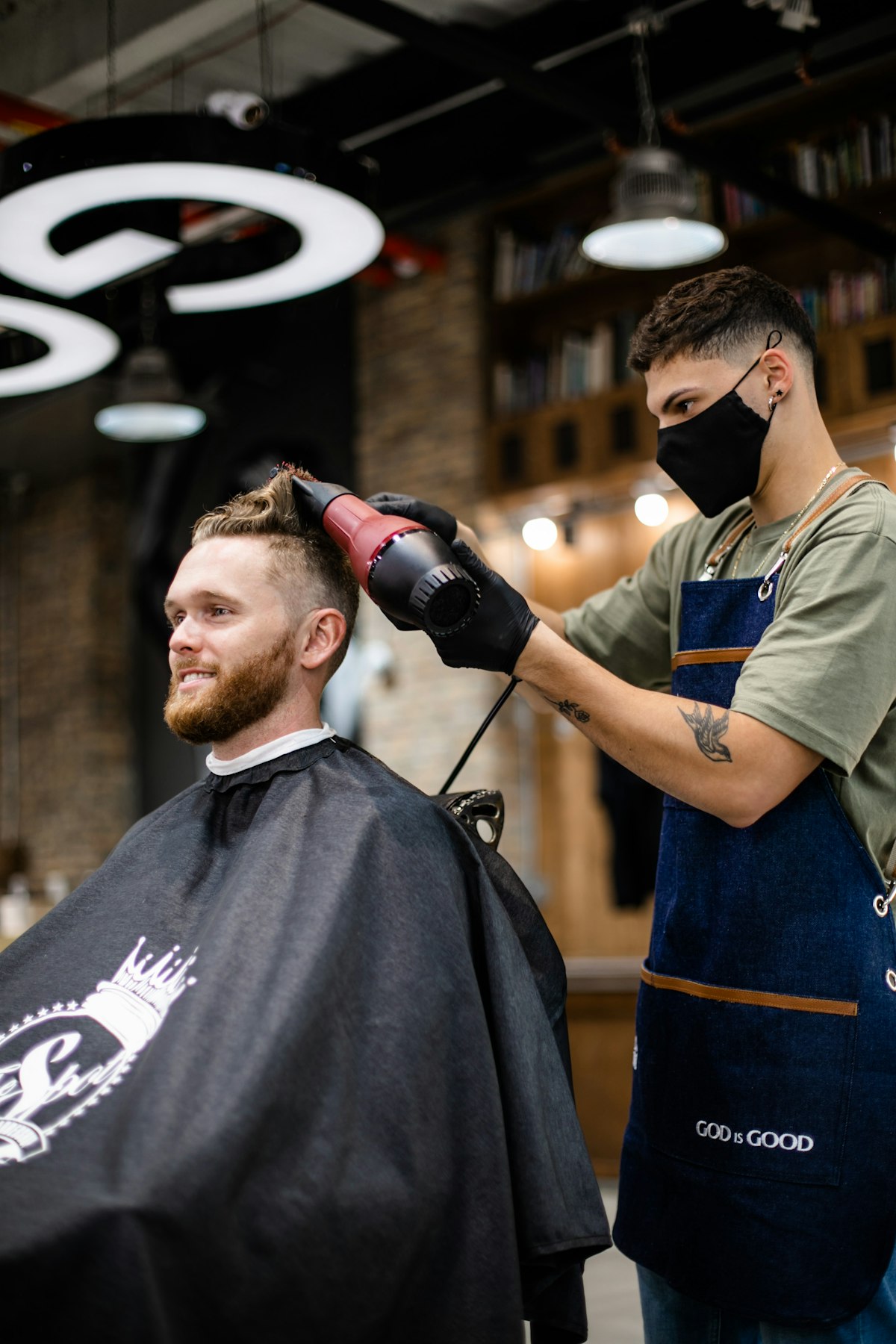
How to Cut Hair That Is Thinning: Barber Techniques and Advice
How to Cut Hair That Is Thinning: Barber Techniques and Advice
Roughly 50% of men will experience some form of hair thinning or male pattern baldness by age 50. A significant share of barbershop clients at any given time are either actively experiencing thinning or approaching a hairline that concerns them. A barber who can address thinning hair well builds loyalty that is difficult to replace.
Understanding Why the Cut Matters
Hair thinning is a biological process the barber cannot reverse, but the cut has direct influence on how visible the thinning appears. Hair that is too long at the thinning areas lies flat and separates, making scalp visible through gaps. Hair that is cut too short removes coverage entirely. The right length creates the maximum illusion of density, hair at the thinning areas is cut to a length that allows it to lie with some volume and cover without separating or revealing the scalp beneath.
General Principles
Shorter is usually better, but not zero
This is counterintuitive. Clients with thinning hair often want to keep it longer to cover the thinning areas. The problem is that longer thin hair has less body, lies flatter, and separates more easily, exactly the opposite of what creates the appearance of density. Shorter hair has more body per strand, lies closer together, and does not separate under its own weight. A cut that takes the thinning areas from 3 inches to 1.5 inches typically looks denser, not sparser. The exception is clients with localized crown thinning, where some strategic length can be used to create coverage, but this requires careful execution.
Avoid harsh contrast near thinning zones
A high skin fade next to a thin top creates maximum contrast between the bare sides and the sparse top, the sparse top becomes the obvious focal point. A lower fade or a soft taper reduces this contrast and draws less attention to the difference in density. For clients with significant top thinning, a softer, blended transition from sides to top serves them better than the high-contrast skin fade look.
Texture adds visual density
Blunt cuts on thin hair look flatter and more sparse than textured cuts. Point cutting or razor cutting the top adds disconnection and movement that reads as fuller. Thinning shears can remove weight from thick areas elsewhere (sides, nape) to balance the overall look without changing length on the thin areas.
Cutting Techniques by Thinning Pattern
Receding hairline (temple recession)
Avoid a line-up that draws a straight edge at the receded hairline position. A hard geometric edge at the recession emphasizes the recession. Work with the natural hairline shape rather than fighting it. Softer temple definition and a haircut that frames the face without relying on a sharp edge at the hairline produce a more natural result.
Crown thinning
Keep crown hair slightly longer than the rest of the top, the additional length allows more coverage. Avoid combing patterns that create a visible part over the thin area (this tends to expose the crown). A forward-falling direction (like a textured crop) or no specific part direction at all often works better than a hard side part that sits near the thinning crown.
Diffuse overall thinning
When the entire top area is fine and low-density, a shorter uniform length with texture is the most reliable approach. Guard 3 to 5 on top with a mid taper or low fade on the sides. This length has enough body to create some volume, enough shortness to not separate and expose gaps, and with a matte styling product produces the best day-to-day density appearance.
The Conversation with the Client
Many clients with thinning hair have not been told directly what works. They ask for what they have always had, or what they see on people with full hair, because no barber has walked them through the alternatives. A barber who explains "at this length, the hair will have more body and look fuller than it does at the length you are used to" is giving genuine value, not delivering a difficult message, but solving a real problem. Most clients appreciate directness when it comes with the solution.
CADMEN Business Coaching
Client consultation skills and technical cutting range are covered in CADMEN's barber training programs. academy.cadmen.ca/in-person-training.
Frequently Asked Questions
What haircut is best for thinning hair in men?
Short, textured cuts consistently outperform longer styles for men with thinning hair. The most effective options: a textured crop at guard 4 to 5 on top with a mid taper; a buzz cut at guard 3 to 4 that provides even density across the entire top; or a short side part at 1.5 to 2 inches on top for clients who prefer a more traditional style. The common thread is length short enough for the hair to have body and density without becoming so short it looks like a deliberate shave to hide the thinning. The goal is to remove the length that exposes gaps while keeping enough to work with.
Should you tell a client their hair is thinning?
If the thinning is visible and affecting how you approach the cut, yes, mention it. Not as a diagnosis or a problem, but as practical information that informs the service: "Your hair is finer at the crown, I will keep a bit more length there to give it better coverage. Sound good?" This is the barber doing the job well. Clients who are already aware of the thinning appreciate the acknowledgment and the proactive solution. Clients who are not yet aware are better served by knowing than by the barber silently trying to navigate around a topic that directly affects the haircut.
Does cutting your hair short help with thinning?
It helps the appearance of density, yes. Shorter hair has more body per strand, sits closer together, and does not separate under its own weight the way longer thin hair does. The illusion of density at shorter lengths is real, it is a physical property of hair structure, not just perception. Cutting hair shorter does not affect the biology of the thinning (hair follicle behavior is not influenced by how the external hair shaft is cut). But from a visual standpoint, a shorter cut almost always looks denser on fine or thinning hair than the same client's hair at a longer length.
What products help thinning hair look fuller?
Matte volumizing clays and pastes add texture and separation that reads as density. Avoid heavy waxes and oil-based pomades on thinning hair, they add weight, which flattens the hair and makes thinning more visible. Sea salt sprays applied to damp hair before styling add texture and body to fine hair without weight. Dry shampoos used on dry hair add volume and grip, which is useful for clients whose hair lies flat by midday. The general rule: light-weight, matte-finish products that add texture outperform heavy, shiny products on thinning hair in every case.
Is a fade or a taper better for thinning hair?
A taper is generally better for clients with significant top thinning. A skin fade creates maximum contrast between the very short sides (or bare skin) and the longer, thinner top, the sparse top becomes the most visually prominent part of the cut. A taper reduces the contrast: the sides graduate from short to medium, blending more naturally toward whatever density exists on top. The result is less graphic visual contrast that draws attention to the thinning. For clients with mild thinning or primarily frontal recession, a mid or even high fade can still work well. For clients with significant top thinning, a soft taper is the technically correct recommendation.
Related Reading From CADMEN Barber Academy
- Curly Hair at the Barbershop: What Barbers Do Differently
- Men's Hair Thinning: What Causes It and What You Can Actually Do About It
- Men's Hair Thinning: What to Tell Your Barber and What Actually Helps
- Cutting Hair on Clients with Thinning Hair: What Works and What Makes It Worse
- Thinning Hair at the Barbershop: What Barbers Actually Do
- Men's Thinning Hair: What Barbershop Techniques Actually Help
