Styling Fine Hair: What Actually Works for Men
Styling Fine Hair: What Actually Works for Men
Fine hair behaves differently from medium or thick hair in predictable ways. It responds to product differently, loses volume faster throughout the day, and reflects some techniques poorly that work well on denser hair. Here is what works specifically for fine hair and why.
The Styling Product Rule for Fine Hair
The single most important rule for fine hair styling: less product, lighter product. Heavy waxes, pomades, and oils weigh fine hair down and flatten it against the scalp. The visual result is not a styled look, it is flat, greasy-looking hair that emphasizes its thinness. Lightweight clay, texturizing cream, or sea salt spray used in small amounts add texture without the weight that collapses fine hair. Apply any product to slightly damp hair rather than dry, distribution is more even and the product amount required is smaller.
What the Cut Should Do
A haircut for fine hair should not create heavy blunt sections that lie flat. Texturizing through the top, internal layering and point-cutting, breaks up the surface into smaller sections that sit slightly off each other, creating the visual impression of more volume than the hair actually has. Blunt cuts on fine hair produce a flat, single-plane surface that is the worst possible outcome for density. Tell your barber you have fine hair and ask them to texturize through the top section.
Volume Techniques
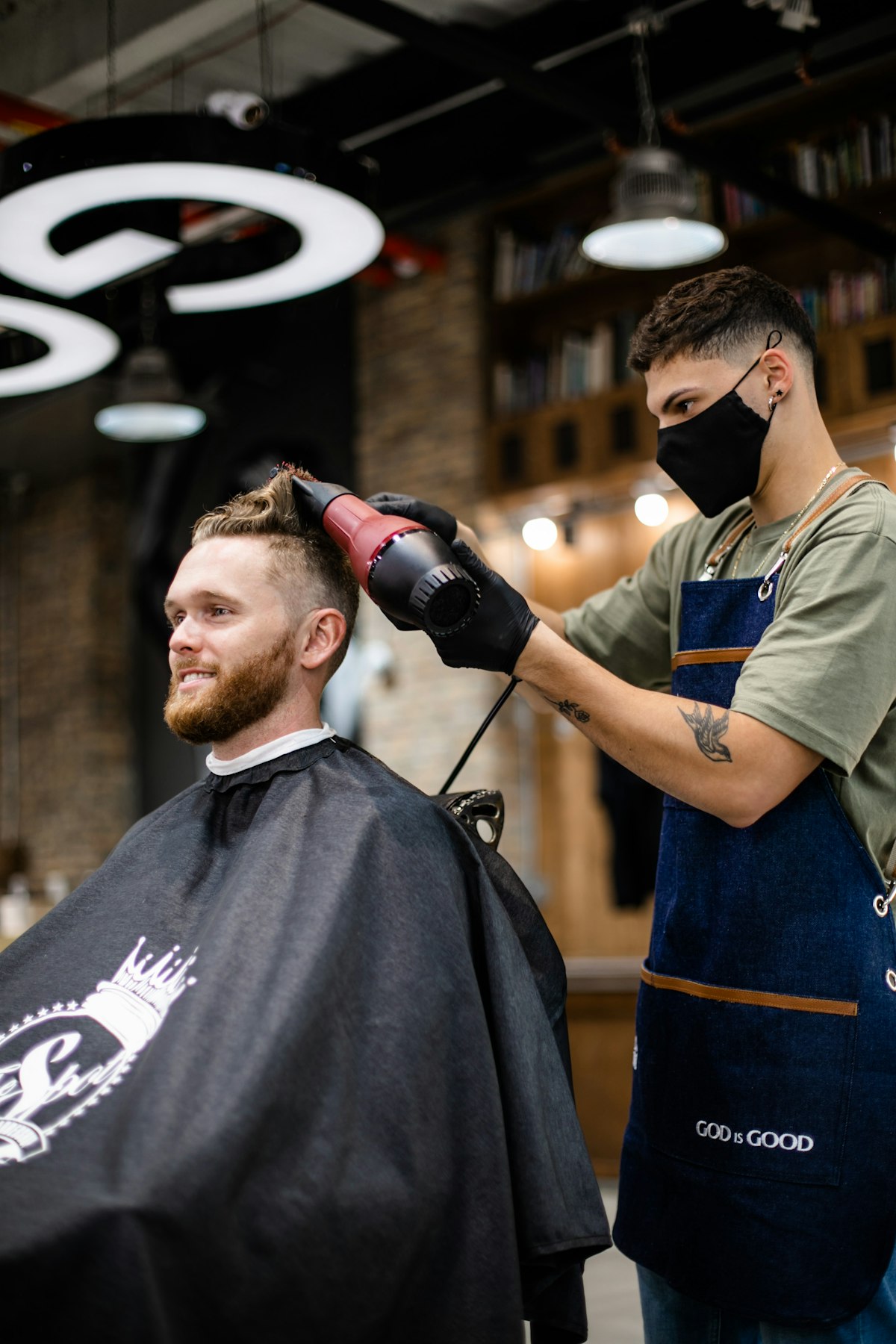
A blow-dryer pointed upward or backward at the roots while the hair is damp lifts the root section and adds volume that stays in place as the hair dries. This approach, drying with fingers at the roots, directing the airflow against the hair's growth direction, produces more volume from fine hair than air drying flat. Once dry, add product. Applying product before drying often requires re-drying to get the same volume effect.
CADMEN Training
Adapting technique for all hair types including fine hair is covered in CADMEN's barbering curriculum. academy.cadmen.ca/in-person-training.
Frequently Asked Questions
What hairstyle is best for fine hair in men?
The hairstyles that work best for men with fine hair share one trait: they work with the hair's natural behavior rather than trying to make it behave like denser hair. The most consistently recommended cuts and styles: the textured crop with fade, the fade on the sides is less dependent on density, and the textured crop uses internal layering on top to create the visual impression of volume and movement. This is the most consistently flattering cut for fine hair across face shapes. Short to medium scissor cut with internal texturizing, any cut that uses point-cutting and internal texturizing to break up the top section into irregular layers creates more visual density than a blunt cut. The key word is "textured", blunt cuts on fine hair produce flat surfaces that look thin. The modern slick back (only if fine hair has enough length), a slick back on fine hair works when the hair is long enough to create a single swept section. Surprisingly, a well-executed slick back on longer fine hair can look polished and deliberate, particularly for formal settings. The undercut with longer top, keeping the top at medium length while fading the sides focuses the volume where it exists (the top section) and removes the visual competition from the sides. What to avoid with fine hair: very short crops where the scalp visibility reads as thinning rather than deliberate styling, unless the intent is a buzz cut where this is expected. Heavy, long top sections that lie completely flat. Styles that require holding significant volume, since fine hair loses volume through the day regardless of product use.
What products should men with fine hair use?
Product selection for fine hair should prioritize two characteristics: light hold and low weight. The products that work best: lightweight clay or matte paste, these provide texture and some hold without the oil content that collapses fine hair. A small amount (pea-size) worked through slightly damp hair adds definition without weighing the hair down. Sea salt spray, applied to damp hair before drying, sea salt spray adds texture and a slightly rough surface to the individual strands that creates the impression of more volume and density. Most effective when the hair is then blow-dried for additional lift. Volumizing mousse, applied to damp hair before blow-drying, mousse adds body to fine hair during the drying process. The polymer content in mousse coats individual strands slightly, making them appear and feel thicker. Use a small amount to avoid making the hair stiff. Dry shampoo, applied to dry hair at the roots, dry shampoo absorbs oil (which is what makes fine hair lie flat and lose volume through the day) and adds texture and grip to the root area. Can be used to restore volume mid-day without washing. Products to avoid with fine hair: heavy pomades, especially oil-based (will flatten immediately), thick waxes and putties (sit on the surface of fine hair and weigh it down), hair oils and serums applied to the top sections (designed for thick or coarse hair, overwhelm fine hair). The amount matters as much as the product type. Any product used in excess weighs fine hair down. Start with half or less of what the packaging suggests, apply to damp hair, and add more only if needed.
Does fine hair need more frequent haircuts?
Fine hair does not inherently require more frequent cuts than medium or thick hair from a growth-rate perspective, hair growth rate is about half an inch per month regardless of strand thickness. The maintenance interval depends on the cut style, not the hair type. However, fine hair can look overgrown or lose its shape visually before medium or thick hair does, for a specific reason: fine hair lies flatter and is less structured. As it grows, the lack of density means the cut's shape is more dependent on precision length. A few weeks of growth on thick hair may still look broadly intentional. The same growth on fine hair, particularly at the top where the styling relies on the cut's structure, can lose the intentional shape faster. The practical implication: men with fine hair in precisely cut styles (specific crop shapes, parts, defined fringe) may need to maintain a consistent 3 to 4 week interval to keep the style looking deliberate. Men with fine hair in looser, more casual styles can extend visits slightly. The fade or taper maintenance interval for fine hair is similar to any other hair type, the fade grows out at the same rate regardless of strand thickness. A skin fade on fine hair needs a touch-up in 2 to 3 weeks like any other skin fade; the strand thickness does not extend that window meaningfully.
Related Reading From CADMEN Barber Academy
- How to Style Wavy Hair for Men: What Works
- Haircuts for Men with Fine Hair: Maximizing Volume and Definition
- Cutting Coily Hair: The Techniques That Work and the Mistakes That Damage the Pattern
- Cutting Curly Hair: What Barbers Do Differently
- How to Cut Curly Hair: Barber Techniques and Approach
- Curly Hair at the Barbershop: What Barbers Do Differently
