The Slick Back Haircut: How It Works and How to Style It
The Slick Back Haircut: How It Works and How to Style It
The slick back is a men's hairstyle where all the hair on top is combed or brushed straight back from the forehead, with no part and no directional variety, the entire top section moves uniformly backward. The sides are typically faded or tapered short. The result is a sleek, high-contrast style that looks intentional and polished. It is one of the more demanding everyday styles because it requires both the right hair length and consistent product application to maintain its shape.
What Makes a Slick Back Work
The slick back requires sufficient length on top to travel straight back from the hairline to the crown without falling to the sides. Hair shorter than about 3 inches on top typically will not stay back and tends to fall forward or to the sides. The hair needs enough length to create the backward sweep and enough weight to stay in place with product. Straight to wavy hair holds a slick back more easily than curly hair, which tends to contract against the backward direction as it dries.
The Fade Underneath
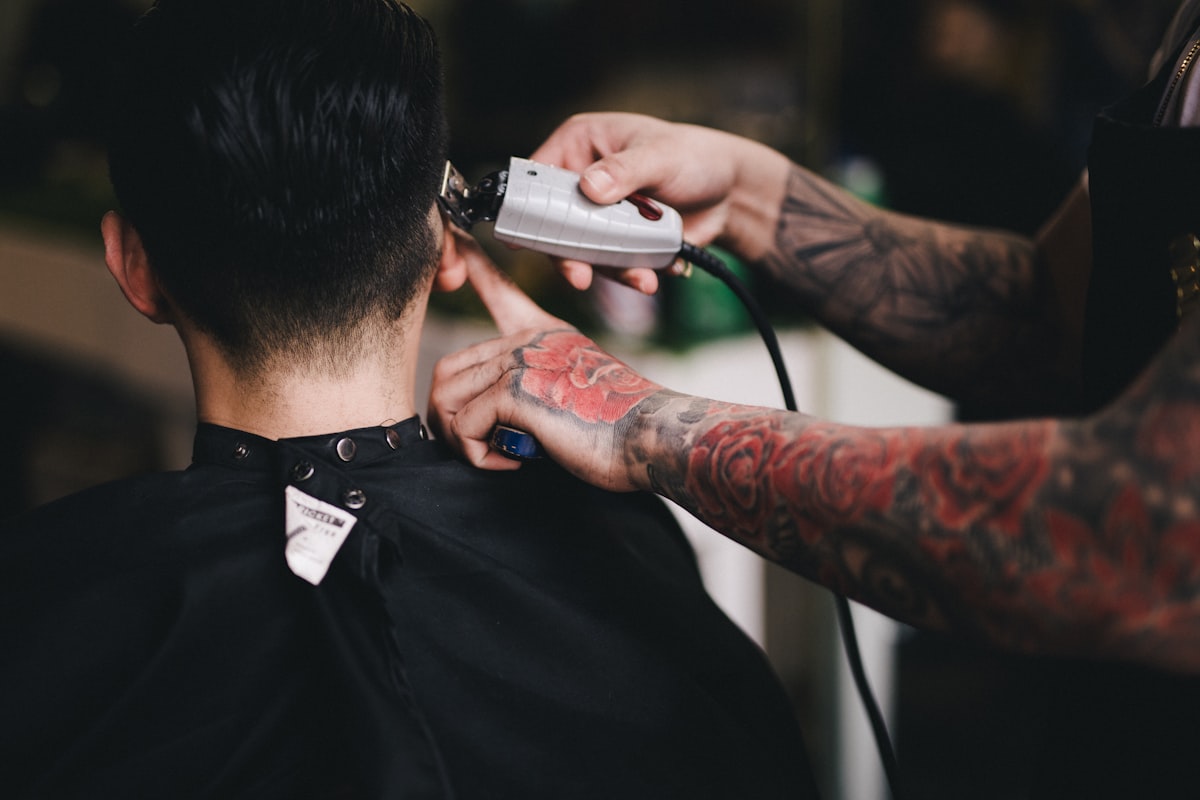
A skin fade or mid-fade on the sides and back creates the contrast that makes the slick back read as a finished style rather than simply long hair combed back. Without the fade, the slick back looks like hair that outgrew its cut. The fade is what transforms the overall look into a deliberate, barbershop-crafted style.
Styling at Home
Apply a strong-hold pomade or wax to damp hair. Use a comb to direct all sections of the top backward from the front hairline toward the crown and back. A blow dryer pointed backward at the front section during styling helps train the hair in that direction. Finish by combing the final shape smooth and allowing it to set. Oil-based pomades hold the slick back through the day with a high-shine finish; water-based options hold well but may break down by late afternoon in humid conditions.
CADMEN Training
Slick back construction and top-section management are covered in CADMEN's barbering curriculum. academy.cadmen.ca/in-person-training.
Frequently Asked Questions
What is a slick back hairstyle?
A slick back is a men's hairstyle where the hair on the top of the head is combed or brushed uniformly backward from the forehead, with all the top sections moving in the same backward direction and no part dividing the top. The sides are typically cut shorter through a fade or taper, creating strong contrast between the sleek, combed top and the close-cut sides. The style is associated with precision, formality, and a classic barbershop aesthetic. The slick back has been present in men's grooming culture for over a century, appearing in various forms across the 20th century and maintaining consistent relevance through multiple era shifts. The style works best on straight or wavy hair with sufficient length (typically 3 to 6 inches on top). On shorter lengths, the hair tends to fall forward rather than staying back. On curly hair, maintaining the backward direction requires significantly more product and effort than on straight hair, and the result is often more of a slicked curl than a true slick back. The style is higher-maintenance than most contemporary barbershop cuts, it requires daily product application and combing to look intentional, and it is more sensitive to wind, moisture, and activity than textured or casual cuts. Men who maintain a slick back typically use it as a work or evening style with the understanding that it needs specific care to stay in shape.
How is a slick back different from a comb-over?
A slick back and a comb-over are both styles that involve directing hair in a specific backward direction, but they differ in purpose and execution. A slick back: all the hair on the top section is swept uniformly backward, with no attempt to cover any specific area. The direction is backward, not to one side. The result shows the hairline as it actually is, no coverage is implied. The style assumes a full head of hair being directed backward as a deliberate aesthetic choice. A comb-over in its common modern use: the hair is swept to one side, typically from a part, to cover or minimize a receding hairline or thinning area. The direction is lateral (across the head) rather than purely backward, and the intent is often to maximize the coverage of the longer sections over less-covered areas. The comb-over is associated with concealment; the slick back is associated with aesthetic choice. There is also a specifically modern barbershop interpretation of the comb-over as a style choice for men who do not have hair loss, a side-swept, high-volume version of a side part that is called a comb-over without any concealment purpose. In this context, the distinction from a slick back is direction: the comb-over goes to the side, the slick back goes straight back.
What product is best for a slick back?
The product choice for a slick back depends on the desired finish and hold duration. Oil-based pomade: the traditional slick back product. Provides strong, long-lasting hold with a high-shine finish. Works on damp or dry hair. The hold is more durable through the day than most water-based alternatives. Limitations: requires shampoo to fully remove (does not wash out with water alone), can build up on the hair over multiple uses without thorough washing, and may feel heavy in warmer weather. Water-based pomade: provides strong hold with high shine, similar appearance to oil-based pomade but washes out with water. The hold is somewhat less durable than oil-based, particularly in humid conditions or with physical activity. Best for men who want the slick back look without the difficulty of removing an oil-based product. Hair gel: an older product for slick backs that works but has largely been replaced by pomades in professional settings. Provides strong hold and high shine but dries to a stiff finish that does not allow restyling and can flake through the day as it breaks down. Clay or wax with strong hold and low sheen: works for a matte version of the slick back, though a true slick back is traditionally associated with a high-shine finish and these products produce a less classic result. The classic pairing: a quality water-based pomade for everyday use, switching to oil-based for occasions where maximum hold duration is needed.
Related Reading From CADMEN Barber Academy
- The Slick Back Haircut for Men: What It Is and How to Style It
- Slick Back Haircut for Men: How to Wear It and Style It
- Short Back and Sides: What the Term Means and What to Expect
- How to Slick Back Men's Hair: Technique and Product Guide
- The Slick Back for Men: Products, Technique, and How to Make It Last
- 7 Reasons Why You’re Clients Aren’t Coming Back
Want to learn to cut a slicked back cut yourself? CADMEN Barber Academy teaches cutting hands-on, with an educator beside you. See the barber academy in Mississauga or view in-person classes and send an enquiry.
Watch the free Barbering for Beginners playlist on YouTube.
