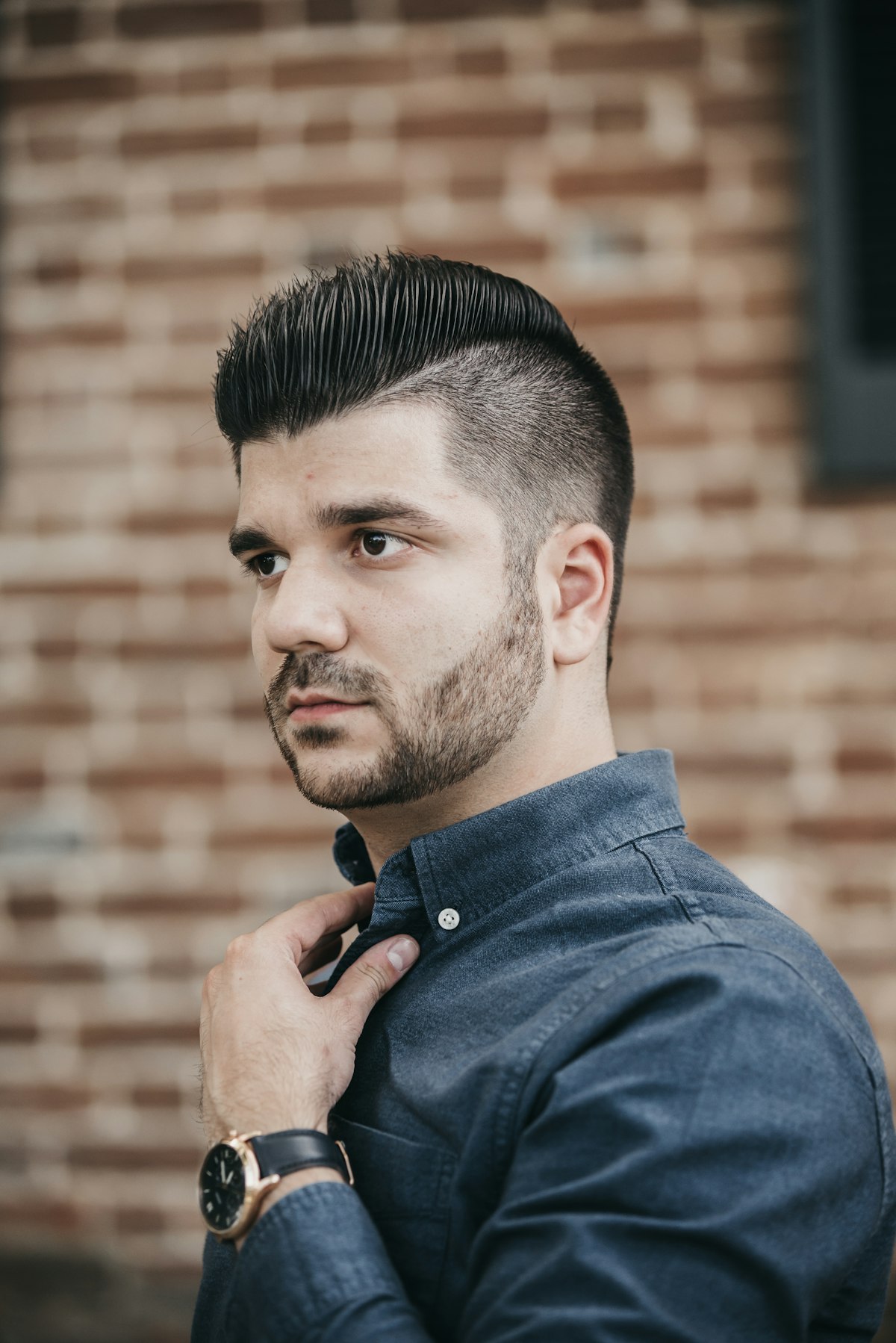
Skin Fade vs Bald Fade: What Is the Difference?
Skin Fade vs Bald Fade: What Is the Difference?
Skin fade and bald fade refer to the same haircut technique. Both terms describe a fade that reaches the bare skin, the hair length graduates from a guard length above to zero to bare skin at the lowest point of the fade. The two terms are used interchangeably across different regions and barbershop communities. Understanding what they mean and how they differ from other fades helps when requesting a specific result.
What a Skin Fade Actually Means
In a skin fade, the lowest portion of the sides and back are cut to the bare skin with no guard, clippers run directly against the skin at the neckline, around the ears, and along the temple. Above this bare-skin zone, the hair graduates through increasingly longer guard sizes before reaching the full-length sides or top section. The result is a high-contrast fade where the lowest section is completely hair-free and the gradient above it creates a smooth transition.
The height at which the skin portion sits (low, mid, or high) determines how much of the head is bare versus faded. A low skin fade has the bare section only at the very bottom, at and just above the natural hairline. A high skin fade has the bare section much higher on the head, sometimes reaching above the temples.
How It Differs from a Zero Fade
A zero fade reaches the bare clipper blade (0.5mm, the shortest guard that is still technically a guard) but does not go to skin. The lowest point of the fade is very short but not completely bare. On close inspection, a zero fade retains a faint shadow of hair at the lowest section. A skin fade removes this shadow entirely. The difference is visible at close range and matters to clients who want the cleanest possible transition at the baseline.
How It Differs from a Taper
A taper is not a fade. A taper shortens the hair at the neckline and sides without producing a gradient effect, the hair length transitions from the full side length to shorter at the natural hairline, but without the smooth blended graduation that defines a fade. A taper is a natural-looking finish appropriate for more conservative styles. A fade (skin, zero, or guard-based) is a sharper, higher-contrast technique.
CADMEN Training
Fade technique at every level is covered in CADMEN's hands-on program. academy.cadmen.ca/in-person-training.
Frequently Asked Questions
What is the difference between a skin fade and a bald fade?
There is no difference. Skin fade and bald fade are two names for the same haircut outcome: a fade where the lowest portion of the sides and back is cut to bare skin. "Bald" in the context of a bald fade refers to the hair being completely absent at the lowest point, the same as "skin" in skin fade. Regional preference determines which term a barber or shop uses. In the US, both terms are common, with "skin fade" slightly more prevalent in recent years. In the UK and Caribbean barber traditions, "bald fade" is more common. When booking or requesting this style, either term will be understood by a professional barber as the same technical outcome: the fade transitions to bare skin at the lowest section. The height of the skin/bald section (low, mid, or high) is the meaningful variable to specify beyond the base term.
Is a skin fade the same as a zero fade?
No, they are different outcomes that are often confused. A zero fade finishes at the bare clipper blade, approximately 0.5mm of hair. At close range, a zero fade retains a very faint shadow at the lowest section. A skin fade goes below the zero to bare skin by running the open blade with no guard directly against the skin. The skin fade has no visible shadow at the lowest section. The difference is subtle when viewed at normal distance but visible up close, especially in certain lighting. For most haircut styles, both a zero fade and a skin fade produce a very sharp, clean result. The client's preference for the degree of skin visibility at the neckline and around the ears determines which is appropriate. Clients who want absolutely no visible shadow at the baseline request a skin fade. Clients who prefer a very short but slightly present baseline opt for a zero fade.
Does a skin fade grow out quickly?
Yes. A skin fade shows visible regrowth faster than any other fade type because the contrast between the bare-skin baseline and the incoming stubble is the most dramatic visible change in the haircut. Within 1 to 2 weeks, a shadow of regrowth is visible at the skin section. Most clients maintaining a sharp skin fade return every 2 to 3 weeks for touch-up. This is more frequent than the 4 to 6 weeks typical of longer styles or lower-contrast haircuts. The maintenance cost (in time and money) is higher for a skin fade than for a taper or mid-guard fade. Clients who want a low-maintenance haircut are generally better served by a taper, a mid fade that stops at a guard length rather than skin, or a longer side length that ages more gracefully between appointments.
What guard sizes are used in a skin fade?
A skin fade uses a progression of guard sizes from the bare blade (no guard) at the lowest section upward. A typical progression for a low skin fade: bare skin at the neckline transition zone (approximately 0 to 1.5 cm above the natural hairline), Guard 0 or 0.5 above this (creating a transition from bare skin to the faintest blade length), Guard 1 above that (3mm), Guard 1.5 or 2 (4.5 to 6mm), continuing upward in half-guard or full-guard increments until reaching the full side length. The specific progression varies by barber and by the desired blend speed (tight fade versus gradual fade). A tight fade uses more incremental steps to create a seamlessly blended transition. A more abrupt blend uses fewer steps and creates higher contrast. The barber uses blending shears and clipper-over-comb technique in addition to guards to refine the transition zones between guard sizes.
How do you ask for a skin fade at the barbershop?
Tell the barber "skin fade" (or "bald fade") and specify the height: "low skin fade," "mid skin fade," or "high skin fade." If you have a reference photo, show it, the photo specifies the height and overall aesthetic more precisely than the height term alone, since "mid" can vary slightly between barbers. If you are unsure which height you want, describe what you are looking for: "I want it short on the sides but I don't want a lot of bare skin showing" = low skin fade. "I want the fade to start up at my temples" = high or burst skin fade depending on the direction. "I want something in between, classic barbershop look" = mid skin fade. Adding the top style or overall haircut name (skin fade undercut, skin fade taper, skin fade with a comb-over) further specifies the result. The more specific the request, the closer the result matches the intention.
Related Reading From CADMEN Barber Academy
- Bald Fade vs Skin Fade: Are They the Same Thing?
- Bald Fade vs Skin Fade: Is There a Difference and Which Should You Get?
- How to Cut a Bald Fade Step by Step
- The Bald Fade: What It Is, Who It Suits, and How to Maintain It
- The Bald Fade: Technique and Common Mistakes
- The Skin Fade: A Complete Guide to What It Is and How It Is Done
Want to learn to cut a skin fade yourself? CADMEN Barber Academy teaches cutting hands-on, with an educator beside you. See the barber academy in Mississauga or view in-person classes and send an enquiry.
Learn this fade step by step in our free Fade Tutorials playlist on YouTube.
