The Quiff Haircut: How to Get It and Style It
The Quiff Haircut: How to Get It and Style It
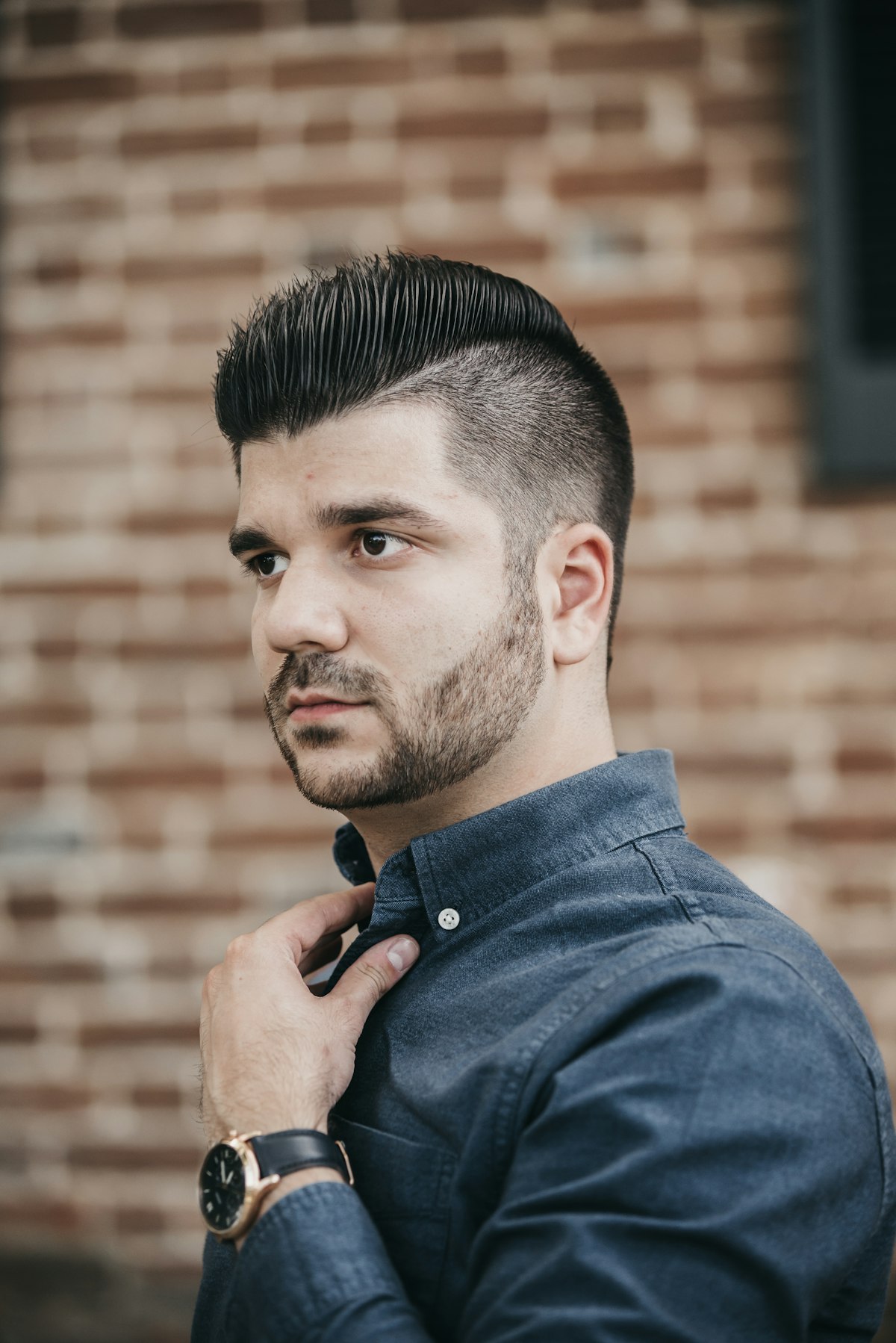
The quiff is a men's haircut where the front section is styled upward and slightly forward, creating a peak or wave at the hairline. Unlike the pompadour, which sweeps strictly backward, the quiff has a forward or upward direction that creates height at the front of the head. The sides are typically faded or tapered. It is a classic structure that has remained continuously present in barbershop culture for decades.
Quiff vs. Pompadour: The Key Difference
Both the quiff and the pompadour build volume at the front of the head, and the names are sometimes used interchangeably. The distinction: the pompadour sweeps backward from the hairline, with the front section rolling back toward the crown in a wave. The quiff sweeps upward or slightly forward, the front section rises before folding back, creating a peak that is closer to the forehead. The quiff also typically has a less dramatic structure than a full pompadour, though the line between the two styles is not strict. In practice, many cuts described as quiffs have elements of both styles.
How Barbers Cut a Quiff
The top section is cut with more length at the front and gradually shorter toward the crown (the reverse of many other cuts). This front-loading of length provides the material for the upward-sweeping quiff front. The sides are faded or tapered to create contrast with the top volume. Internal texturizing of the front section removes weight while maintaining the length needed to build the style.
Styling a Quiff
A blow dryer and hold product are typically required. Apply a volumizing product or hold cream to damp hair. Blow dry the front section while directing the hair upward from the roots, lifting the front section away from the forehead. Finish by applying a small amount of pomade or wax to control the shape and separate or smooth the surface as preferred. The front peak requires the root lift from the blow dry to maintain height through the day.
CADMEN Training
Top-section construction and styling technique are covered in CADMEN's barbering curriculum. academy.cadmen.ca/in-person-training.
Frequently Asked Questions
What is a quiff haircut?
A quiff is a men's haircut defined by a top section styled to create height and volume at the front of the head, with the front section swept upward or slightly upward-and-forward from the hairline. The sides are typically cut shorter through a fade or taper. The defining characteristic is the front section's upward direction and the height it creates near the forehead, which differentiates it from a side part (which sweeps laterally) and from a classic pompadour (which sweeps strictly backward). The quiff is a versatile base structure because the front volume can be styled in many ways, loosely and textured for a casual interpretation, heavily pomaded and precise for a classic barbershop look, or with a natural wave emphasized by the cut's front-loading of length. The term quiff has British origins and is more commonly used in UK and European barbershop culture, while similar styles in North America may be described as pompadours, high-volume crops, or simply "volume on top." The underlying structure is the same: front-weighted length on top, shorter sides, and styling direction that goes upward at the front rather than sideways or backward. The style has been continuously present in men's grooming since at least the 1950s and has cycled through various interpretations, from the tight, glossy, heavily-pomaded versions associated with that era to the loose, matte textured versions popular in contemporary barbershop culture.
How is a quiff different from a pompadour?
The quiff and the pompadour are related styles that share a front-volume structure and are often confused or used interchangeably, but they have a meaningful technical distinction. The pompadour: the front section is swept backward from the hairline toward the crown, creating a rolling wave that moves away from the face. The peak of the volume is typically at the front hairline, and the hair falls backward from there. The characteristic look is a backward-rolling front section with height that diminishes from the hairline toward the crown. The quiff: the front section rises upward and may have a slight forward lean at the peak before dropping back. The direction is upward rather than backward, and the peak often sits directly above or just behind the front hairline rather than rolling smoothly away from it. The quiff tends to have a more upright, peak-like front section; the pompadour tends to have a more rounded, swept-back front section. In practice, many haircuts combine elements of both, some quiffs have significant backward sweep, and some pompadours have an upright front section. The difference is clearest at the extremes: a rockabilly pompadour (strongly backward, heavily pomaded) and a British quiff (upright peak, forward lean) are clearly distinct. The middle range overlaps significantly, and barbers and clients often describe the same cut with either name. Reference photos are more useful than either term alone for communicating exactly what you want.
Does a quiff suit round faces?
A quiff is generally well-suited to round faces because the upward volume at the front of the head adds visual height that elongates the face. Round faces benefit from haircuts that create the impression of length, vertical height reduces the perception of circularity in the face's proportions. The quiff's front volume does this directly by adding height above the forehead. The tapered or faded sides that accompany the quiff further elongate the face by removing visual width at the sides. The combination of less width (from close-cut sides) and more height (from the front volume) is flattering for round faces. How much this effect is enhanced: a higher fade (skin fade starting at the temple) maximizes the width reduction and makes the height contrast more dramatic. A very high quiff with significant front volume creates maximum elongation. The effect can be modulated based on how dramatic the result is wanted, a modest quiff with a mid-fade produces a subtle elongation; a high quiff with a high skin fade produces a dramatic one. What to avoid for round faces with any hairstyle: very voluminous sides that add width, very flat top sections that add width without height, or styles that spread the silhouette horizontally. The quiff does the opposite of these and is a strong choice for round face shapes for that reason.
Related Reading From CADMEN Barber Academy
- The Quiff Haircut for Men: What It Is and How Barbers Build It
- Gray Hair in Men: When to Embrace It and How to Style It
- The Pompadour Haircut: How to Cut and Style It
- The Quiff: What Makes It Work and How to Style It
- The Men's Quiff: How to Cut and Style It
- The Quiff Haircut: How to Get It and Style It
Want to learn to cut a quiff yourself? CADMEN Barber Academy teaches cutting hands-on, with an educator beside you. See the barber academy in Mississauga or view in-person classes and send an enquiry.
Watch the free Barbering for Beginners playlist on YouTube.
