Barber Tools: What Professional Barbers Use and Why
Barber Tools: What Professional Barbers Use and Why
The quality of a barber's tools directly affects the quality of the cut. Dull blades cause pulling and uneven blending. An underpowered clipper struggles with thick hair. The wrong comb for the technique produces inconsistent results. Here is what professional barbers use and why each tool matters.
Clippers
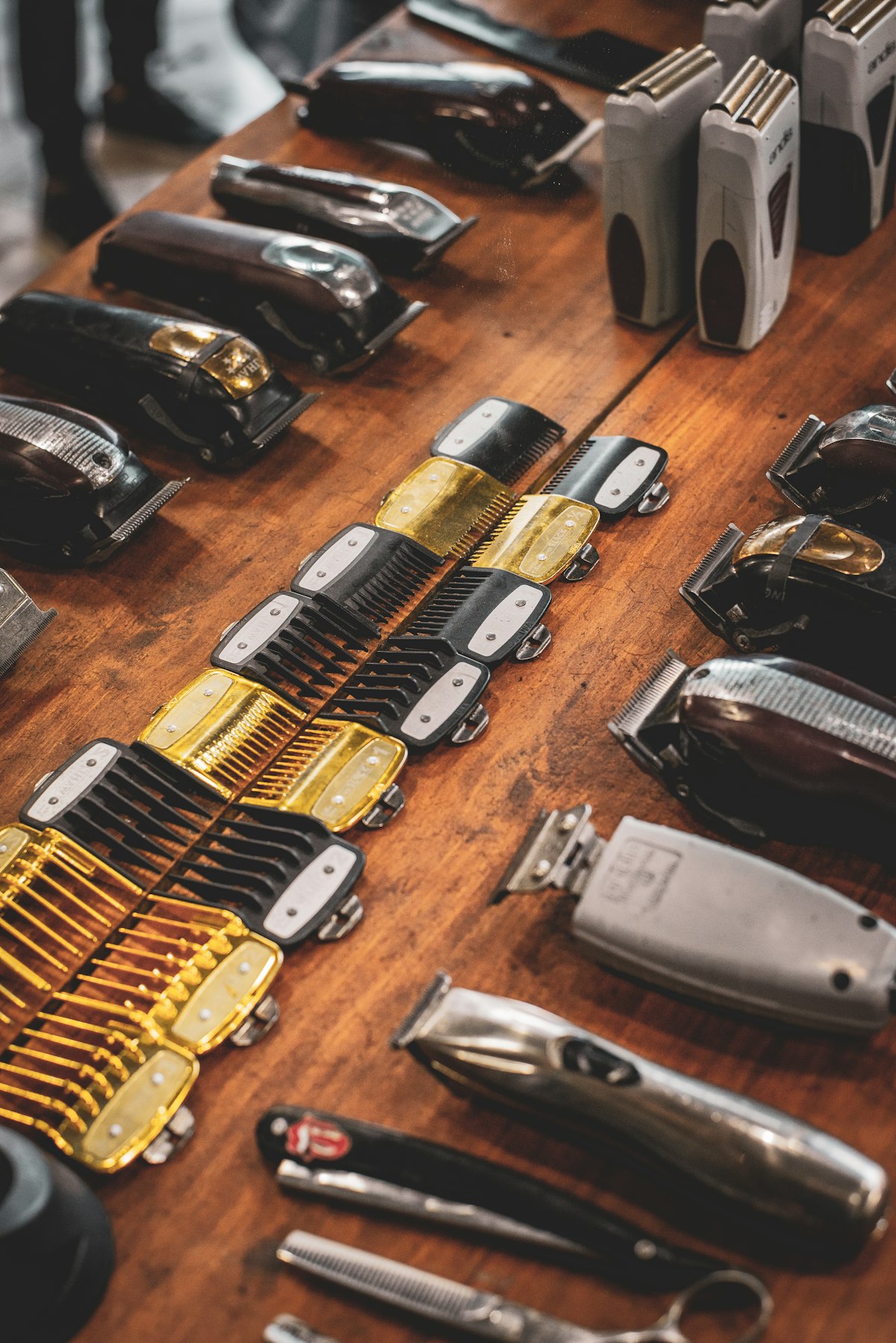
The primary cutting tool for most men's haircuts. Professional-grade clippers have more powerful motors, run cooler, and maintain blade alignment longer than consumer models. For fades specifically, the blade alignment and motor consistency determine how smoothly the graduation blends between guard lengths. Barbers typically keep multiple clippers, different blade configurations handle different tasks in the same haircut.
Trimmers and Detailers
Smaller than clippers, trimmers have finer blades designed for close detail work, edges, hairlines, beards, and the finishing detail that creates a clean finished look. The zero-gap or near-zero blade of a professional trimmer produces the crisp lines that define the silhouette of the haircut. The T-blade configuration on many professional trimmers allows closer work in tighter areas than a standard clipper blade.
Shears and Scissors
Scissors in barbering serve different purposes from clipper work. They are used for length reduction on top sections where a softer finish is preferred, for texturizing (thinning shears remove bulk without changing the overall length), and for cutting techniques that require more control over the fall and direction of the hair than clippers allow. Barbers working in a primarily scissor-based style, as opposed to clipper-dominant, invest significantly in Japanese or German steel shears that hold an edge longer and cut with less compression of the hair shaft.
CADMEN Training
Proper tool selection, maintenance, and technique are foundational elements of CADMEN's in-person barbering program. academy.cadmen.ca/in-person-training.
Frequently Asked Questions
What clippers do professional barbers use?
Professional barbers typically use a combination of clippers from a few well-established brands, selected based on performance characteristics rather than brand loyalty alone. The most widely used professional clipper brands: Wahl is the most commonly seen brand in North American barbershops. The Wahl Senior, Wahl Magic Clip, and Wahl 5-Star Cordless are particularly widespread. The Senior is favored for its power and blade performance; the Magic Clip for its fade blade and cordless convenience; the 5-Star line overall for its reliability and the ecosystem of interchangeable parts. Andis is the other dominant brand in professional barbershop settings. The Andis Master (a corded clipper with a powerful rotary motor) is considered a benchmark tool among barbers. The Andis Fade Master and Andis Cordless are also widely used. The Master's motor durability and blade quality make it a long-term investment that many barbers keep for years or decades. BaByliss Pro (specifically the FX series) has grown significantly in professional usage over the past several years. The FX870 and FX870G are popular for their motor performance and ergonomic design. What to look for in professional clippers: motor type (rotary motors vs. magnetic motors, rotary motors are more powerful and better suited for thick hair; magnetic motors are lighter and faster), blade quality and alignment (blade alignment determines how cleanly the clipper fades), noise and heat (professional-grade motors run cooler and quieter than consumer models), and repairability (professional barbers use tools heavily, tools that can be serviced and have replacement parts available last far longer).
What is the difference between clippers and trimmers?
Clippers and trimmers serve different functions in a haircut and are built differently to handle those functions. Clippers: larger body, wider blade (typically 1.75 to 2 inches), more powerful motor, designed for bulk cutting and the main fade work. Clippers use interchangeable guards of different lengths to cut and blend through the bulk of the hair. They are the primary cutting tool for the fade, the sides, and the length reduction on top in most contemporary haircuts. Trimmers (also called edgers or detailers): smaller body, narrower blade (typically 0.5 to 1 inch), designed for precision detail work rather than bulk cutting. Trimmers are used for hairline edges (sideburns, neckline, forehead hairline), beard shaping and detailing, and fine finishing work that requires more control than a full-size clipper allows. The T-blade configuration common in professional trimmers allows the barber to work in tight areas and create very clean lines. The most important difference in use: clippers blend and reduce length; trimmers define and edge. A typical haircut uses clippers for the majority of the work, the fade, the blending, the length throughout the sides and back, and trimmers for the finishing detail at the hairline and edges. Some barbers also use a zero-gapped trimmer (a trimmer with the blade adjusted for extremely close cutting) to refine the lowest part of a skin fade after the main clipper work is complete. The two tools work as a system: clippers build the shape, trimmers finish it.
Why do barbers use different combs?
Different comb types are suited to different techniques and hair types. The major comb categories barbers use and what each is for: the cutting comb (also called a barber comb or all-purpose comb), typically 7 to 8 inches long with fine teeth on one half and wider teeth on the other. The fine side is used for detailed sectioning and scissor-over-comb work; the wide side for distribution and working through thicker or tangly hair. This is the most-used comb in most haircuts. The tail comb (rat-tail comb), a comb with a long pointed metal or plastic handle extending from one end. Used primarily for sectioning and parting, the pointed tail draws clean part lines. Common in classic barbershop work and any haircut that requires precise parting of the hair before scissor work. The wide-tooth comb, larger teeth, more space between them. Used for distributing product through the hair, working through curly or coily hair without excessive tension, and general detangling without pulling. Barbering combs are often made of hard rubber or a durable plastic that handles heat from blow-dryers and resists the chemicals in styling products. Metal combs are used for specific techniques (the metal afro comb for picking out coily hair, for example) but are less common in general barbering. Carbon-fiber combs are antistatic, which reduces the flyaway that causes fine hair to stand up unpredictably during cutting. The right comb for the specific technique matters: using the wrong comb for scissor-over-comb work, for example, produces inconsistent guide lengths and uneven blending.
Related Reading From CADMEN Barber Academy
- The Top 5 Most Important Tools to Have in Your Barber Beginner Kit
- What Tools Do You Need to Start as a Barber: The Starter Kit That Covers Every Cut
- Barber Tools List: Every Piece of Equipment a Professional Barber Needs
- Barber Tools: What Each One Does and Why Barbers Use It
- Barber Tools Explained: What Every Instrument in the Shop Actually Does
- What Happens During a Barbershop Shampoo and Why It Differs from Home Washing
