The Pompadour Haircut: How It Works and How to Style It
The Pompadour Haircut: How It Works and How to Style It
The pompadour is defined by volume and direction: the hair on top is grown to sufficient length and then styled upward and back, away from the face, creating height at the front. The sides are cut shorter, creating contrast that emphasizes the volume on top. The cut originated in the 18th century but gained its strongest cultural presence through 1950s rock-and-roll style and has maintained mainstream relevance since. Here is what makes it work and what it requires.
What Makes a Pompadour Different from a Quiff or a Side Part
The pompadour is swept straight back from the forehead, creating a rounded, voluminous front section that has height and backward momentum. The quiff is swept upward at the front and slightly forward or to the side, more of a forward peak than a backward sweep. The side part is swept laterally across the forehead to one side with no specific requirement for front height. The pompadour's signature characteristic is the backward sweep with height, the front section of hair rolling back like a wave.
How Barbers Cut a Pompadour
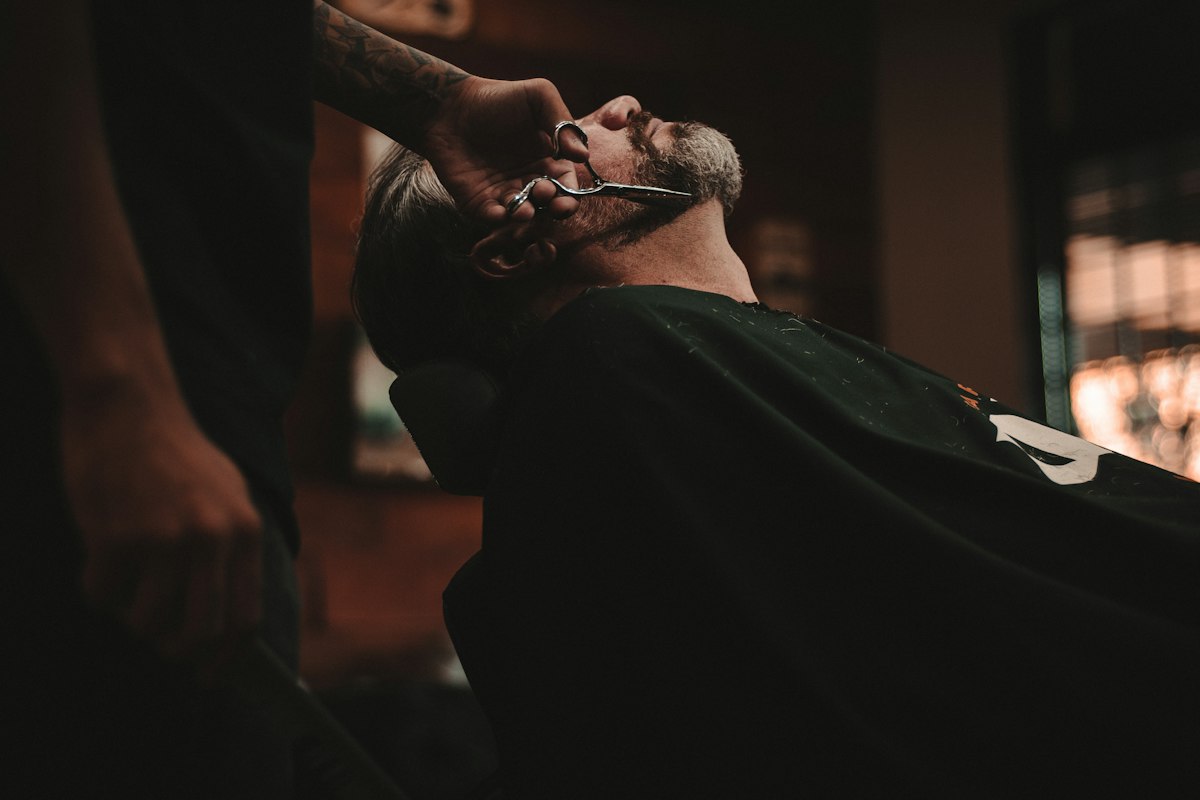
The top section is left long enough to achieve the desired volume, typically 4 to 6 inches for a moderate pompadour, longer for a high or dramatic version. The sides and back are faded or tapered to create the contrast between the length on top and the clean sides. The transition point where the top section meets the sides is critical, the barber blends this with care to avoid a shelf or visible line at the boundary. Internal texturizing of the top section removes excess weight that would prevent the hair from holding volume and direction.
Styling a Pompadour at Home
A pompadour requires a strong-hold product and a blow dryer for most hair types. Apply a hold product (pomade or wax) to damp hair. Use the blow dryer pointed forward at the front hairline to push the front section upward and backward while directing the roots in the intended direction. Finish by running a comb or brush through the shape to set the final form. Strong-hold pomades maintain the shape through the day; lighter products allow the style to relax by afternoon.
CADMEN Training
Pompadour construction and top-section styling are covered in CADMEN's barbering curriculum. academy.cadmen.ca/in-person-training.
Frequently Asked Questions
What is a pompadour haircut?
A pompadour is a men's haircut defined by a top section of hair that is grown longer and styled to sweep upward and backward from the forehead, creating height and volume at the front of the head. The sides and back are cut shorter (typically via a fade or taper) to create contrast that makes the top section visually prominent. The defining characteristic is the backward sweep from the forehead: the front hairline area is typically the highest point of the style, and the hair flows backward and downward from there. The pompadour has been worn in some form since the 18th century but entered mainstream men's grooming culture through 1950s cultural icons. It has remained a barbershop staple because the basic structure adapts to different eras and aesthetics: a tight skin fade and heavy product makes it contemporary and urban; a classic taper with a natural finish reads as vintage. The style varies significantly in volume, from a low, understated backward sweep to a dramatic high volume that extends several inches above the forehead. The hair length required increases with the desired volume. Short pompadours work with 2 to 3 inches on top; high volume classic pompadours may require 5 or more inches on top to achieve the intended shape.
How long does hair need to be for a pompadour?
The minimum hair length for a wearable pompadour is approximately 3 inches on top. At 3 inches, the barber can create a low, contained pompadour with a backward sweep, but the volume will be limited. The most common length range for a moderate pompadour is 4 to 6 inches on top, this provides enough length to build meaningful volume and achieve the characteristic wave shape. For a high or dramatic pompadour (the kind associated with classic rockabilly style), 6 to 8 inches or longer is needed at the top section. The sides and back are typically cut short regardless of the top length, so the overall time to grow a pompadour from short hair depends primarily on how much top length the client wants to achieve. Average hair growth is approximately half an inch per month. Going from a close crop to a 4-inch top takes approximately 6 to 8 months, accounting for ongoing side maintenance cuts during the growing phase. Men transitioning from a short cut to a pompadour often go through an awkward mid-length phase where the top is not long enough to properly style. Barbers can advise on intermediate cuts that manage the growing phase with reasonable results.
What products are needed for a pompadour?
The product choice for a pompadour depends on the finish and hold level required. Strong-hold pomade (oil-based or water-based): the most traditional pompadour product. Provides strong hold and a high-shine finish. Oil-based pomades have more hold and longer-lasting shine but are harder to wash out. Water-based pomades are easier to wash out while providing similar aesthetics. This product is right for a shiny, defined classic pompadour. Strong-hold wax or clay with matte finish: provides strong hold without the shine. Modern pompadour styling often uses this for a more contemporary, natural-looking finish. Right for men who want the shape and volume of a pompadour without the slicked-back shine. Volumizing mousse or spray (applied to damp hair before blow drying): adds lift and volume at the roots during the blow dry process. Used as a base product under the finishing product, not as the sole product. Right for men with fine or thin hair who need help building and holding volume. Blow dryer technique matters as much as product: for the pompadour, direct the dryer at the front hairline from below, pointing upward, while combing or brushing the top section backward. This builds the root lift and backward momentum before the product sets the final shape. Without blow dryer technique, many pompadour products produce a flat result regardless of their hold strength.
Related Reading From CADMEN Barber Academy
- The Pompadour Haircut: How to Cut and Style It
- The Pompadour Fade: How to Get It and Keep It Sharp
- The Pompadour for Men: What It Is, Where It Came From, and How Barbers Build It
- The Pompadour: What Makes It Work and How to Style It
- The Pompadour Haircut: How to Cut and Style the Volume-Dependent Classic
- The Pompadour Haircut: What It Is, Its Variations, and How to Ask for One
Want to learn to cut a pompadour yourself? CADMEN Barber Academy teaches cutting hands-on, with an educator beside you. See the barber academy in Mississauga or view in-person classes and send an enquiry.
Watch the free Barbering for Beginners playlist on YouTube.
