The Textured Haircut for Men: What It Means and How It's Cut
The Textured Haircut for Men: What It Means and How It's Cut
Texture is one of the most commonly used words in modern barbershop requests. "I want it textured," "keep it textured," "can you add some texture to the top", barbers hear these phrases constantly. The word means different things in different contexts, and understanding what creates texture in a haircut helps both clients communicate better and barbers deliver more consistently.
What Texture Means in Barbering
In a haircut context, texture refers to visible variation in the cut ends of the hair, the opposite of blunt, straight-cut ends that create a uniform, solid silhouette. A textured cut has ends that are cut at varying lengths and angles, creating movement, depth, and a less structured, more natural look.
Texture is achieved through technique, not just length. You can have a short textured cut (2 inches on top, heavily point-cut) or a long textured cut (5 inches, heavily layered with soft ends). The texture comes from how the ends are cut, not how short the hair is.
Techniques That Create Texture
Point-cutting: Instead of cutting straight across the section (which produces a blunt, even edge), the scissors are angled and the tips of the blades cut into the end of the section. This produces varying lengths at the perimeter of the cut section, creating the ragged, soft end that falls with movement rather than in a solid line.
Texturizing shears (thinning shears): Scissors with serrated or comb-like teeth on one blade remove weight from within the section without cutting the full perimeter. Used throughout the top section, thinning shears reduce bulk and create internal variation in the hair without significantly reducing length. The result is hair that moves more freely and sits flatter without heaviness.
Slicing: The scissors are opened slightly and the blade is slid down the surface of a section in a slicing motion, removing weight along the length rather than at the ends. Produces a similar lightening effect to thinning shears with a different quality of movement in the hair.
What a Textured Cut Looks Like
A well-executed textured haircut has: visible movement when the hair shifts (rather than moving as a solid mass), defined but soft ends, a layered appearance without visible stepping between layers, and a natural look that does not require heavy product to hold a shape.
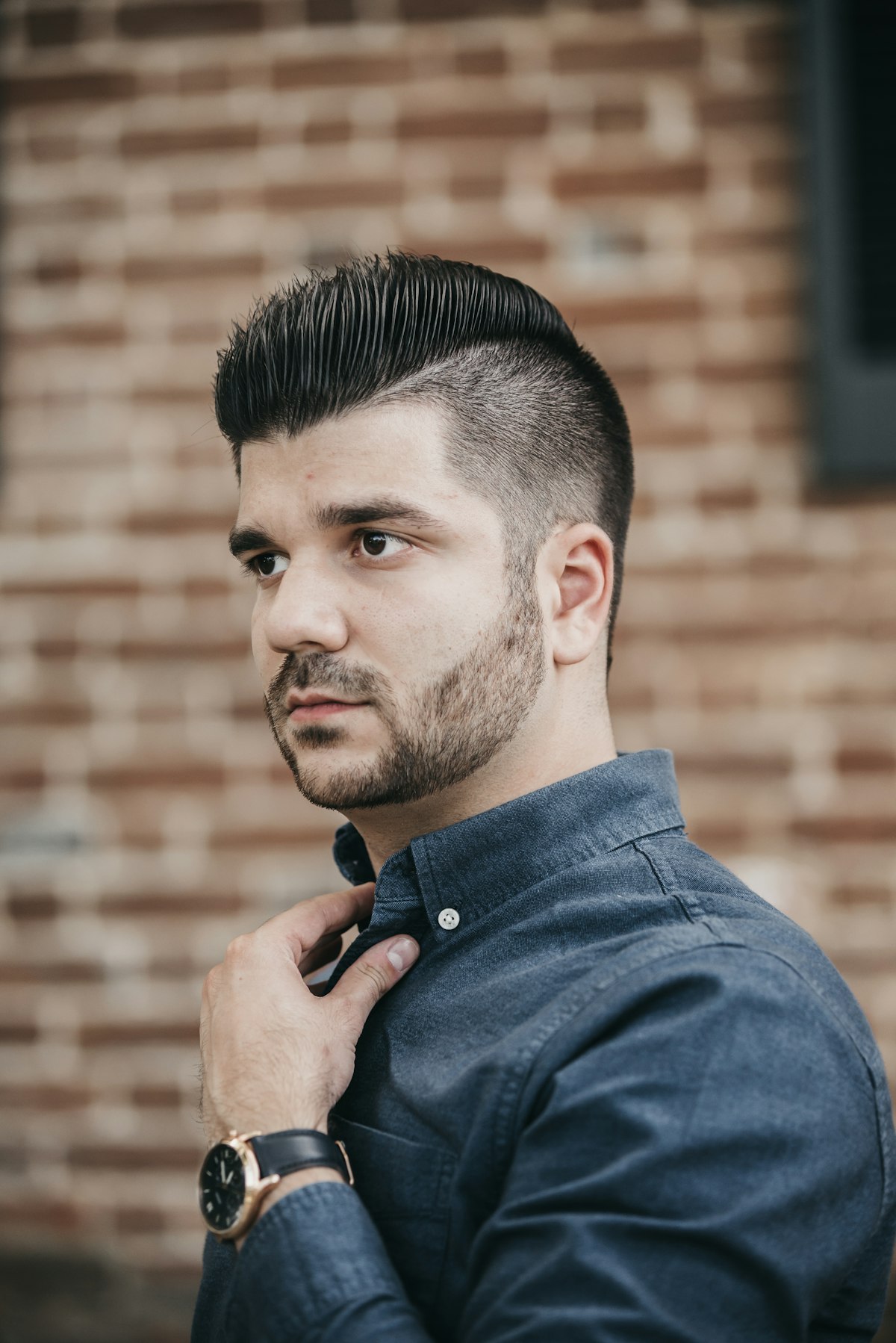
The most commonly requested textured styles in current barbershops: the textured crop (short top with heavily point-cut ends and a fringe), the textured quiff or pompadour (volume with soft, textured surface rather than smooth pomaded finish), and the textured fringe (see fringe haircut).
CADMEN Training
Texture technique, point-cutting, thinning shears, and slicing, is covered in CADMEN's hands-on barbering program. academy.cadmen.ca/in-person-training.
Frequently Asked Questions
What does a textured haircut mean?
A textured haircut is a cut where the ends of the hair are cut at varying lengths and angles (rather than straight across), creating visible movement, depth, and a naturally varied surface rather than a solid, uniform silhouette. Texture is the opposite of a blunt cut, blunt cuts produce hard, clean edges where all ends are cut to the same length; textured cuts produce soft, varied ends that move independently. In modern barbershop requests, "textured" typically means the barber should use point-cutting (angling the scissors and cutting into the end of each section) and/or thinning shears (removing internal weight) on the top section to produce a cut that looks natural and moves easily rather than lying flat or sitting in a rigid shape. The word is also used more loosely to describe styles associated with a relaxed, natural aesthetic, a "textured crop" describes not just the technique but the overall look of the style.
How is a textured haircut different from a regular haircut?
A "regular" haircut typically implies that sections are cut straight across at a uniform length, a clean, even result with defined edges. A textured haircut specifically uses techniques like point-cutting, thinning shears, or slicing to create variation in the cut ends, removing weight and creating movement. The practical difference in the result: a regular haircut has a more structured, geometric look; a textured haircut has a softer, more natural appearance that looks less "fresh cut" and more lived-in over time. From a maintenance perspective, textured cuts also grow out more gracefully than blunt cuts because the varied ends at the perimeter soften the overgrown look rather than producing a hard, overgrown line. Many clients who feel like their hair "just doesn't look right a week after a haircut" benefit from switching from a blunt to a textured approach.
What hair types look best with a textured haircut?
Textured cuts work well on most hair types but are particularly effective for: thick or dense straight hair, where removing weight through texture technique prevents the hair from sitting too heavily flat; wavy hair, where texture enhances the natural wave movement; and fine hair, where point-cutting and thinning adds apparent volume and movement to hair that would otherwise lie flat. The only hair type where texture technique requires the most care is very curly or coily hair, the texture technique (especially thinning shears) can remove too much bulk on very curly hair and create imbalanced volume. On coily hair, many barbers use a lighter version of texture technique or skip thinning shears entirely, relying on the natural curl pattern for movement rather than artificial texturizing. On straight, fine hair: most effective. On thick, straight hair: very effective. On wavy hair: effective. On curly and coily hair: use with care and lighter hand.
Does a textured haircut require styling products?
Less than a structured cut, in most cases. A textured cut is specifically designed to look natural and move freely, the cut itself creates the look rather than relying on heavy product for shape. Most men with textured cuts use a light to medium product: a matte clay, a light cream, or a sea salt spray. Heavy pomades or gels that smooth and control the hair work against the textured aesthetic by removing the movement and definition the cut created. Air-drying a textured cut typically produces a good result with minimal or no product. Blow-drying with a light product and a diffuser or by using the hands to break up and separate sections during drying produces slightly more definition. The product recommendation depends on the specific texture style, a textured crop worn naturally needs less product than a textured quiff worn with volume, but the starting point is always lighter product than a structured cut would require.
How long does a textured haircut take at the barbershop?
A textured cut typically takes 25 to 45 minutes at a professional barbershop, compared to 15 to 25 minutes for a basic clipper fade without significant scissor work. The additional time comes from the scissor-intensive top section work, point-cutting, thinning, and finishing take longer than a simple clipper pass at a uniform length. A highly detailed textured cut with extensive top work (layering, texturizing throughout, detailed fringe shaping) can take 45 to 60 minutes at shops that specialize in this type of service. Most barbershops that charge a premium for textured or scissor-heavy cuts price the additional service time into their menu, either as a dedicated "scissor cut" or "textured cut" price point above the standard fade price, or through a flat premium on the base haircut price.
Related Reading From CADMEN Barber Academy
- The Bowl Cut Is Back: The Modern Version and How to Get It
- How to Cut a Buzz Cut: Guard Selection, Blending, and Common Mistakes
- The Buzz Cut: What It Is and What Face Shapes It Actually Works For
- Buzz Cut Guard Sizes: What Each Length Looks Like and How to Choose the Right One
- Buzz Cut Guard Lengths: What Each Number Does to Your Hair
- Buzz Cut Styles: A Barber's Guide to Every Variation
