Fringe Haircuts for Men: When They Work and How to Style Them
Fringe Haircuts for Men: When They Work and How to Style Them
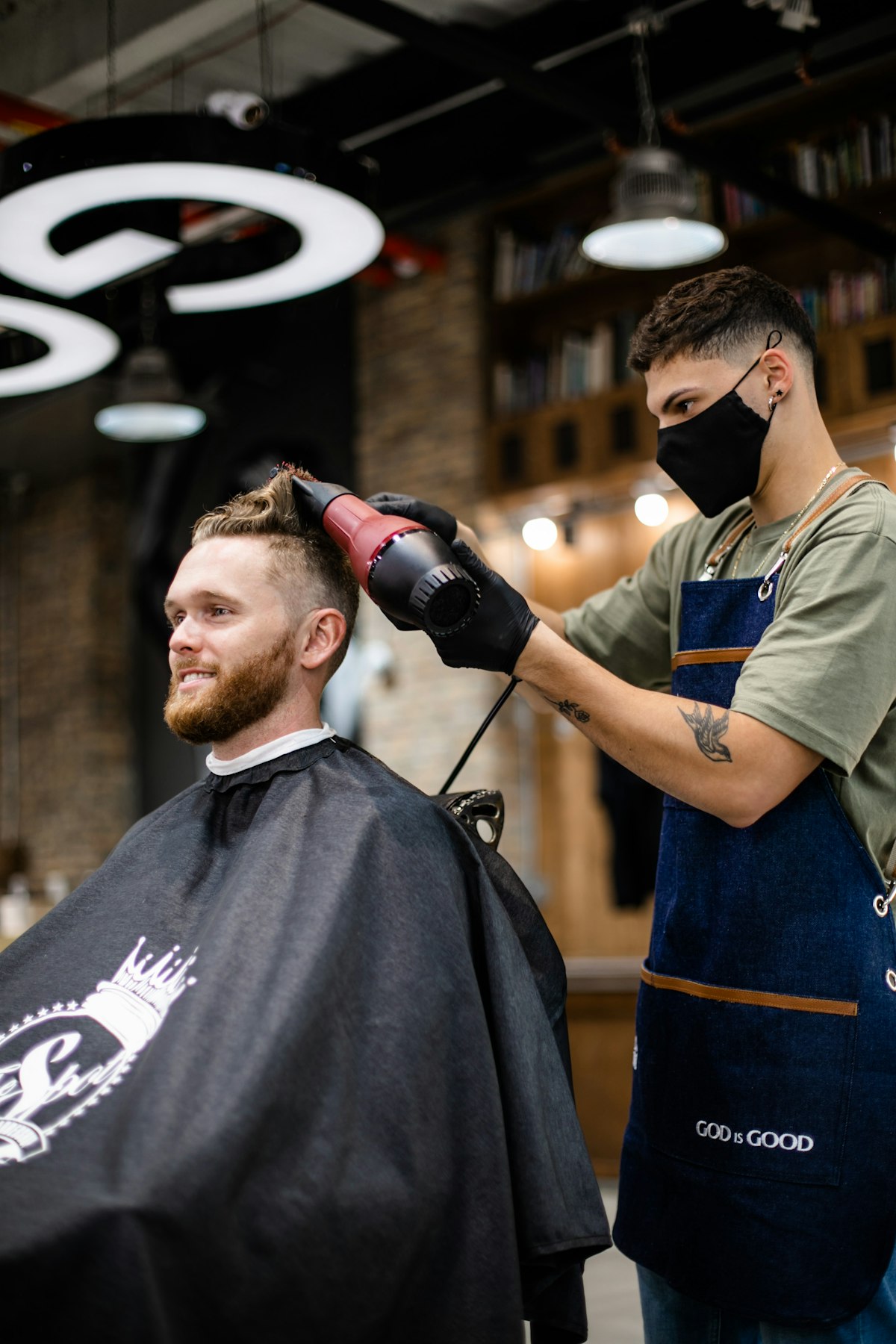
Fringe in men's haircuts refers to hair at the front of the head that is directed toward or falls over the forehead. Men's fringe is different from women's bangs in that it is typically shorter, less uniform, and more textured. The fringe element in a men's haircut can range from a subtle forward sweep to a more defined curtain or crop style. It is a design element, not a single specific cut.
Types of Men's Fringe
Textured fringe: short, choppy front hair with visible texture and separation. The hair is not uniformly cut and does not sit as a smooth, single line. Common in textured crops and short modern styles. Curtain fringe: longer fringe (typically 2 to 4 inches) parted in the center, with each half sweeping toward its respective side. Common in the curtains or middle-part styles. Swept fringe: fringe directed to one side rather than straight forward. Creates a side-parted appearance with the front hair sweeping over one temple. Blunt fringe: similar to the Caesar or French crop fringe, a more uniform, straight-cut horizontal line across the forehead. Less common in men's cuts than the textured or swept variations.
Face Shape Considerations
Fringe reduces the visual forehead height by covering or partially covering it. This makes fringe particularly effective for men with elongated or rectangular face shapes where forehead height contributes to the overall length of the face. Round face shapes generally fare less well with fringe because fringe further rounds the face profile. Square face shapes tend to be versatile, most fringe types work. Oval face shapes: most fringe types are compatible.
CADMEN Training
Fringe cutting and styling technique are part of CADMEN's barbering program. academy.cadmen.ca/in-person-training.
Frequently Asked Questions
Should men get a fringe haircut?
Whether fringe suits a man depends on face shape, hair texture, lifestyle, and personal preference. The honest fringe-suitability assessment: face shape. Fringe reduces visible forehead height and creates a horizontal line across the face profile. For men with high foreheads or long/rectangular face shapes, this reduction works in their favor, fringe provides balance. For men with already-short face shapes or round faces, fringe can reduce the visual height further and potentially make the face appear shorter or rounder. This is not a hard rule, but it is the most common facial proportion consideration. Hair texture. Fine, straight hair sits into a fringe cleanly and is easy to maintain. Very thick, wavy, or curly hair is harder to keep in a fringe position, it tends to lift, curl, or expand outward rather than laying flat or forward. Men with significantly wavy or curly hair who want a fringe typically require more daily styling effort or chemical treatment to maintain the fringe position. Lifestyle. Fringe requires some daily attention, at minimum, directing the front hair in the morning. Men who want a completely wash-and-go haircut that requires zero styling may find fringe maintenance inconvenient. Conversely, men who spend 5 to 10 minutes on hair in the morning typically find fringe easy to maintain. The practical recommendation: if you are unsure whether fringe will work for you, the lowest-risk version is a subtle textured fringe rather than a defined, visible fringe line. A good barber can add a textured fringe element to your next cut that suggests fringe without committing to a full blunt or curtain fringe, this gives you a trial period without a major style change.
What is the best fringe style for men with thick hair?
Thick hair creates specific challenges and advantages for fringe styles. Understanding the challenges: thick hair has more volume and mass than fine hair. When directed forward as fringe, thick hair tends to expand outward and upward rather than laying flat or sitting cleanly. A blunt, uniform fringe on very thick hair often looks heavy and can curl or lift at the ends. Very straight-across fringe cut uniformly without internal thinning tends to look "helmeted" on thick hair. What works better: textured fringe with thinning shear work. The barber uses thinning shears or point cutting to remove internal bulk from the fringe section before cutting the final line. This removes weight without changing the overall fringe length, allowing the fringe to sit with better movement and less heaviness. The result is fringe that has visible texture and separation rather than a heavy, uniform block. Swept fringe for thick hair. Directing thick fringe to one side rather than straight forward takes advantage of the natural weight, the hair falls to the side more easily than it sits straight forward. A side-swept fringe on thick hair often sits more naturally than a forward-facing fringe. Longer curtain fringe. For thick-haired men who want a more defined fringe look, a curtain fringe (longer, parted in the center, falling to each side) works well with thick hair because the length provides enough weight to control the direction. The hair falls to the sides rather than needing to sit against the forward pull. Product for thick-hair fringe: a matte clay applied to damp fringe and blow-dried in the desired direction provides the best combination of direction and hold for thick hair. Blow-drying is more important for thick hair fringe than for fine hair, as the heat helps set the direction more effectively.
How do I stop my fringe from getting in my eyes?
Fringe that reaches or goes past the eyebrows is the typical threshold where it starts affecting the eyes. There are several approaches to this, depending on your preference for how long you want to keep the fringe. The haircut approach: the most direct solution is telling your barber how far you want the fringe to sit above your eyes and getting it trimmed to that length at each visit. Specifying "just above the eyebrows" or "mid-forehead" gives the barber a clear reference point. Fringe sits slightly lower when dry than when cut wet (the hair relaxes and drops slightly), so some barbers account for this. If the fringe continues to reach the eyes between visits, a standalone fringe trim between full haircuts is an option at most barbershops, it takes a few minutes and is typically inexpensive. The styling approach: directing fringe to the side rather than straight forward is the most effective way to keep it out of the eyes without cutting it shorter. A side sweep moves the fringe away from the direct line of vision. A light to medium hold pomade or clay applied to the fringe and set with a blow-dryer in the sideways direction can hold this position for most of the day. For curtain fringe: parting the fringe in the center and ensuring each side falls cleanly away from the center line reduces direct eye interference while maintaining the fringe look. The parting can be reinforced with a comb and a small amount of product. What does not provide a lasting solution: pinning fringe back or wearing it tucked behind the ear temporarily. This can train the habit of tucking rather than solving the length or direction issue. The practical recommendation: if fringe consistently gets in your eyes, the length is more than you want to maintain. Telling your barber you want fringe that sits above the eyebrows and confirming that boundary at each cut is simpler than daily management of fringe that is growing past your preferred length.
Related Reading From CADMEN Barber Academy
- The Fringe Haircut: What It Is and How It's Cut
- The Fringe in Men's Haircuts: Types, Lengths, and What Works
- Cutting Afro and Type 4 Hair: Techniques for Barbers Working with Coily Textures
- The Blowout Haircut: What It Is and How to Maintain It
- The Brush Up Haircut: What It Is and How to Style It
- The Caesar Haircut: What Makes It a Caesar and How to Cut It Cleanly
Want to learn to cut a textured fringe yourself? CADMEN Barber Academy teaches cutting hands-on, with an educator beside you. See the barber academy in Mississauga or view in-person classes and send an enquiry.
Watch the free Barbering for Beginners playlist on YouTube.
