How Barbers Shape and Clean Up the Hairline
How Barbers Shape and Clean Up the Hairline
The hairline is the frame of the face. A precisely shaped hairline on an otherwise average haircut makes the haircut look better than it is. A rough or uneven hairline on a technically excellent cut makes the whole thing look unfinished. The hairline work at the end of a service is what most clients see first in the mirror.
There are specific decisions involved in hairline work that many clients do not know are choices: whether to follow the natural hairline or create a more defined shape, how much to remove if the natural hairline has irregular growth, and how to handle baby hair at the edges. These decisions should involve the client, not be made unilaterally.
The Natural Hairline
The natural hairline is the outline of where the hairline naturally grows: the temples, the forehead, and the sideburn area. Most natural hairlines have some irregularity, slightly uneven temples, a widow's peak, or patches of lighter, finer hair at the edges.
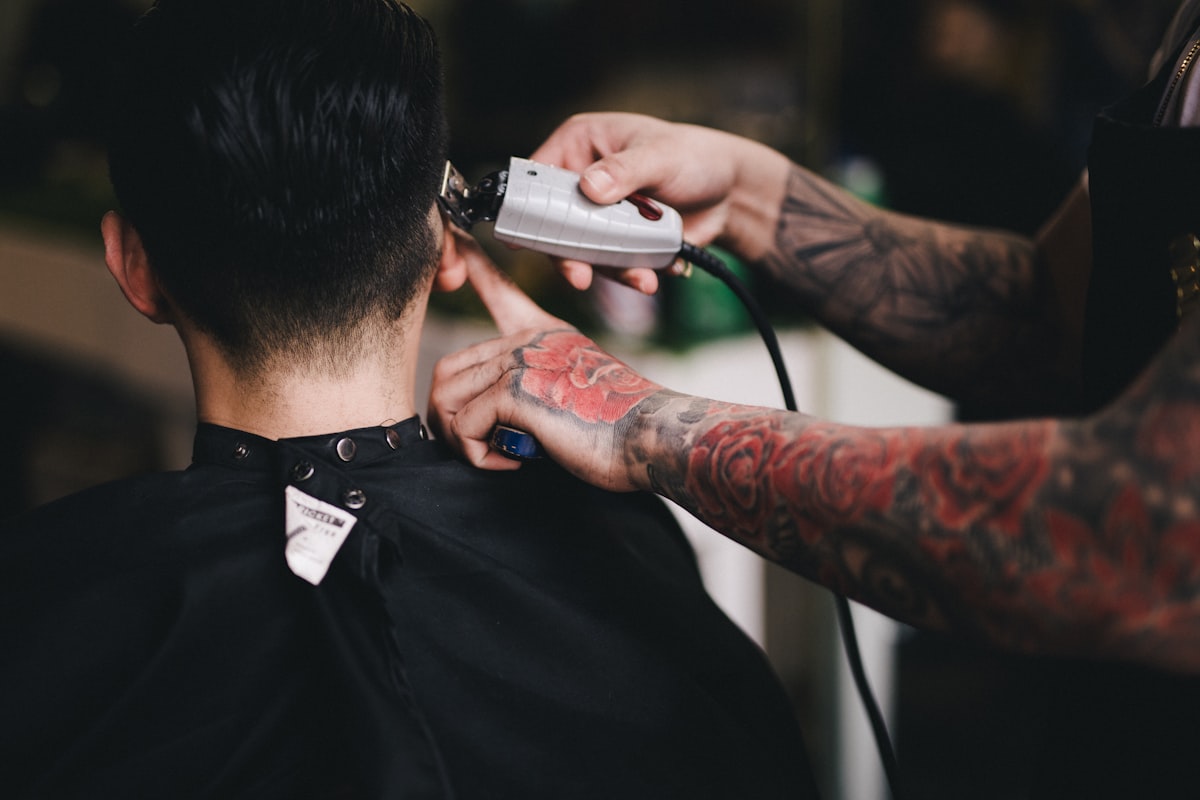
Cleaning up a natural hairline means trimming the irregular edges to produce a cleaner version of the natural shape, without altering the fundamental outline. The T-outliner (or equivalent) traces just inside the natural growth boundary to remove stray hairs and create a defined edge without cutting into the hairline itself.
The Lined Up / Hard-Part Hairline
A lineup (also called a shape-up or edge-up) creates a crisp, hard-edged line at the hairline, typically a straight horizontal line across the forehead, straight vertical temple lines, and a sharp corner where they meet. The result is a geometric, defined frame rather than the softer natural hairline curve.
Lineup work is most common in shorter fade cuts and with clients whose hair texture and natural hairline work well with defined lines. It is part of the standard finish on most modern barbershop cuts.
The lineup is done with the T-outliner held at a horizontal angle to the scalp surface. The key technique point: work with the outliner moving along the established line rather than pressing into the skin. The blade traces the line; it does not engrave it. Pressing too hard creates scalp marks and an uneven result.
The Natural Hairline on the Neckline
At the neckline, the same choice exists between following the natural growth and creating a defined shape. The primary options:
- Blocked neckline: a straight, horizontal line across the nape of the neck, shaved cleanly below. Looks sharp and deliberate but grows out visibly within 1 to 2 weeks.
- Tapered neckline: a natural-curve clean-up that tapers the neckline to skin at the base without creating a hard horizontal line. Grows out more gradually and requires less frequent maintenance.
- Arched neckline: a rounded arc across the nape, sitting higher than the natural growth, shaved clean below. A middle ground between the blocked and tapered options in terms of maintenance frequency.
Client preference drives this choice. Some clients strongly prefer one; others have never considered the question. Offering the choice as part of the standard consultation is a professional touch most barbers skip.
Baby Hair and Irregular Edge Hairs
Baby hair at the temples and hairline edges is fine, lighter-colored hair that falls outside the main hairline boundary. In a lineup context, these hairs are typically removed to create a cleaner edge. In a natural hairline context, removing them aggressively can result in an unnatural appearance, a too-straight line where the natural edge had texture.
The general approach: clean up visibly stray hairs at the edge while preserving the natural line quality. Do not shave a half-inch into the natural hairline to create a "perfect" edge if the natural hairline was irregularly growing in that area, the result will look unnaturally far back and will grow in patchy.
CADMEN Training
Hairline work, lineup technique, and neckline options are covered in the CADMEN hands-on program. academy.cadmen.ca/in-person-training.
Frequently Asked Questions
What is a hairline shape-up at a barbershop?
A hairline shape-up (also called a lineup or edge-up) is a barbershop service where the barber defines and cleans the edges of the hairline using a T-outliner clipper. The service sharpens the hairline at the temples, forehead, and sideburn area, typically creating a more defined and intentional edge than the natural hairline. It can be done as a standalone service (for clients who do not need a full haircut but want their edges cleaned up) or as the finishing step of a full haircut service. A lineup alone typically takes 10 to 15 minutes and is priced significantly less than a full haircut at most shops.
Should you change your natural hairline when getting a haircut?
Not without intent. The natural hairline is the correct frame for most clients' faces and should be cleaned up (stray hairs removed, edge defined) but not fundamentally altered without a clear reason. Lowering the hairline (shaving above the forehead to bring the hairline forward) is cosmetically unusual and not a standard barbershop service. Raising the hairline (shaving into the hairline to create the appearance of a more receded line) is done in some lineup styles to achieve a more angular shape but should be a deliberate client decision, not a default. The barber's job is to clean and define what is there, not to redesign the client's hairline without explicit discussion.
How often should you get a hairline edge-up?
Every 2 to 3 weeks for clients who maintain a sharp lineup look. The hairline area shows new growth quickly, particularly at the temples and forehead where even 3mm of new growth visibly softens the hard edge created by a lineup. Some clients book full haircuts every 4 to 6 weeks but get hairline-only touch-ups at the 2 to 3 week mark, a shorter, less expensive service that maintains the sharp edge without trimming the overall length. The service gap that works for any specific client depends on their hair growth rate and how much they prioritize keeping the edges sharp between full cuts.
What tools do barbers use to shape hairlines?
The primary tool for hairline work is the T-outliner (also called a T-blade trimmer or zero-gapper), a trimmer with a blade configuration designed for detailed outlining work along hairline edges. The T-outliner produces a closer cut at the edge than a standard clipper and is designed for precision tracing work. A straight razor or foil shaver is often used after the T-outliner to shave the areas just outside the defined hairline line for maximum definition. Some barbers use a straight razor for the entire hairline definition step, particularly for the neckline, where a razor-sharp line is the cleanest possible result. The specific tool combination depends on the barber's training and the finish being created.
Can you ask a barber to change your hairline shape?
Yes. The hairline shape is a service decision that clients can and should specify. Common requests: a straighter, harder edge across the forehead (more geometric lineup), a lower or higher lineup than previous, a specific neckline shape (blocked, tapered, or arched), or leaving the temples natural rather than sharply defined. Barbers who do not discuss this as part of the consultation are making the decision on the client's behalf by default. Clients who have a specific preference about their hairline shape should communicate it directly, most barbers will accommodate any reasonable request, and many will appreciate the specificity because it removes ambiguity about what "look good" means for that particular client.
Related Reading From CADMEN Barber Academy
- Haircuts for Receding Hairlines: What Works and Why
- How to Cut Hair with a Receding Hairline
- Beard Line Shaping at the Barbershop: What to Ask For
- Beard Shaping at the Barbershop: What to Expect
- Hairline Sharpening at the Barbershop: What It Is and Why It Matters
- Beard Shaping at the Barbershop: What the Service Involves
