Your First Barbershop Visit: What to Expect and How to Communicate
Your First Barbershop Visit: What to Expect and How to Communicate
First-time barbershop visits go wrong in one of two ways: the client says nothing useful ("just clean it up") and gets a result that does not match what they pictured, or the client uses terms the barber interprets differently and ends up with more cut off than intended. Both problems are preventable.
Before You Go
Know what you want, or have a reference photo. "Clean it up" gives the barber no information. A photo of a haircut you want or a photo of your own hair at its best length gives the barber a visual target. You do not need to know the name of the cut, the photo communicates it. Save 2 to 3 reference photos to your phone before the appointment.
The Consultation
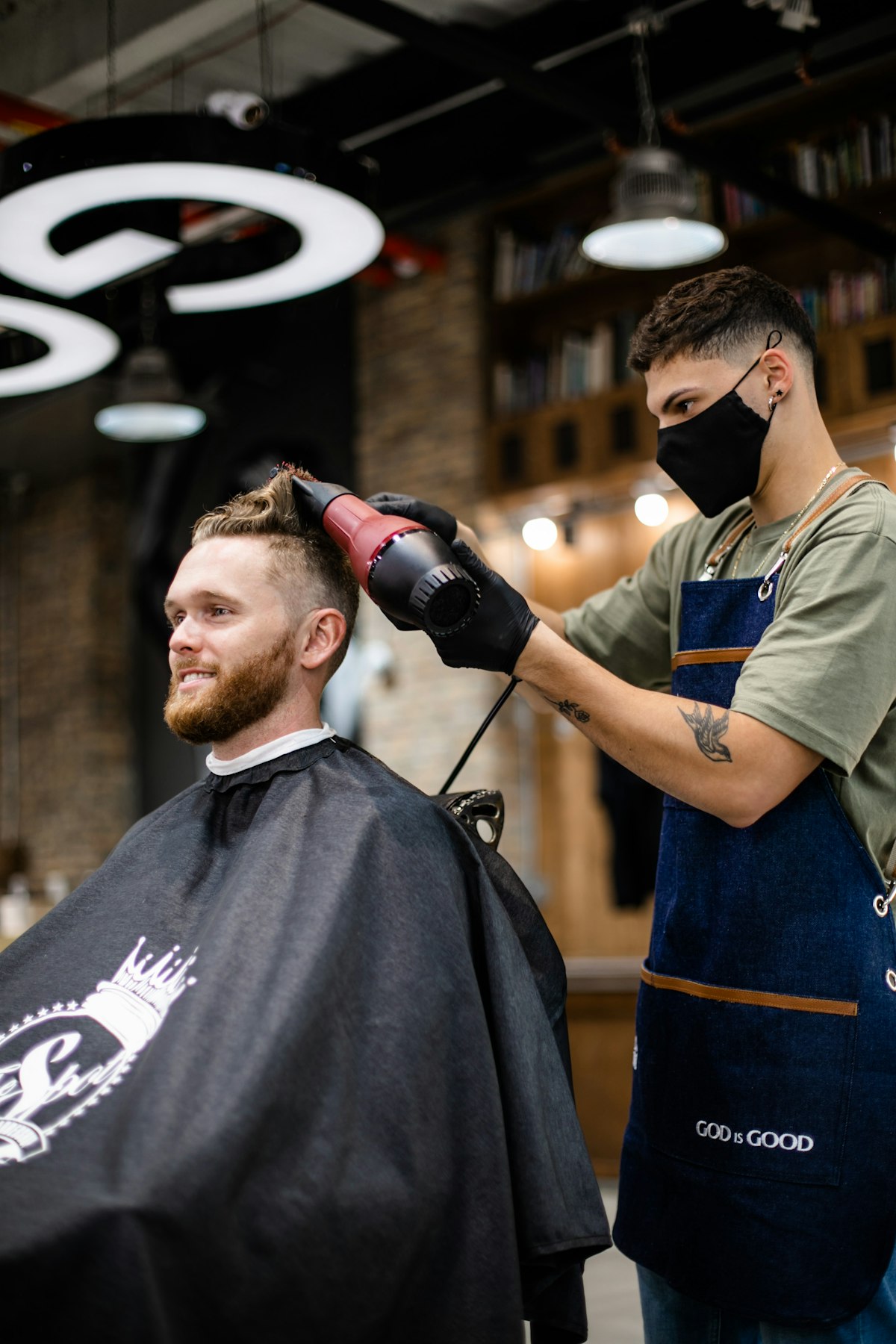
Every barbershop visit should start with a short consultation before the barber touches your hair. The barber should ask what you want, and you should tell them: the overall style, how much length to take off, and any specific concerns (a cowlick, an asymmetrical hairline, a spot where hair grows in an inconvenient direction). If the barber starts without asking anything, speak up before the clippers start.
During the Cut
You can speak during the cut. If something looks wrong, say so immediately. It is much easier to adjust partway through than to correct after the cut is complete. Phrases that work: "Can you leave a bit more length there?" or "I think the right side is shorter than the left." Barbers prefer to hear this in the moment rather than after.
CADMEN Training
CADMEN trains barbers on client consultation as well as cutting technique. academy.cadmen.ca/in-person-training.
Frequently Asked Questions
What should I tell my barber to get a good haircut?
The information that produces a good haircut outcome is specific on a few key points and clear about what you want to keep. The complete communication framework: start with the top. What length do you want on top? Long, medium, short, and ideally a specific length in inches or a guard number if you know it. Describe the style you want: flat, textured, a specific shape (taper, quiff, crop). Describe the sides. What length do you want on the sides? What type of transition (taper, low fade, mid fade, high fade)? Do you want the sideburns shaped or natural? Describe the neckline. Squared (a sharp horizontal line at the nape) or tapered (a gradual fade into the skin at the nape). Squared looks bolder and more defined. Tapered grows in more naturally. Mention anything specific to your hair. Does it have a cowlick somewhere? Does one side grow differently than the other? Are there areas where you want the barber to be conservative because you are trying to grow out length? Use a reference photo alongside the verbal description. A photo of the style you want, shown together with your verbal description, reduces the chance of misinterpretation. "Something like this, but a bit longer on top" is much clearer than the verbal description alone. Say what you want to preserve: if you are trying to grow your hair longer and just want a cleanup, say explicitly "I want to keep as much length as possible, just clean up the edges." Without this instruction, a barber may take a standard amount off, which can undo weeks of growth. What not to say: "Whatever you think" is appropriate only if you genuinely trust the barber's judgment from a prior visit and have an established relationship. For a first visit, it removes your input entirely. "Just a little off" is ambiguous, a little to one barber is a lot to another. Put a number on it when possible: "Half an inch off the top."
How do I find a good barber?
Finding a good barber is worth investing a small amount of time upfront because a good barber relationship, maintained consistently, produces significantly better results than cycling through different barbers. The effective approaches: look at photos, not just reviews. Most barbershops and individual barbers have Instagram profiles. Look at the actual haircuts in their photos. Do the fades look clean? Does the detail work look precise? Do you see examples of the specific style you want? The quality of work is visible in photos. Reviews tell you about friendliness and price, but photos tell you about skill. Ask someone whose haircut looks good. If you notice a clean fade or a sharp taper on someone in your day-to-day environment, ask who cut it. Direct referrals from someone whose results you can see are more reliable than anonymous online reviews. Book a consultation before committing. Some barbers offer consultations. Even those that do not will typically discuss the cut before starting. You can learn a lot about a barber's knowledge and communication style from a brief conversation before the cut begins. Test with a defined ask on the first visit. On your first visit to a new barber, request something specific with a clear reference photo. This lets you evaluate the barber's ability to execute a defined result rather than something open-ended where any result could be called "correct." Consistency over exploration: once you find a barber who delivers the result you want, book consistently with that person at regular intervals. A good barber learns your hair type, growth patterns, and preferences over time, which compounds into better and faster cuts. Switching barbers frequently resets this accumulated context.
How much should I tip my barber?
The standard tipping range for barbers in the United States is 15 to 25 percent of the service price, with 20 percent as the conventional baseline for satisfactory service. The tipping norms for barbers are functionally identical to restaurant tipping norms in most markets. How the math works out: on a $30 haircut, 15% is $4.50, 20% is $6, and 25% is $7.50. On a $50 haircut, the same percentages produce $7.50, $10, and $12.50. When to tip at the higher end: the haircut was excellent and exceeded your expectations; the barber spent significantly more time than average on the cut; you arrived late and the barber accommodated you without issue; the barber provided additional services or consultation beyond the standard cut. When 15% is appropriate: you were satisfied but the service was standard. The barber was professional and produced the requested result without anything exceptional. When no tip or a reduced tip is appropriate: the result was significantly different from what was requested, you had to correct major errors during the cut, or the service was unprofessional in a way that affected the outcome. Tipping on appointments vs walk-ins: the same norms apply regardless of how you arrived. Tipping for the shop owner: tipping the owner of a barbershop is standard practice, though some people consider it optional. In practice, if the owner cut your hair and did a good job, a standard tip is appreciated and appropriate. Cash vs card tipping: cash tips are generally preferred by barbers because they are received immediately without processing fees. Many card payment systems do pass tips to the barber, but cash eliminates any ambiguity. Tipping on first visit: tipping well on a first visit is an investment in the relationship and communicates to the barber that you are a reliable client worth retaining.
Related Reading From CADMEN Barber Academy
- How to Get a Good Haircut When You Are New at a Barbershop
- First Barbershop Visit: What to Expect and How to Communicate
- First Time at a Barbershop: What to Expect and What to Say
- First Visit to a New Barbershop: Exactly What to Say
- Your Kid's First Barbershop Visit: What Parents Need to Know
- How to Choose a Barber in Toronto for the Best Fade
