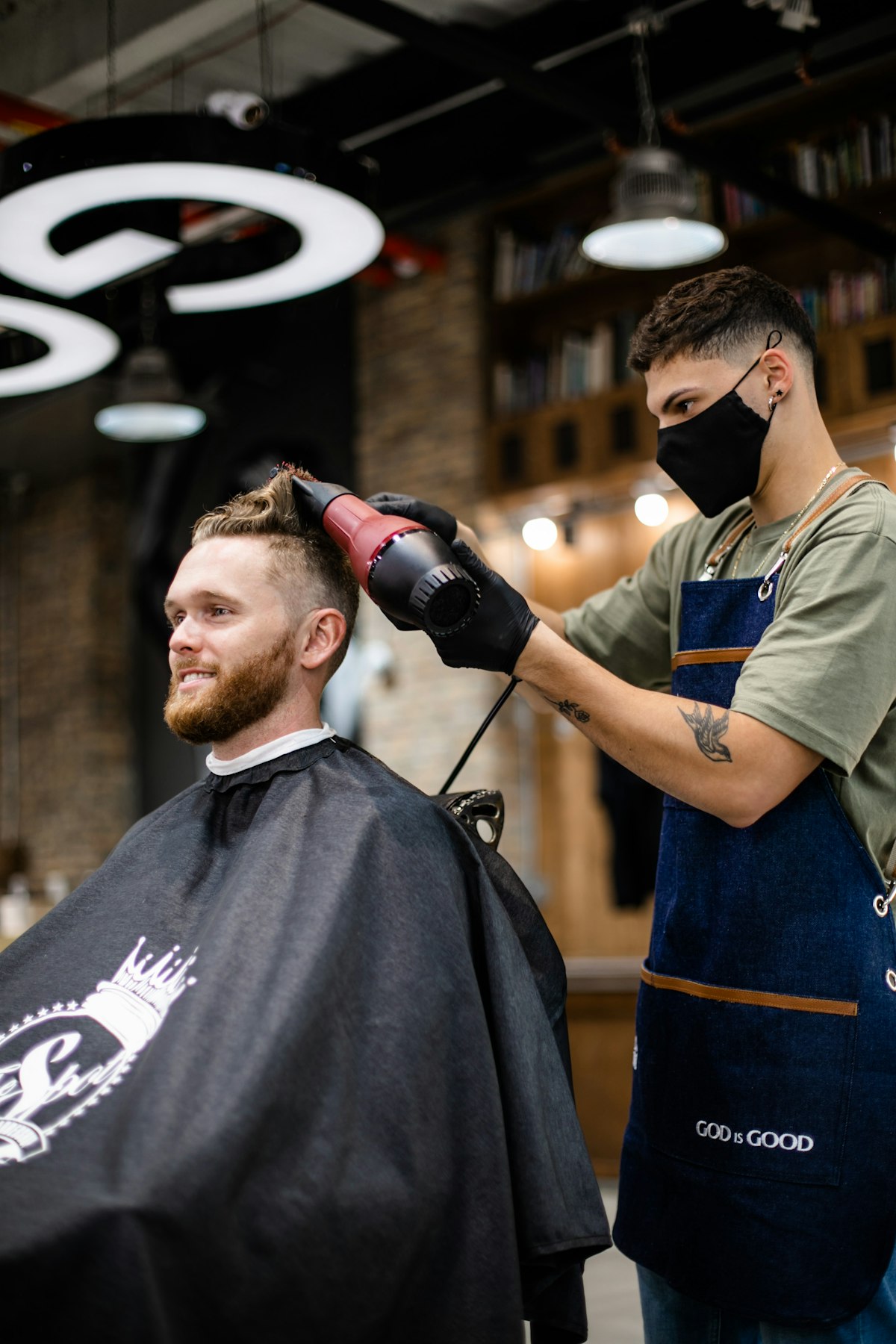
The Taper Fade Combination: What It Is and How to Request It
The Taper Fade Combination: What It Is and How to Request It
A taper fade is the most requested side treatment in modern barbershops. It applies the high-contrast, skin-close technique of a fade on the main body of the sides while using a taper (gradual reduction without skin exposure) at the specific perimeter points, the neckline and the sideburn area. The combination produces a side profile that is sharp and visually dramatic in the middle sections while being clean and natural-looking where the hair meets the skin at the edges.
Why the Combination Is Popular
A pure skin fade, taken to skin at the sides and also at the neckline, requires very frequent maintenance to stay sharp. Within 7 to 10 days, the neckline and sideburns grow in noticeably. A taper fade keeps the striking visual contrast of the fade on the sides while allowing the neckline and sideburns to grow in more gradually, extending the time before the cut looks overgrown. Many professional environments also accept a tapered neckline more readily than a fully shaved neckline, making the taper fade more versatile across different contexts.
How Barbers Execute It
The barber applies the fade technique from the mid-section of the sides, creating the high-contrast skin or near-skin section above the ear, and then transitions to a taper approach at the neckline and sideburns, using the clipper-over-comb or guard technique to create a smooth gradient into the natural hairline rather than a shaved edge.
CADMEN Training
Taper fade execution is foundational technique at CADMEN Barber Academy. academy.cadmen.ca/in-person-training.
Frequently Asked Questions
What is the difference between a tapered neckline and a squared neckline?
The neckline treatment is one of the most impactful details of any haircut, yet it is one of the least discussed during the consultation. The two main options produce distinct looks. Tapered neckline (also called a natural neckline): the hair at the nape of the neck is faded or blended gradually into the skin, following the natural hairline shape. Rather than a defined edge at the bottom of the cut, the hair gradually becomes shorter until it fades into skin. The result is softer and more natural-looking, and it grows in gradually without creating a clear visible line as the hair grows back. It is more forgiving for men who go longer between cuts. Squared neckline (also called a blocked neckline): the hair at the nape is cut to create a straight, horizontal line across the bottom, creating a defined rectangular shape at the back of the neck. The edge is clean and sharp when fresh. It communicates a precise, groomed appearance. The trade-off: the squared neckline is highly visible when fresh and looks sharp. But as the hair grows, the squared edge becomes a noticeable horizontal line of grown-in hair below the cut. It requires more frequent maintenance to stay sharp. Within 2 weeks, most men will see visible growth below the squared edge that requires cleanup. Which to choose: tapered neckline for men who want lower maintenance, a more natural appearance, or who are growing their hair longer. Squared neckline for men who want the most defined, sharp appearance and are visiting the barbershop frequently enough to maintain it. The squared neckline also tends to look cleaner from behind when the hair is short, the defined edge communicates intentionality. Some men prefer a rounded neckline, which is a variation of the squared approach where the corners are softened into a gentle curve rather than sharp right angles. This is a middle-ground option that has the definition of a squared neckline without the hard corners.
How do I ask for a taper fade at the barbershop?
Requesting a taper fade requires being specific about two things: where the fade sits on the sides (low, mid, or high), and what happens at the neckline and sideburns (tapered or squared). The complete request formula: state the fade level. "I want a mid fade on the sides" tells the barber where the skin-close section starts. Low fade = just above the ear level. Mid fade = mid-ear level. High fade = temple level. State the neckline preference. "With a tapered neckline" or "with a squared neckline" tells the barber what to do at the back. If you do not specify, barbers will default to their usual approach, which varies. State what you want on top. The fade only describes the sides. Describe the top length and style separately: "I want about 2 inches on top, messy textured" or "I want a comb-over with a side part." Use a reference photo alongside the verbal description. A taper fade with a comb-over on top looks very different from a taper fade with a textured crop. A photo confirms the overall style direction. Example of a complete, specific request: "I want a mid fade on the sides, take it to skin, with a tapered neckline. About 2 to 2.5 inches on top, textured with a clay finish. Something like this photo." That request gives the barber enough information to proceed without guessing. The most common gap in requests: men describe the fade level but do not specify the neckline or the top, leaving both to the barber's judgment. Specifying all three components produces the most predictable result.
How long does a taper fade last before it needs a trim?
The lifespan of a taper fade depends on how closely the fade was cut, how fast your hair grows, and your personal standard for when the cut looks "past its best." At the most general level: the fade section grows in first. A skin fade taken to skin at the bottom will have visible hair at the base within 7 to 14 days, depending on growth rate. The visual contrast of the fade diminishes as this happens. At 3 weeks, most skin fades have grown in enough that the sharp contrast between skin and hair has blurred. The taper element grows in more slowly than a hard shaved line would. If the neckline is tapered rather than squared, the growth there is more gradual and less obvious. The overall cut silhouette remains reasonably intact for 3 to 4 weeks in most men. At 4 to 6 weeks, the fade has grown in significantly on most men and the cut is past the point most people consider "well-maintained." How different people handle the maintenance cycle: the 2-week maintenance model. Men who want the taper fade at its sharpest visit the barbershop every 2 weeks. The sides are refreshed, the neckline is cleaned up, and the cut looks sharp again. This is the most expensive approach but produces a consistently sharp look. The 4-week model. Most men visit every 4 weeks. The cut looks its best in the first 2 weeks, softer but still acceptable in weeks 3 and 4. A full cut at 4 weeks restores the sharpness. The home-maintenance hybrid. Some men touch up the neckline and lower sides with a home trimmer between 4-week barbershop visits to extend the sharp appearance without the full cost of a 2-week schedule. This works well for men who are comfortable with a trimmer and know exactly where their neckline sits.
Related Reading From CADMEN Barber Academy
- Fade vs. Taper: What Is the Difference?
- The Skin Taper Fade: What Makes It Different and How It Is Cut
- Taper vs. Fade: What Is the Difference?
- Taper Fade vs. Drop Fade: What the Difference Actually Is
- Taper Fade vs. Skin Fade: What the Actual Difference Is
- Taper vs. Fade: What the Difference Actually Is
Want to learn to cut a taper yourself? CADMEN Barber Academy teaches cutting hands-on, with an educator beside you. See the barber academy in Mississauga or view in-person classes and send an enquiry.
Learn this fade step by step in our free Fade Tutorials playlist on YouTube.
