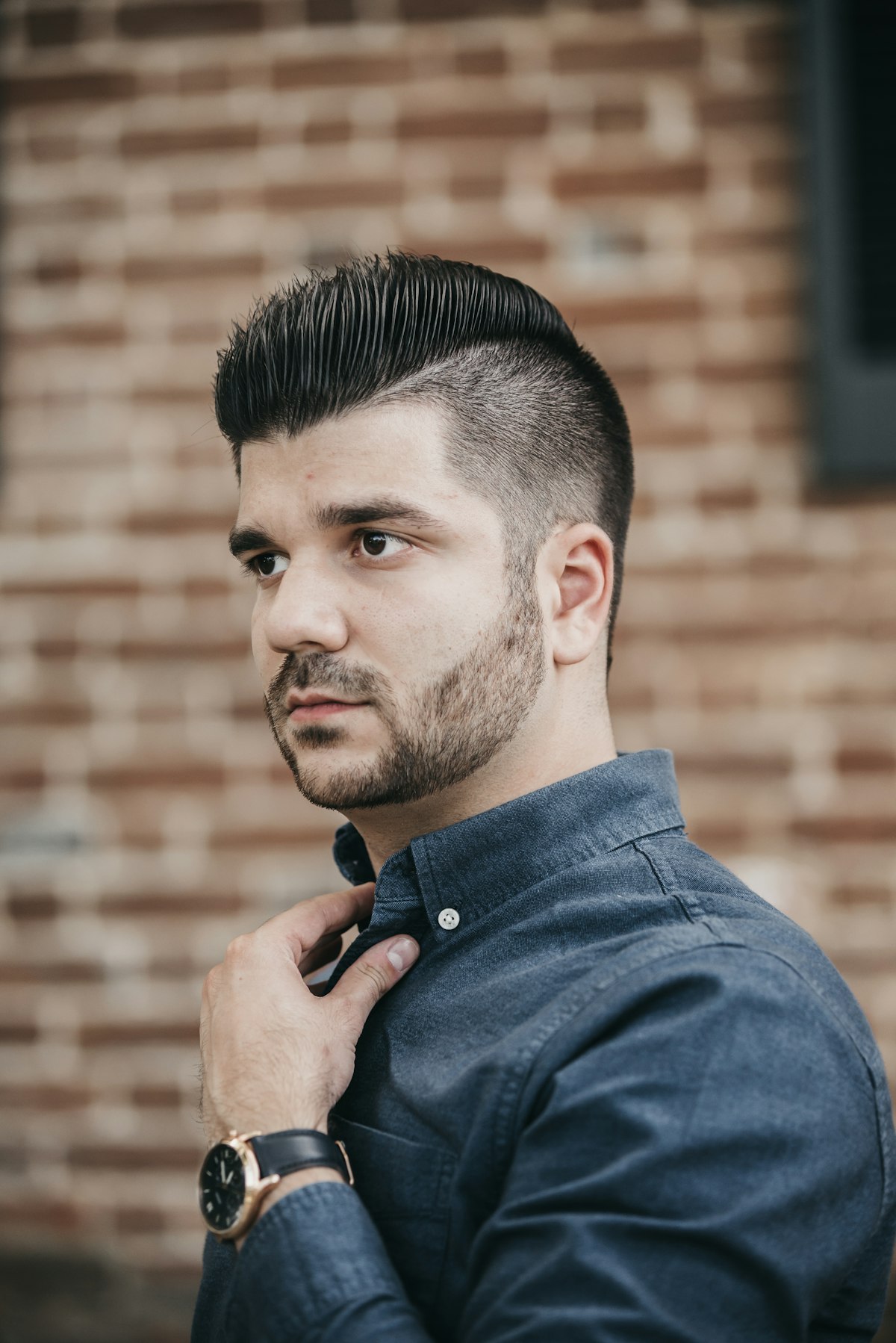
The Edgar Cut: What It Is and How It's Done
The Edgar Cut: What It Is and How It's Done
The Edgar cut is a men's haircut characterized by a blunt, straight horizontal line cut across the front of the hair, combined with high faded sides. The blunt front line is the defining feature, it creates a flat, clean edge at the forehead that is sharp and geometric rather than the tapered or textured front lines more common in other cuts.
The Defining Characteristics
Two elements make an Edgar: the blunt horizontal fringe line at the front, and the high skin or mid-fade on the sides. The top section sits flat with a clean front edge, the length can vary from a short, tight top to a medium-length section, but the front edge is always the blunt horizontal defining line. The sides typically run a high fade, sometimes skin, to maximize contrast between the flat top section and the faded perimeter.
How the Cut Is Executed
The barber cuts the front section with scissors or a comb-over technique to create the blunt horizontal line. Unlike a typical haircut where the front hairline transitions naturally, the Edgar front requires a precise horizontal cut that creates a flat, defined line across the forehead. The sides are then high faded, either to skin or to a guard 0.5, creating the contrast that frames the blunt top.
CADMEN Training
Structural cuts and advanced fading are core to CADMEN's barbering program. academy.cadmen.ca/in-person-training.
Frequently Asked Questions
What is an Edgar haircut?
The Edgar cut (also called the Edgar fade or the Caesar Edgar) is a men's haircut defined by two primary visual elements: a blunt, straight horizontal line cut at the front of the hair (resembling a horizontal fringe that sits flat and forward rather than at an angle) combined with high faded sides that typically go to skin or near-skin. The top section is cut to a specific length that creates the flat, horizontal front line. The length of the top section in an Edgar varies: a tight Edgar has the top cut very short (guard 3 to 4 at the top section), creating a subtle horizontal line that is more about the shape than the length. A longer Edgar has more length on top (1.5 to 2.5 inches), making the horizontal front line more pronounced and visible from the side. The sides are typically given a high fade, starting well above the ear and fading to skin. This high fade creates the maximum contrast that makes the flat top section read as a deliberate structure. The front line placement: the Edgar front line typically sits at or just below the natural hairline at the forehead, covering part of the forehead. The exact position varies by preference and the specific variation of the Edgar. Where it comes from: the Edgar cut became widely recognized through social media (particularly Instagram and TikTok) in the late 2010s and early 2020s, with significant popularity in Latino barbershop culture in the United States. It spread from regional popularity to national and international recognition through barber portfolios and style content online. Who it works for: the Edgar's strong horizontal geometry works best on people with straight or loosely wavy hair (the blunt line holds its definition) and on faces where the strong horizontal front line does not conflict with facial proportions. It is a commitment-style cut, the blunt front line is distinctive and deliberate.
How do I ask for an Edgar cut at a barbershop?
Asking for an Edgar cut requires communicating a few specific decisions about the cut's proportions. The key information to provide: "I want an Edgar", most barbers with any contemporary training know the term. But confirming with a reference photo removes any interpretation gap, especially because the Edgar's proportions can vary significantly. The length on top. This is the most important specification. "Short Edgar" (very close, guard 3 to 4 on top, subtle blunt line) versus "longer top Edgar" (1.5 to 2 inches, more visible horizontal front section) are different cuts. Telling the barber how much length you want on top, or showing a photo with the length you want, prevents a mismatch. The height of the fade on the sides. High skin fade, mid-fade, or something else. The high skin fade is the most common pairing for an Edgar, but some people prefer a mid-fade for a slightly softer profile. Whether you want any design or line work. Some Edgar variations include a hard part line at the side where the top meets the fade, or a defined shape at the front hairline. If you want clean geometric lines at specific points, say so. What to expect from the execution: cutting a precise, flat horizontal line at the front requires skill, the barber must cut across the natural hair growth pattern to create a line that holds its horizontal definition. On hair that has a strong forward growth pattern, the line holds better. On hair that has a more upward or variable growth pattern, the line may need product to maintain its definition daily. Product for maintaining the Edgar: a medium-hold clay or pomade applied in the morning and a flat brush or comb used to maintain the front line keeps the Edgar looking clean. Without product, the front line softens as the hair's natural growth direction reasserts.
How long does an Edgar cut last?
An Edgar cut needs maintenance every 2 to 3 weeks for the skin or high fade, with the top section potentially lasting longer depending on length. The fade section: a skin fade on the sides grows out the fastest. Regrowth at skin level is visible within the first week. At 2 weeks, the fade has grown out enough that the precision of the fade gradient is blurring. At 3 weeks, the high skin fade section looks noticeably grown out and the cut profile has softened. The front blunt line: the blunt horizontal front of the Edgar grows out as the top section grows. For a tight, short Edgar (guard 3 to 4 on top), the front line starts to soften after 2 weeks and looks distinctly grown out by 4 weeks as the hair pushes forward beyond the cut line. For a longer Edgar (1.5 to 2.5 inches on top), the front line has more length tolerance, the line does not disappear with half an inch of growth the way the tight version does. But the overall proportions of the cut change as both the top and the sides grow. The practical maintenance schedule for most clients with an Edgar: every 2 weeks to maintain a crisp skin fade and a defined front line. Clients with a slightly longer top version can stretch to 3 weeks before the front line looks significantly grown out. The Edgar is a high-maintenance cut, its defining precision requires consistent upkeep to look intentional. Letting it go 4 to 5 weeks without a visit results in a cut that no longer reads as an Edgar, the front line has grown forward and the fade has softened to the point where the structure is gone.
Related Reading From CADMEN Barber Academy
- The Edgar Cut: Structure, Variations, and What to Ask For
- The Edgar Cut: What It Is and Who Should Get One
- The Ivy League Haircut: What It Is and How to Style It
- The Crew Cut: What It Is and How It Differs from Similar Styles
- The Edgar Cut: What It Is, Where It Came From, and How to Ask for One
- Edgar Cut vs. Textured Crop: How to Tell the Difference
Want to learn to cut an Edgar cut yourself? CADMEN Barber Academy teaches cutting hands-on, with an educator beside you. See the barber academy in Mississauga or view in-person classes and send an enquiry.
Watch the free Barbering for Beginners playlist on YouTube.
