The Drop Fade: What It Is and Who It Works For
The Drop Fade: What It Is and Who It Works For
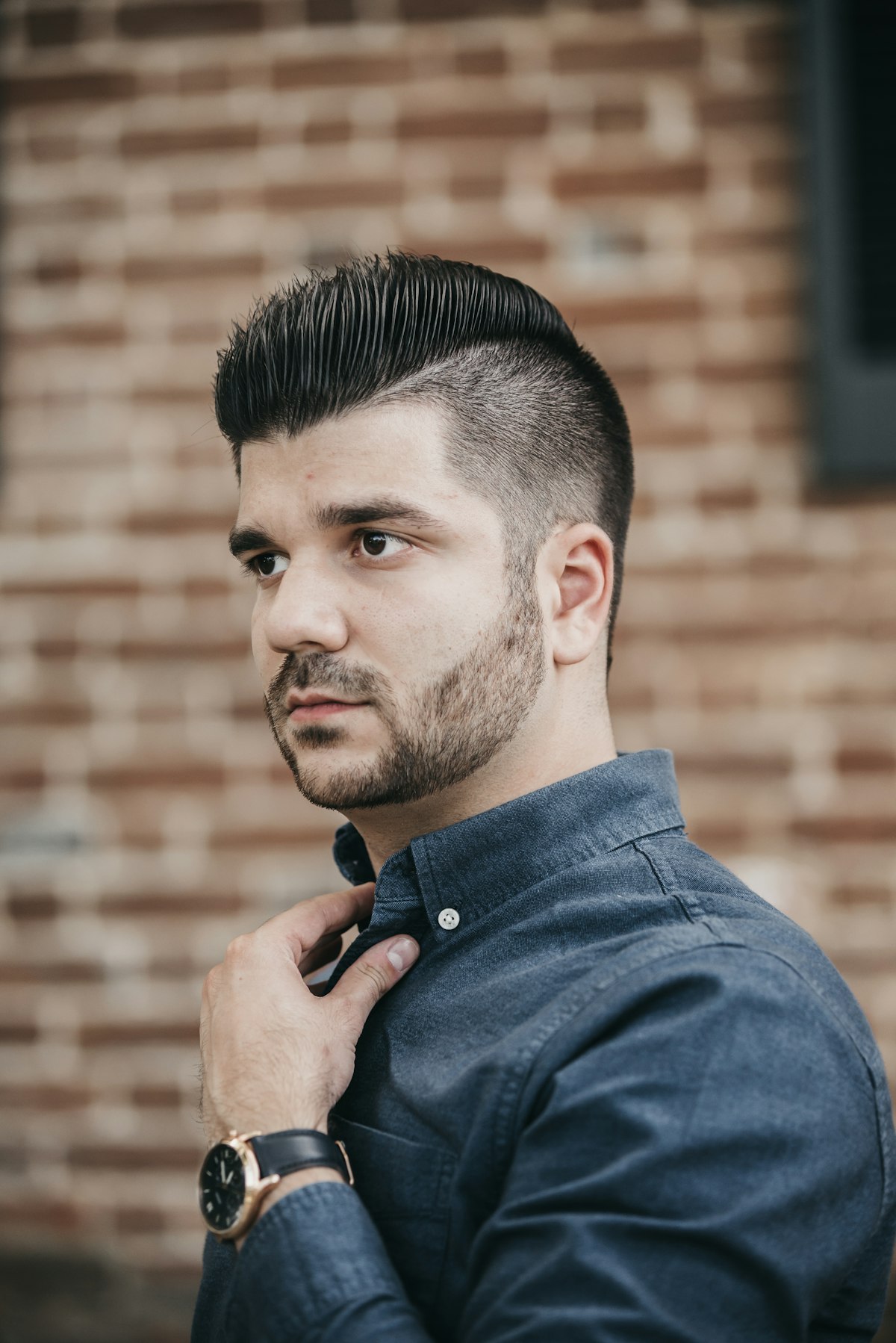
A drop fade is a fade variation where the fade line curves downward behind the ear rather than continuing horizontally around the head. In a standard fade, the fade height is consistent from the sideburn area, around the back of the ear, and across the neckline. In a drop fade, the fade height drops noticeably as it passes behind the ear, creating a curved line that follows the natural shape of the skull in that area.
How It Differs Visually
The most visible difference between a drop fade and a standard fade is the silhouette when viewed from the side or back. A standard high or mid-fade creates a horizontal band of shorter hair around the entire perimeter of the head. A drop fade creates a curved arc, higher at the sideburn area, curving down behind the ear, and back up toward the neckline. This arc follows the natural head shape and can make the top section appear more connected to the head rather than sitting on top of a uniformly short perimeter.
When It Works Best
The drop fade works particularly well with styles that have significant volume or length on top, textured crops, curly hair cuts, and styles where the top section is the visual focus. The curved fade line frames the top section differently than a horizontal fade, often adding to the overall shape of the haircut when the top section has its own significant character. It also works well for men whose natural head shape features a pronounced curve behind the ear, the drop fade follows and enhances that contour.
CADMEN Training
Fade variations including the drop fade are covered in CADMEN's hands-on barbering curriculum. academy.cadmen.ca/in-person-training.
Frequently Asked Questions
What is the difference between a drop fade and a regular fade?
The key difference between a drop fade and a regular fade is the path that the fade line takes around the head. Regular (standard) fade: the fade height stays approximately consistent as it travels from the sideburn, around the back of the ear, and across the occipital area at the back of the head. Whether it is a low, mid, or high fade, the height of the shortest section of hair stays relatively uniform around the perimeter of the head. The result is a clean horizontal band that circles the head. Drop fade: the fade line starts at the chosen height at the sideburn, then curves downward as it moves behind the ear, "dropping" to a lower point at the back of the ear and the sides of the occipital area, before the neckline creates its own shape. The drop creates a curved arc rather than a horizontal band. This arc is what gives the drop fade its name and its distinctive silhouette. Technically, a drop fade requires a barber to change the fade height intentionally as they move around the head, tracking the curved line consistently on both sides. This is more technically demanding than maintaining a consistent height. An uneven or asymmetric drop on the two sides is one of the most common failure points in this cut. Both types of fade are compatible with any fade height category (low, mid, high) and with skin or near-skin finishes. The specification "drop fade" is about the geometry of the fade line, not the height or closeness.
Who looks best with a drop fade?
The drop fade works best in specific contexts. Face shapes: the drop fade tends to look strongest on rounder or oval face shapes where the curved arc of the fade line creates vertical visual interest without adding width. On very square or angular face shapes, the curve of the drop fade can sometimes compete with the angular jawline in a way that a cleaner straight-line fade does not. However, the head shape and the cut on top matter more than face shape alone, so this is a general tendency rather than a rule. Hair types: the drop fade is particularly effective on curly or coily hair, where the top section has significant volume. The curved fade line frames the natural volume of the top section differently than a standard fade, often producing a more proportional silhouette between the tight sides and the fuller top. Overall cut style: the drop fade pairs best with cuts where the top section has its own visual weight. Textured crops, curly hair cuts, and medium-length styles benefit from the framing that the drop fade's curved arc creates. For very short top sections (close crops, buzz cuts), the difference between a drop fade and a standard fade is less visually significant because there is less top section for the fade to frame. The best way to determine whether a drop fade suits you: bring a reference photo of the specific drop fade style you are considering and ask your barber's assessment given your head shape and hair type.
How do I ask for a drop fade at the barbershop?
Asking for a drop fade at the barbershop is straightforward if you use the correct terminology and specify the height. A complete description: "I want a [low/mid/high] drop fade" is sufficient for a barber who is familiar with the technique. "Drop fade" tells them the geometry (the arc curves down behind the ear); the height specification tells them where the lowest point of the fade starts. If you want a skin drop fade, specify: "skin drop fade with a [low/mid/high] drop." Adding "and sharp lines" or "natural finish at the hairline" specifies the edge work if you have a preference. A reference photo is strongly recommended for a drop fade. The exact degree of the drop (how pronounced the curve is behind the ear) varies between interpretations, and a photo shows the exact arc you want. Without a photo, two barbers might execute very different amounts of "drop" from the same verbal description. What to check during the cut: because the drop fade requires the barber to track a curved line consistently on both sides of the head, asymmetry between the two sides is the most common issue. Ask the barber to check both sides are matching before the haircut is finished. It is much easier to correct an asymmetric drop while you are still in the chair than after you leave.
Related Reading From CADMEN Barber Academy
- Drop Fade Haircut Explained: What It Is and Who It Suits
- The Drop Fade: What It Is and How It Differs from Other Fades
- The Drop Fade: What It Is and How It Differs from Other Fades
- Taper Fade vs. Drop Fade: What the Difference Actually Is
- The Drop Fade: What It Is and How It Changes the Shape of a Haircut
- High Fade for Men: What It Is and How It Changes the Look
Want to learn to cut a drop fade yourself? CADMEN Barber Academy teaches cutting hands-on, with an educator beside you. See the barber academy in Mississauga or view in-person classes and send an enquiry.
Learn this fade step by step in our free Fade Tutorials playlist on YouTube.
