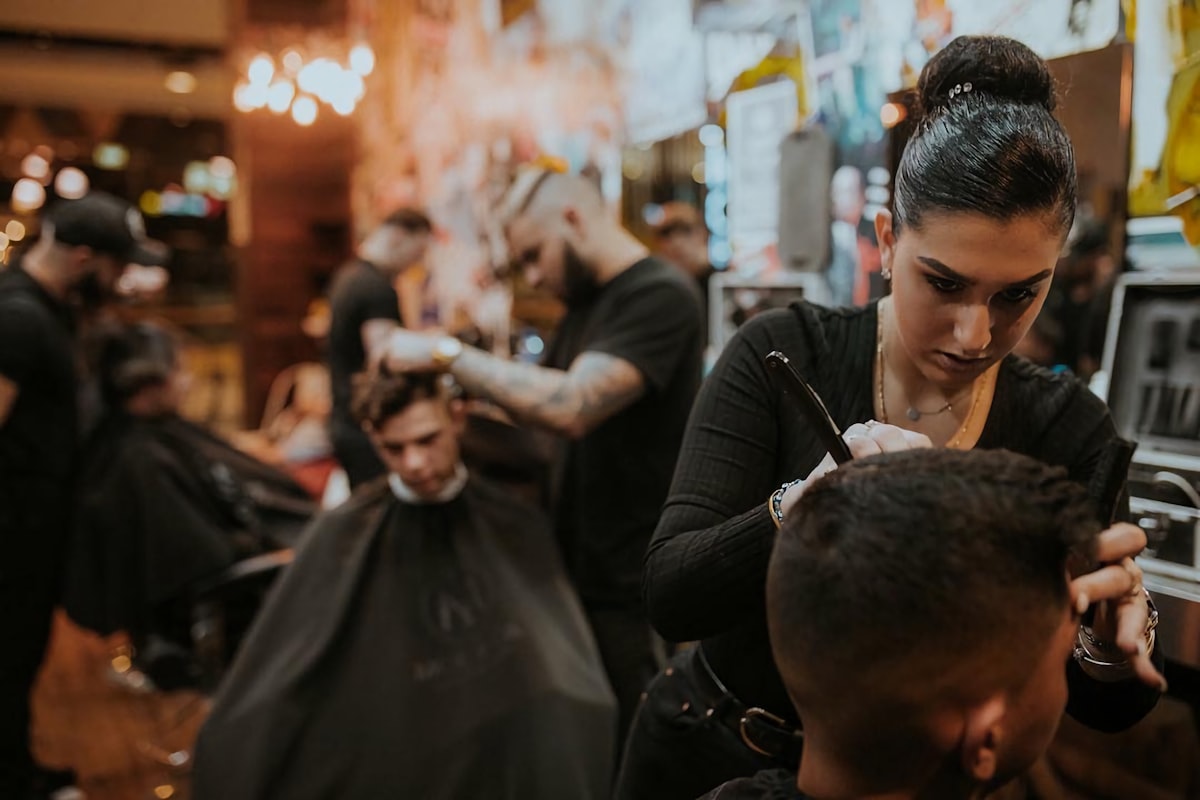
Barber Continuing Education: Why Professional Development Compounds
Barber Continuing Education: Why Professional Development Compounds
The barbers with the most technically consistent work are almost always the ones who are still training, even after years in the industry. This is not a coincidence. Skill without active maintenance and exposure to correction drifts toward habit rather than precision. The barber who stopped learning after finishing their apprenticeship is working from a static technique base. The barber who keeps attending training, watching instruction, and getting feedback on their work is building on a foundation that compounds.
What Continuing Education Actually Means for Barbers
Continuing education for a working barber does not require a classroom or a multi-day program. It includes:
- Attending an intensive training program (2-day workshops, masterclasses) with a barber whose work is at a level above your current execution
- Competition entry, which forces a performance standard you cannot cut to in the regular shop environment
- Watching and analyzing instructional video from barbers at the top of the industry and intentionally applying specific techniques to the next 10 haircuts
- Getting feedback from a more experienced barber on your current work (not general praise, but specific correction)
- Expanding service range by learning services outside your current menu (if you only do fades, learning beard technique; if you primarily do fades and beards, learning scissors)
The Formats That Produce Real Improvement
Not all continuing education formats produce the same result. The variable that matters most is corrected live reps per hour. Learning is faster when:
- The training includes actual cutting (not just observation or demonstration)
- An experienced barber watches and corrects the cut in real time
- The format is small enough (low student-to-instructor ratio) that correction happens on every cut
A 2-day program with 10 live haircuts and real-time correction produces more measurable improvement than 20 hours of watching video tutorials or attending a large group demonstration. The distinction is feedback per cut, not content per hour.
The Compounding Effect
A barber who attends one quality training per year, properly implementing what they learned into their daily work, improves their technical baseline each year. Over 10 years, this barber has compounding skill relative to a barber who stopped training after their apprenticeship. The improvement is not linear; technique builds on technique, and each addition opens up more complex work the foundation did not support before.
The financial compound is also real: barbers who continue improving command higher prices, attract more word-of-mouth referrals, and maintain a client base that is not just loyal but actively referring. The revenue gap between a technically stagnant barber and one who continued improving opens up significantly over a career.
When to Pursue Continuing Education
Three practical triggers:
- When a client asks for a service you cannot execute confidently
- When you notice other barbers producing results in a specific area (beard work, texture cuts, skin fades) that are consistently better than yours
- When you have been doing the same thing the same way for more than 2 years and have not actively analyzed whether there is a better way
CADMEN's Approach to Ongoing Training
CADMEN's intensive programs are specifically designed for working barbers who want corrected live reps on specific techniques, not for beginners in a classroom setting. Every student completes approximately 10 live haircuts across 2 days with direct correction from Francis Paua on every cut. The programs cover fade, beard, and scissors technique. Book at academy.cadmen.ca/in-person-training.
CADMEN Barber Academy is a private training institution in Mississauga, Ontario. It does not provide Skilled Trades Ontario apprenticeship hours or Certificate of Qualification pathways.
Frequently Asked Questions
Do certified barbers need to keep training?
There is no legal continuing education requirement for certified barbers in Ontario after they receive their Certificate of Qualification. The decision to keep training is professional, not regulatory. Barbers who choose to train continuously produce better work and advance their careers faster than those who do not. The absence of a requirement is not a reason to stop; the compound value of continued training is the reason to continue it.
How much does barber continuing education cost?
Costs vary widely by format. Online instructional content ranges from free to $200 for structured programs. In-person intensives (2-day workshops at quality programs) range from $1,500 to $3,000 depending on the instructor, location, and program structure. Competition entry fees range from $100 to $500 depending on the event. The ROI calculation: a single additional retained weekly client at $40 per visit recovers a $1,750 training cost within one year.
What is the best continuing education for a barber who already knows how to fade?
It depends on the specific gap. If the fade is solid but beard work is weak, a focused beard and shave program. If fade and beard are strong but the business is not growing, business coaching (how to market, price, and operate a profitable barbershop). If technique is across-the-board strong but the barber wants to advance, competition preparation builds the elite-level precision that regular shop work does not require.
Can a self-taught barber benefit from formal continuing education?
Yes, often more than a formally trained barber. Self-taught barbers frequently have strong intuitive technique in areas they developed naturally and significant gaps in areas they never had to formally address. A structured training program with an experienced instructor often identifies and corrects foundational issues the self-taught barber did not know they had, producing rapid improvement.
Are barber masterclasses worth it?
The value depends entirely on the format. A masterclass that puts a tool in the attendee's hands and produces corrected live haircuts is worth the cost. A masterclass that is primarily a demonstration followed by Q&A is essentially educational content you could access online at a fraction of the cost. Ask before booking: how many live haircuts will I personally complete, and is the instructor watching and correcting my work?
