The Comb Over Fade: How to Cut and Style It
The Comb Over Fade: How to Cut and Style It
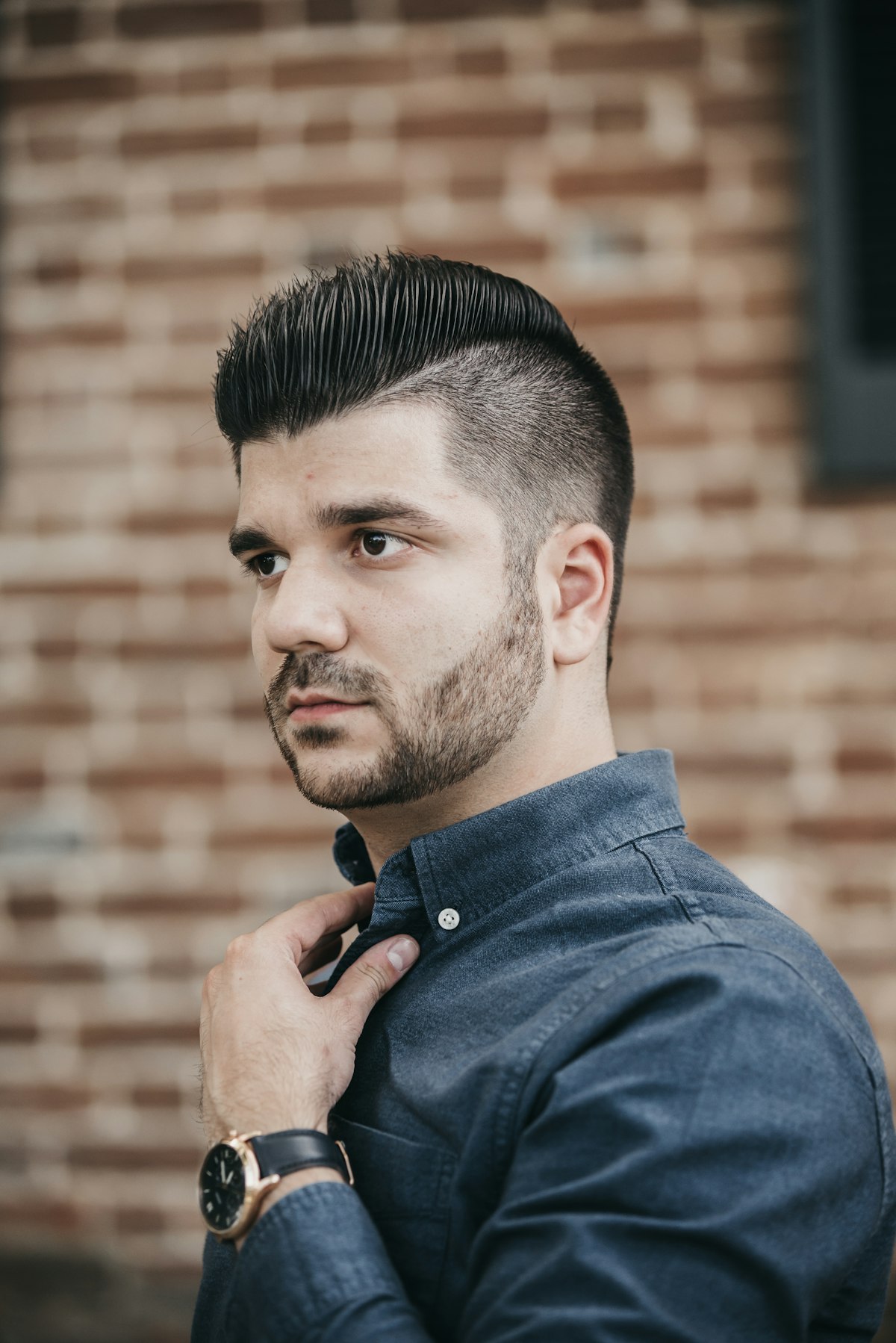
The comb over fade combines a classic side-parted top section with a modern fade on the sides and back. The top is left long enough to comb to one side with definition; the sides graduate from skin or very short upward to meet the longer top section. The result is a versatile style that reads as professional and polished while remaining modern enough for any context.
Variations of the Comb Over Fade
Low fade comb over: the fade line sits just above the natural hairline. Conservative, works with any face shape, suits clients who want the classic look without aggressive contrast. Appropriate for more formal or conservative professional environments.
Mid fade comb over: the fade line sits at the temple. The most popular version currently, more defined contrast than the low fade but not as graphic as the high fade. Works on the widest range of face shapes.
High fade comb over: the fade line sits above the temple, producing maximum visual disconnect between the very short sides and the longer combed top. The most dramatic version. Suits clients who want a defined, fashion-forward look.
Skin fade comb over: any of the above versions with the base taken down to skin (zero). The highest-contrast version. Requires the most maintenance because the skin-to-hair contrast shows new growth quickly.
Cutting the Sides
Execute the fade at the chosen height using standard fade technique: establish the guide at zero, work upward through guard increments, blend the transitions. The fade on a comb over is the same technical execution as any other fade service on the sides and back, the only difference is that the top section will be left significantly longer for the comb-over styling.
Cutting the Top
The top on a comb over fade typically ranges from 2 to 4 inches. The longer the top, the more dramatic the comb-over effect. Shorter tops (2 to 2.5 inches) produce a tighter, more casual look; longer tops (3 to 4 inches) produce the full classic comb-over shape with more volume and sweep.
Cut the top with scissors, working in the direction the hair will be combed. The front section (the part where the comb-over side sweep begins) is the longest point; the crown can be slightly shorter. The sides of the top section blend down into the fade, scissor-over-comb work at the blend zone connects the scissor-cut top to the clipper-faded sides.
The part line: a hard part (a shaved line using the T-liner or razor) is an optional detail that sharpens the transition from side to top. Confirm with the client whether they want a hard part or a natural part before adding this detail, not all clients want a shaved line, and once it is cut in, it requires maintenance to keep sharp.
Styling the Comb Over
Apply a medium-hold pomade or clay to damp or dry hair. Comb the top section to the chosen side using a comb, directing the hair from the natural part position (or the hard part if cut in). For the comb-over to lie cleanly, the product must be worked through all layers of the top section, not just the surface.
Finish with a blow dry pass on the top section if the client wants more lift and volume, the heat from the dryer sets the shape and adds body that product alone does not achieve.
CADMEN Training
Comb over technique, classic men's styles, and the full haircut range are covered in the CADMEN hands-on program. academy.cadmen.ca/in-person-training.
Frequently Asked Questions
What is a comb over fade?
A comb over fade is a men's haircut with faded or tapered sides and back combined with a longer top section that is combed and parted to one side. The fade on the sides graduates from short (or skin) at the base upward to meet the longer top section. The top is styled with a side part and combed in one direction, creating the swept appearance that defines the "comb over" component. It is one of the most versatile men's barbershop styles, it works in professional settings, suits a wide range of face shapes, and the fade height and top length can be adjusted to suit any client preference from conservative to fashion-forward.
What is the difference between a side part and a comb over?
A side part is any haircut where the hair on top is parted to one side. A comb over specifically refers to hair that is swept or combed horizontally across the top of the head, the hair from one side of the part crosses over toward the other side. In current barbershop usage, the terms are often used interchangeably, particularly for the "comb over fade" style, which may look like a standard side part to many clients. The traditional comb over (associated with men covering bald spots by combing from the side) has no relation to the current barbershop comb over fade style beyond the directional combing.
How long should the top be for a comb over?
2 to 4 inches is the range. 2 to 2.5 inches produces a shorter, tighter comb over that requires less styling and less maintenance between cuts. 3 to 4 inches allows more volume, sweep, and the classic wave appearance. The right length depends on the client's hair thickness and texture (finer hair at 2.5 inches often looks similar to thicker hair at 3.5 inches) and their styling tolerance, longer tops require more product and styling time. First-time comb over clients with no established length preference should be offered a mid-length option (2.5 to 3 inches) and adjusted from there at subsequent visits.
What product is best for a comb over fade?
Medium-hold water-based pomades are the most popular choice for comb over fades because they provide enough hold to keep the part defined and the hair combed in direction, while still being water-soluble (easy to wash out) and offering some workability throughout the day. Matte clays work well for clients who prefer no shine. High-shine oil-based pomades produce the classic slick comb-over aesthetic but are heavier and harder to wash out. The best product depends on the client's preference for shine level and hold strength. A trial application during the service with whatever the shop stocks allows the client to feel the result before purchasing.
Does a comb over work on fine hair?
Yes, with adjustments. Fine hair at full comb-over length (3 to 4 inches) often lacks the volume and body needed for the style to look intentional rather than flat. A blow dry with root-lift technique addresses this, and a volumizing clay or paste adds texture and body that mimics the density thicker hair provides naturally. The top section can also be left slightly shorter (2 to 2.5 inches) on fine hair, this length has more body per strand and holds the comb-over shape better than longer fine hair that falls flat under its own weight. The comb over fade is one of the more fine-hair-friendly styles in men's barbershop because the side part and directional combing give the illusion of structure even when the individual hair strands are fine.
Related Reading From CADMEN Barber Academy
- Comb Over Fade for Men: What It Is and How to Get It Right
- Clipper Over Comb: The Foundational Technique Every Barber Needs to Master
- The Comb Over Haircut: What It Is and How It's Cut Today
- Comb Over Haircut: How to Cut and Style It
- The Comb Over Haircut: How Barbers Cut and Style the Most Versatile Men's Haircut
- The Modern Comb Over: How It Works and Why Men Wear It
Want to learn to cut a comb over yourself? CADMEN Barber Academy teaches cutting hands-on, with an educator beside you. See the barber academy in Mississauga or view in-person classes and send an enquiry.
Learn this fade step by step in our free Fade Tutorials playlist on YouTube.
