Barber Clippers vs Trimmers: What the Difference Is and When to Use Each
Barber Clippers vs Trimmers: What the Difference Is and When to Use Each
Clippers and trimmers look similar but are built for different jobs. Using the wrong one for a task produces worse results and wears down the tool faster. Here is the practical breakdown of what each is built for and when each gets used in a professional barbershop setting.
What Clippers Are Built For
Clippers are built for removing volume. They move through large amounts of hair efficiently. Their blades are wider and designed to cut through bulk without clogging. Most professional clipper blades are 1.5 to 2 inches wide.
Clippers are designed to be used with guards. The guards set the distance between the blade and the scalp, controlling the cutting length. Clipper work is guard-based: you run the clipper up the head at a specific guard length, then change guards or adjust the lever to blend the transition.
The motor in a clipper is typically stronger than a trimmer's motor, built to push through dense or thick hair without stalling or slowing down. Cordless professional clippers typically run for 60 to 120 minutes on a charge before needing to be returned to the base.
What Trimmers Are Built For
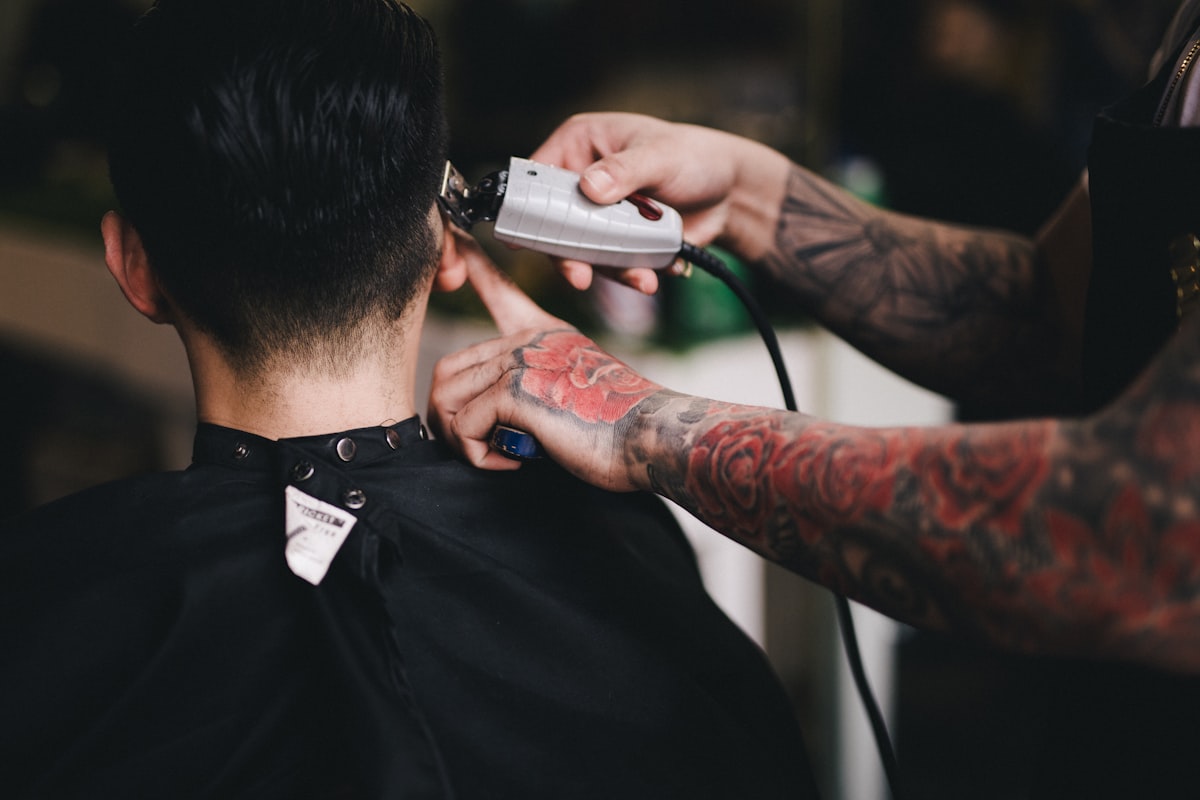
Trimmers are built for precision and outline work. Their blades are narrower (typically 1 inch or less) and are designed to create clean edges rather than move through bulk volume.
Trimmers are used for:
- Hairline cleanup and outline definition
- Sideburn shaping and tapering
- Neckline edging
- Beard outline definition
- Ear outline cleanup
- Detail work on mustache lines and lip edges
A trimmer is the tool a barber reaches for when the clipper work is done and the detail work begins. It is the finishing tool, not the bulk-removal tool.
Zero-Gap Trimmers: The Skin Fade Tool
A zero-gap trimmer has its blade adjusted (or factory-set) so the cutting teeth are flush with or close to the guide teeth, allowing the blade to cut very close to the skin. Zero-gap trimmers produce the bald or skin appearance at the base of a skin fade.
Most barbers who do skin fades own at least one trimmer that has been zero-gapped. Using a standard trimmer for skin fade work produces a slightly elevated result because the blade is not adjusted close enough to the skin.
Brands commonly used for zero-gap work: Andis Slimline Pro Li, Wahl Detailer, BaByliss PRO FX Trimmer, Andis T-Outliner.
T-Blade Trimmers vs Straight Blade Trimmers
The blade shape affects what you can do with the trimmer:
- T-blade (T-outliner style): the blade forms a T shape, giving you a wider cutting surface with sharp corner edges. Excellent for straight outline work and hard parts. The corners are precise enough to draw clean lines.
- Straight blade / foil trimmers: narrower, no corner edges, used for close-to-skin finishing rather than line work. Foil shavers in this category are used for neckline cleanup and creating a clean skin appearance below the hairline.
Most barbers carry both a T-blade trimmer for outline definition and a straight or foil trimmer for close-skin finishing.
When to Use Clippers vs Trimmers in a Fade
The division of labor in a standard fade cut:
- Clippers with guards: the entire length-setting and blending phase. Guards 1 through 4 or whatever the style calls for. The clipper does all the bulk work of the fade and the top.
- Clipper with lever (no guard): used by many barbers for fine-tuning the blend at the transition zone. The lever controls how open or closed the blade sits, giving fractional lengths between guard sizes.
- Zero-gap trimmer: used at the base of a skin fade to push the blend to the skin. Also used for the neckline if the neckline is part of the fade design.
- T-blade trimmer: hairline cleanup, sideburn definition, beard outline if included, neckline shaping after the fade is blended.
- Foil shaver (if used): neckline and sideburn cleanup to the skin, below what the trimmer can reach cleanly.
What Professional Barbers Own
A working barber typically runs with a minimum kit of:
- 2 cordless clippers (primary and backup for when one is charging or needs a blade change)
- 1 T-blade trimmer (outline and detail work)
- 1 zero-gapped trimmer (skin fade work and close finishing)
- 1 foil shaver (optional, used for clean skin lines)
Total investment for this kit from professional brands: $600 to $1,400 depending on model choices. A first kit can be assembled for less with mid-tier models and upgraded over time as preferences develop from actual use.
Where Technique Meets Tools
The tools do not produce the technique. A barber with full control of clipper angle, guard transitions, and trimmer pressure can produce a clean skin fade on a $150 clipper and a $80 trimmer. The same barber with a $400 clipper and poor mechanics produces the same uneven result.
CADMEN offers a two-day fade course in Mississauga with demonstrations, supervised practice on live models and educator feedback. Small-group classes have up to three students, and one-on-one training is also available. Confirm the skill you want to practise with our team before booking. View current details.
$1,750 + HST (small group) or $1,950 + HST (1-on-1). Book at academy.cadmen.ca/in-person-training.
Frequently Asked Questions
What is the difference between barber clippers and trimmers?
Clippers are built for bulk cutting and length setting. They have wider blades, stronger motors, and are designed to be used with guards to control hair length. Trimmers have narrower blades designed for edge work, outlines, and detail finishing. A fade requires both: clippers for the length transitions and trimmers for the edges and clean-up.
Can you use trimmers instead of clippers?
Not effectively for bulk work. Trimmers are not designed to move through large amounts of hair efficiently. Using a trimmer to do clipper work will clog the blade, slow the motor, and produce an inconsistent cut. Use each tool for what it is built for.
What is a zero-gap trimmer?
A trimmer whose blade has been adjusted so the cutting teeth are flush with or very close to the guide teeth, allowing it to cut as close to the skin as possible. Zero-gap trimmers are used at the base of skin fades and for close-skin neckline finishing.
Do I need both clippers and trimmers?
Yes. No single tool handles all of a professional haircut efficiently. Clippers handle the bulk work and fade blending. Trimmers handle the outline definition, neckline cleanup, and close-skin finishing. Running a professional barbershop without both means compromising on either speed or finish quality.
What clippers and trimmers do professional barbers use?
Common professional choices include Wahl, Andis, BaByliss PRO, and Oster for both categories. Most barbers develop preferences through use over time. The brand matters less than the fit in the hand, motor stability, and blade quality. Buy from professional supply sources rather than consumer retail.
Related Reading From CADMEN Barber Academy
- How Barbers Use Clippers vs. Scissors: What Each Tool Does
- Straight Razor Shave: What Barbers Need to Know
- What Happens During a Straight Razor Shave at the Barbershop
- The Razor Lineup at the Barbershop: Technique and Results
- How to Prepare for a Straight Razor Shave: Client and Barber
- How to Master a Bald Fade with Scissors: A Barber's Guide
- Barbering Topics Index: Every Guide by Subject
