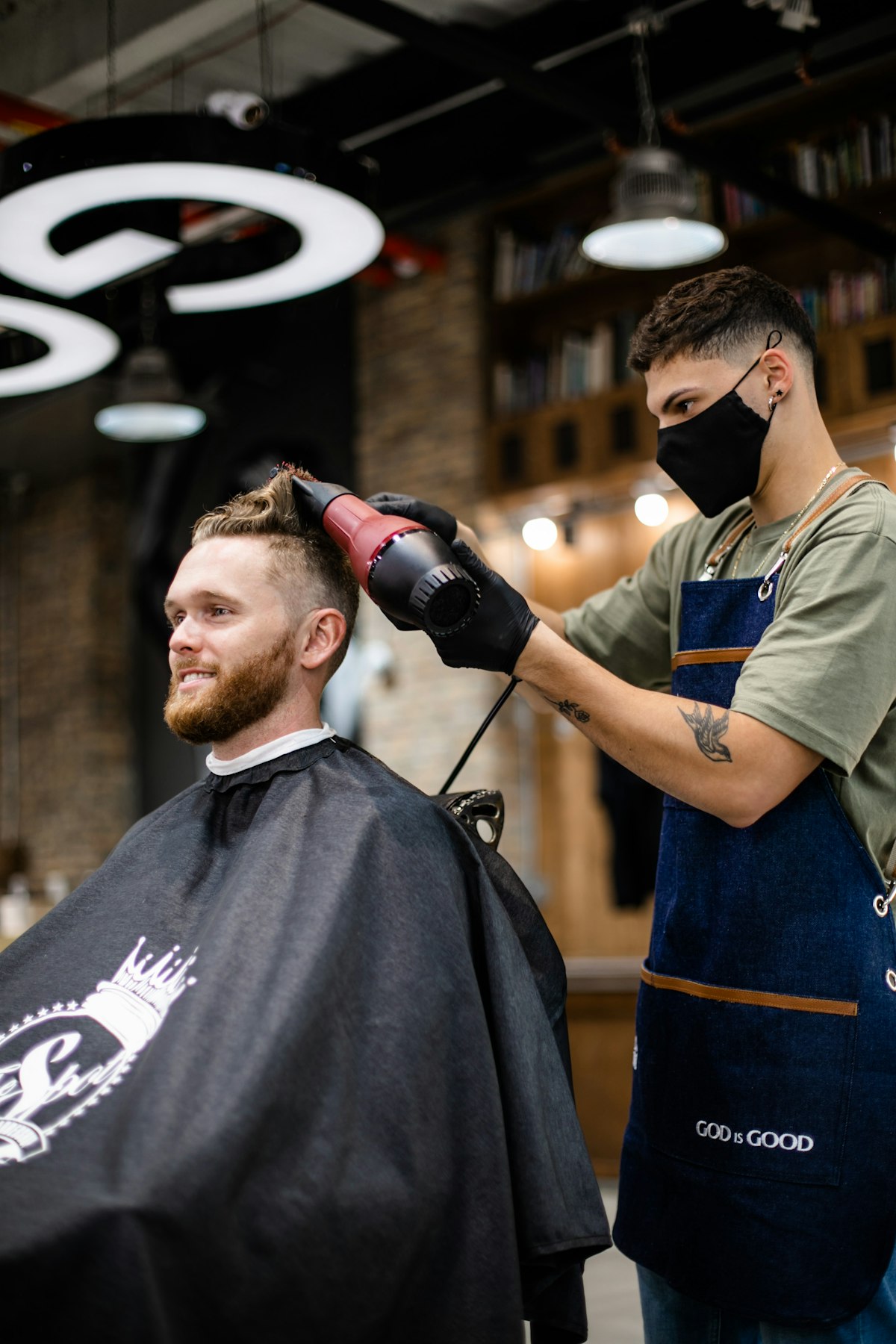
How Barbers Use Clippers vs. Scissors: What Each Tool Does
How Barbers Use Clippers vs. Scissors: What Each Tool Does
Clippers and scissors are both cutting tools, but they produce different results, work on different parts of a haircut, and require different technique. Most professional men's haircuts use both. Understanding what each tool does helps explain how a barber constructs a haircut from start to finish.
What Clippers Do
Clippers cut hair to a specific length using two blades that move against each other at high speed. The guard attachment controls how much hair is left behind, a 1 guard leaves approximately 3mm of hair; a 4 guard leaves approximately 13mm. This makes clippers efficient and consistent for cutting large sections of hair to a uniform length in a short time.
Clippers are the primary tool for fades and tapers. They are used to establish the length at the sides and back, blend between guard lengths to create the fade, and detail the hairline. Without clippers, modern fade technique as clients know it is not achievable at scale, the speed and guard-size precision that clippers provide is fundamental to the clean fade.
What Scissors Do
Scissors cut hair by pinching and shearing between two blades. They are the primary tool for cutting the top section, the hair above the fade line. Scissors allow the barber to control the angle of the cut, the amount of weight removed, and the texture of the finish in ways that clippers cannot replicate. Scissor technique on the top: scissor-over-comb (cutting the comb-lifted hair with scissors), point cutting (cutting into the hair ends at an angle to texturize), and channel cutting (creating depth and movement). Thinning shears, a type of scissors with teeth on one blade, remove bulk from thick hair without shortening the overall length significantly.
How They Work Together
A typical men's haircut uses clippers on the sides and back (fading and establishing base lengths) and scissors on the top (shaping the longer hair and creating the connection between the fade and the top). Some barbers use clipper-over-comb on the top for shorter styles rather than scissors. The tool choice depends on the desired outcome, hair type, and the barber's technique preference.
CADMEN Training
Both clipper and scissor technique are taught in CADMEN's hands-on training. academy.cadmen.ca/in-person-training.
Frequently Asked Questions
Do barbers use scissors or clippers for haircuts?
Professional barbers typically use both clippers and scissors in the same haircut, with each tool handling different sections and functions. Clippers handle the sides and back: establishing the base lengths, fading between guard sizes, and detailing the hairline and neckline. Scissors (or shears) handle the top section: shaping the length, removing weight and bulk, texturizing the finish, and creating the connection between the faded sides and the longer top. The proportion of clipper versus scissor work depends on the cut: a skin fade with a short textured top might be 70 percent clipper work. A longer scissor cut with a tapered neckline might be 70 percent scissor work. Some cuts are performed primarily with scissors from hairline to crown (all-over scissor cuts, longer styles, naturally textured cuts where clip marks would be visible and undesirable). In a modern barbershop, clipper skill is the primary technical differentiator, the clean fade is what most clients come for, and that requires clipper mastery. Scissor skill is the secondary differentiator, it determines the shape, texture, and finish quality of the top section, which is what distinguishes a barber who produces artistic results from one who can only maintain a standard template.
What kind of clippers do professional barbers use?
Professional barbers use two primary types of clippers: cordless and corded, from brands designed specifically for professional use. The leading professional clipper brands are Wahl, Andis, and BaBylissPRO (in the US market). Each has different blade speed, motor types (magnetic, pivot, or rotary), and weight characteristics that barbers choose based on personal preference and the techniques they perform most frequently. Wahl's Senior and Sterling 4 models and Andis' Master and Envy models are among the most widely used in professional settings. Cordless models are increasingly common because they eliminate the cord management issue during a haircut, no cord getting in the way during clipper-over-comb passes or around-the-ear work. Battery life on current professional-grade cordless clippers typically runs 60 to 90 minutes per charge. For fading specifically, the blade gap and blade type matter as much as the brand. Barbers who specialize in tight fades often use a lever-adjustable clipper that allows them to change the cutting length in real-time by moving the lever without changing guard attachments. The specific tools a barber chooses are personal and often debated within the profession, what matters more than the specific brand is that the barber maintains and aligns their blades regularly, uses the right tool for each part of the cut, and has developed the technique to use their tools effectively.
Why do some haircuts use scissors only?
All-scissor haircuts are used in specific situations where clippers would produce the wrong result. Longer haircuts (4+ inches): clippers on long hair are impractical, they cannot cut through the length efficiently and produce flat, blunt results without the texture and layering that scissors create. Long cuts on all hair types require scissors as the primary or sole cutting tool. Very curly or coily hair types: some barbers and clients prefer scissors-only cuts for tight curl and coil types because clipper marks can be visible in very tight curl patterns as the hair grows out, while scissor cuts grow out more naturally. Scissor cuts on textured hair also allow for curl-type-specific shaping that guides how the curl naturally forms rather than cutting to a uniform length. European-style and classic men's cuts: traditional men's barbering in many European markets and some North American shops with a classic positioning uses scissors-over-comb for the sides and back as well as the top, avoiding the clipper-fade look entirely. This produces a softer, less high-contrast result that some clients prefer. The barber's decision to use scissors versus clippers is driven by the desired outcome, for most modern men's cuts that include a fade, clippers are fundamental. For longer styles and all-scissor technique, scissors achieve what clippers cannot.
