The Classic Side Part: How to Cut and Style It
The Classic Side Part: How to Cut and Style It
The side part has appeared in men's barbershop chairs for over a century. It comes in and out of trend cycles, but it never fully disappears because it is genuinely flattering on a wide range of face shapes and hair types, and it is one of the few haircuts that reads as equally appropriate in casual and professional contexts without any restyling.
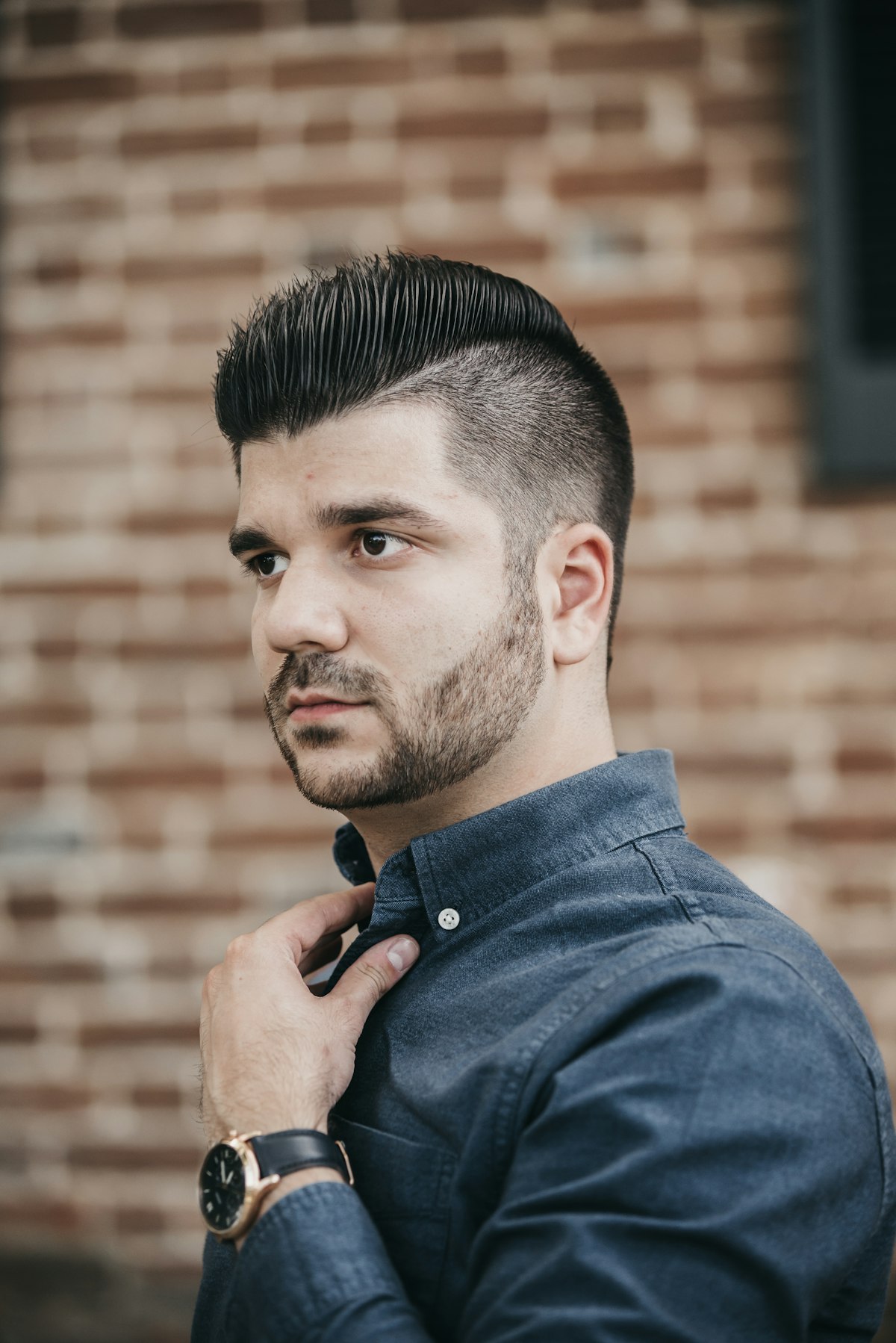
The modern side part is typically cut with a low to mid fade or taper on the sides and back, with longer length on top to allow for the part and styling. The core of the cut is the top section, and the parting placement is the detail that makes or breaks the look.
Determining the Part Placement
The natural part is the starting point. Run a fine comb forward through dry hair from the crown. The hair will fall naturally to one side or the other at a natural part line. This is where the part should sit for the most flattering and low-maintenance result. A part placed against the natural growth pattern is harder to style, holds less well through the day, and tends to return to the natural part within a few hours without product.
The classic side part sits approximately 1 to 2 inches above the outer corner of one eye. A part placed too far toward the center reads as a center part. A part placed too far back toward the ear reads as a hard-line disconnect rather than a classic part. The sweet spot is roughly above the natural outer eyebrow arch.
Cutting the Sides and Back
The modern side part uses a taper or fade on the sides and back. The fade height and tightness at the base depend on the client's preference and how sharp the separation between the sides and top should be.
A high disconnect side part (where the top section is significantly longer and has a hard visual separation from the short sides) is a modern, bold version. A low taper side part (where the sides are shorter but graduated softly into the top) is more conservative and suits professional environments.
Cut the sides and back with the standard taper fade technique: establish the base line, work through the guard progression, blend the transitions. Confirm the fade height and disconnect level with the client before starting.
Cutting the Top
The top section for a classic side part is typically cut to 2 to 4 inches in length, long enough to part cleanly and style to one side. Shorter lengths (under 2 inches) may not hold the part well; longer lengths (over 4 inches) give more styling flexibility but require more product and maintenance.
Cut the top with scissors and a comb, reducing to the desired length while following the natural growth direction. The part side (the side the hair falls toward) can be cut slightly shorter at the ear to avoid bulking at the side. The swept side (the side the hair flows over toward) carries the styling direction and should be cut with the final swept position in mind.
Styling the Side Part
The side part requires product to hold the part in place through the day. Options:
- Pomade (water-based): Classic side part look. High-shine finish. Medium to strong hold. Applied to damp hair, parted with a fine comb, swept to the side. This produces the clean, slick classic look.
- Paste or clay: Matte or low-shine finish for a more modern, textured version of the side part. Applied to damp or dry hair. More casual and workable throughout the day.
- Cream: Light hold for fine hair. Adds volume without weighing the hair down. Suits finer hair types where heavy pomade collapses the top.
Apply product, form the part with a fine-tooth comb, and sweep the hair to the desired side. A blow dryer aimed in the direction of the sweep while brushing adds volume and locks the direction into place.
CADMEN Training
Classic haircut technique and styling fundamentals are covered in the CADMEN hands-on program. academy.cadmen.ca/in-person-training.
Frequently Asked Questions
What face shapes does the side part suit?
The side part works well on oval, rectangular, square, and diamond face shapes. On oval faces (considered the most versatile face shape for haircuts), the side part is essentially universally flattering. On square or rectangular faces, the side part softens the angular jawline by drawing the eye upward and to one side. On round faces, a higher-volume side part with a tighter fade on the sides elongates the face visually. The side part is one of the most face-shape-flexible haircuts in the barbershop menu.
How do you keep a side part in place all day?
Two factors: the right product and blow-drying in the direction of the part. Apply a medium to strong hold pomade or paste to damp hair, comb the part firmly into position, and blow-dry on medium heat in the direction of the sweep. The combination of product and heat sets the direction into the hair shaft so the part holds through the day without constant re-combing. Without the blow-dry step, even strong-hold product may relax throughout the day as the hair dries in a different direction. A small amount of hairspray over the top section after styling extends hold further for important occasions.
What is the difference between a side part and a hard part?
A side part is a natural or combed division of the hair using product and styling. The scalp may or may not be visible at the part. A hard part is cut into the hair with a T-liner or razor during the barbershop visit, creating a precise line of visible scalp between the top section and the side. The hard part is a more defined, intentional visual element rather than a natural part. Hard parts require maintenance at every haircut visit to keep the line sharp. A natural side part requires only daily styling product; the part line is softer and less precise but requires no upkeep between cuts.
What length should the top be for a side part?
2.5 to 4 inches is the range that produces the most versatile side part. Shorter than 2 inches lacks the length to part cleanly and sweep convincingly to one side. Longer than 4 inches gives maximum styling flexibility but increases the styling time and product needed to hold the look through the day. Most barbers cut the side part top to 2.5 to 3.5 inches for clients who want a clean, manageable result. Clients who prefer a more voluminous, heavily styled version request 3.5 to 4+ inches. The ideal length is confirmed by discussing the client's styling time tolerance and desired look.
Can you do a side part on curly hair?
Yes, though it requires more product and effort to maintain than on straight or wavy hair. On curly hair (type 2c to 3b), the side part reads as a more relaxed, textured version rather than the precise slick look of a classic pomaded part. A strong-hold pomade applied to damp curly hair, combed or finger-styled to one side, and blow-dried with a round brush to smooth the curl partially produces a hybrid that holds the direction of the part while keeping some texture. On very tight curl patterns (4a+), a fully defined side part with the natural curl intact is essentially impossible without significant heat straightening — most clients with tight curl patterns opt for natural styles that work with the curl pattern rather than against it.
