The Brush Up Haircut: What It Is and How to Style It
The Brush Up Haircut: What It Is and How to Style It
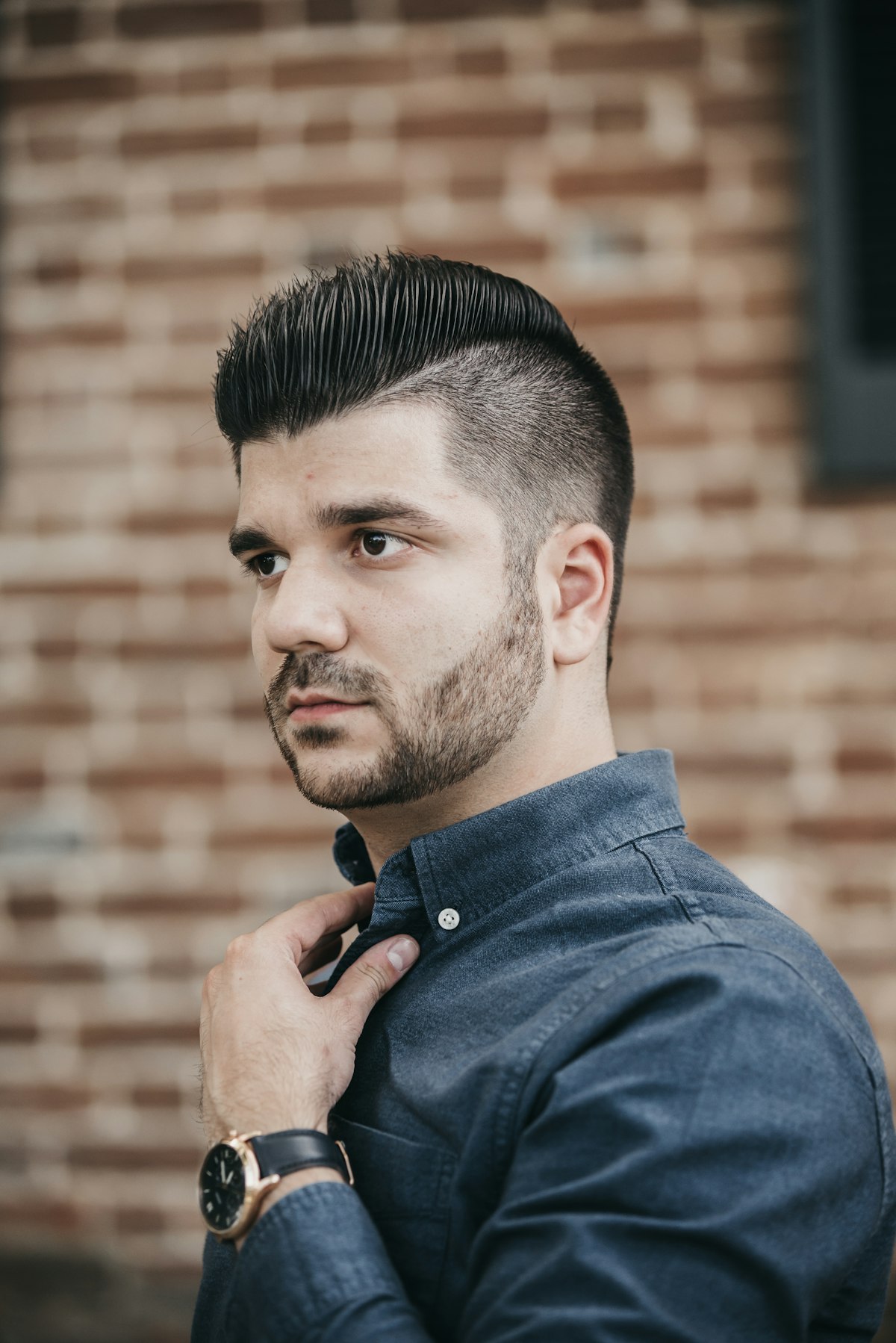
The brush up is a men's cut where the top section of the hair is styled upward and forward, toward the forehead, creating visible height and a directional look without the swept-back structure of a quiff or pompadour. It is a modern, versatile cut that works across a range of hair types and communicates an intentional but not overly formal look.
What Defines the Brush Up
The defining characteristic is the direction: hair on top is brushed forward and slightly upward, rather than swept to the side or back. This creates a forward-facing textured section. The sides are typically faded or tapered to provide contrast with the longer, upward-brushed top. The overall silhouette is height at the front that decreases toward the crown and sharply shorter sides.
How Barbers Build the Cut
The top section is left longer (typically 2 to 4 inches) to provide the length needed for the brush-up direction. The sides are faded or tapered to the desired height and contrast level. The transition from the top to the sides is blended smoothly. Barbers often cut the top with some texture to give the hair movement and prevent it from lying flat when brushed up.
How to Style It at Home
Apply a small amount of medium-hold matte clay or fiber wax to towel-dried hair. Work it through the top section from root to tip. Using fingers, brush the hair forward and upward from the crown toward the forehead. A hair dryer pointed at the roots from below adds lift that holds through the day. The finished look: forward-facing height at the front, textured movement, shorter clean sides. Takes 2 to 4 minutes.
Hair Types
The brush up works best on straight to slightly wavy hair with enough density to hold the forward brush. Very fine hair may need more product or a blow-dry step to hold the lift. Curly hair produces a more voluminous, less directional version of the style.
CADMEN Training
CADMEN Barber Academy covers styling technique alongside cutting. academy.cadmen.ca/in-person-training.
Frequently Asked Questions
What is the difference between a brush up and a quiff?
They look similar and are related styles, but have specific differences in direction and structure. The key difference is the direction the top section is styled and where the visual peak falls. The quiff: the hair at the front is pushed up and swept back, the peak or visual height is at the hairline and the hair falls backward from that point. The styling direction is away from the face. The pompadour and the quiff share this backward sweep as their core structure. The brush up: the hair is brushed upward and forward, toward the face rather than away from it. The visual height is distributed across the front section and slightly forward over the hairline rather than swept back from it. The effect is more casual and less structured than a quiff because the hair is moving in a more natural forward direction. Practical distinction: if you swept the styling direction of a quiff forward and slightly reduced the height, you would have something approaching a brush up. Both use similar lengths and both work with a fade or taper on the sides. Both require product and a brief morning styling step. The choice between them is largely about the final direction preference. The brush up looks slightly more relaxed and less formal than the quiff. The quiff reads as more intentionally styled and structured. For men who want a polished look for specific occasions, the quiff may be the better choice. For an everyday cut that looks intentional without looking formal, the brush up is often the more practical choice.
How much product does a brush up need to hold through the day?
The amount depends on the hair's natural texture and weight, and how much lift you want to maintain. The general guidance: medium-weight product (medium-hold clay or fiber wax) provides enough hold for most hair types without feeling stiff or overdone. Heavy pomades are unnecessary and can make the style feel too product-dependent and heavy. Light creams or waxes may not hold the lift for full-day wear on denser or heavier hair. The blow-dry factor: the blow-dry step is the most significant variable for how long the brush-up holds. Running a dryer at the roots while brushing the hair forward and upward sets the hydrogen bonds in the hair in the desired position as it dries. This creates structure that holds through the day with minimal product. Without the blow-dry step, the same amount of product produces less lasting hold because the hair is setting in its natural dry direction rather than the brushed-up direction. The practical test: style the hair without a blow dryer and check how it looks by mid-morning. If the lift has fallen noticeably, adding the dryer step in the morning will resolve it. If the lift holds without the dryer, the cut and product combination is sufficient without the heat step. Product timing: applying product to towel-dried hair (damp but not wet) produces better distribution and hold than applying to fully wet or fully dry hair. The damp state gives the product something to grip and allows it to dry into the desired position.
Does the brush up work on men with a high forehead?
The relationship between the brush up and a high forehead is worth considering because the style adds height at the front of the head. A high forehead is one where the hairline has receded or is naturally positioned high, creating more visible forehead length from the eyebrows to the hairline. The specific consideration: the brush-up direction moves hair forward, which at first seems like it would help a high forehead by bringing the hairline's visual presence closer to the brow line. In practice, the upward height component of the brush up above the hairline adds to the perceived vertical height of the forehead, which can amplify rather than reduce its visual impact. What works better for a high forehead with the brush-up aesthetic: a lower or more horizontal version where the forward brush is emphasized but the upward height is reduced. Keeping the styling closer to the forehead level rather than prominently above it creates the textured, forward-facing look without the additional vertical emphasis. A low to mid fade that draws the eye to the clean side gradient rather than upward toward the top section also helps shift the visual focus. What to tell the barber: "I have a high forehead, so I want to keep the height on top minimal, more texture and forward movement than lift." This gives the barber the information to modify the styling approach and potentially the cut length on top to reduce the height effect. Barbers experienced with a range of clients have seen this scenario and know the adjustments that work.
Related Reading From CADMEN Barber Academy
- Cutting Afro and Type 4 Hair: Techniques for Barbers Working with Coily Textures
- The Blowout Haircut: What It Is and How to Maintain It
- The Caesar Haircut: What Makes It a Caesar and How to Cut It Cleanly
- The Comb Over Haircut: How Barbers Cut and Style the Most Versatile Men's Haircut
- The Crop Haircut: What It Is, How It Reads, and the Cutting Approach That Makes It Work
- The Crop Top Haircut: Why It Works and How to Style It
