The Undercut Haircut for Men: Structure, Variations, and How It's Cut
The Undercut Haircut for Men: Structure, Variations, and How It's Cut
The undercut is a haircut where the sides and back are cut significantly shorter than the top, creating a strong contrast between the two sections. It is one of the most architecturally distinct haircuts in men's barbering. Here is how it works and what the main variations involve.
The Core Structure
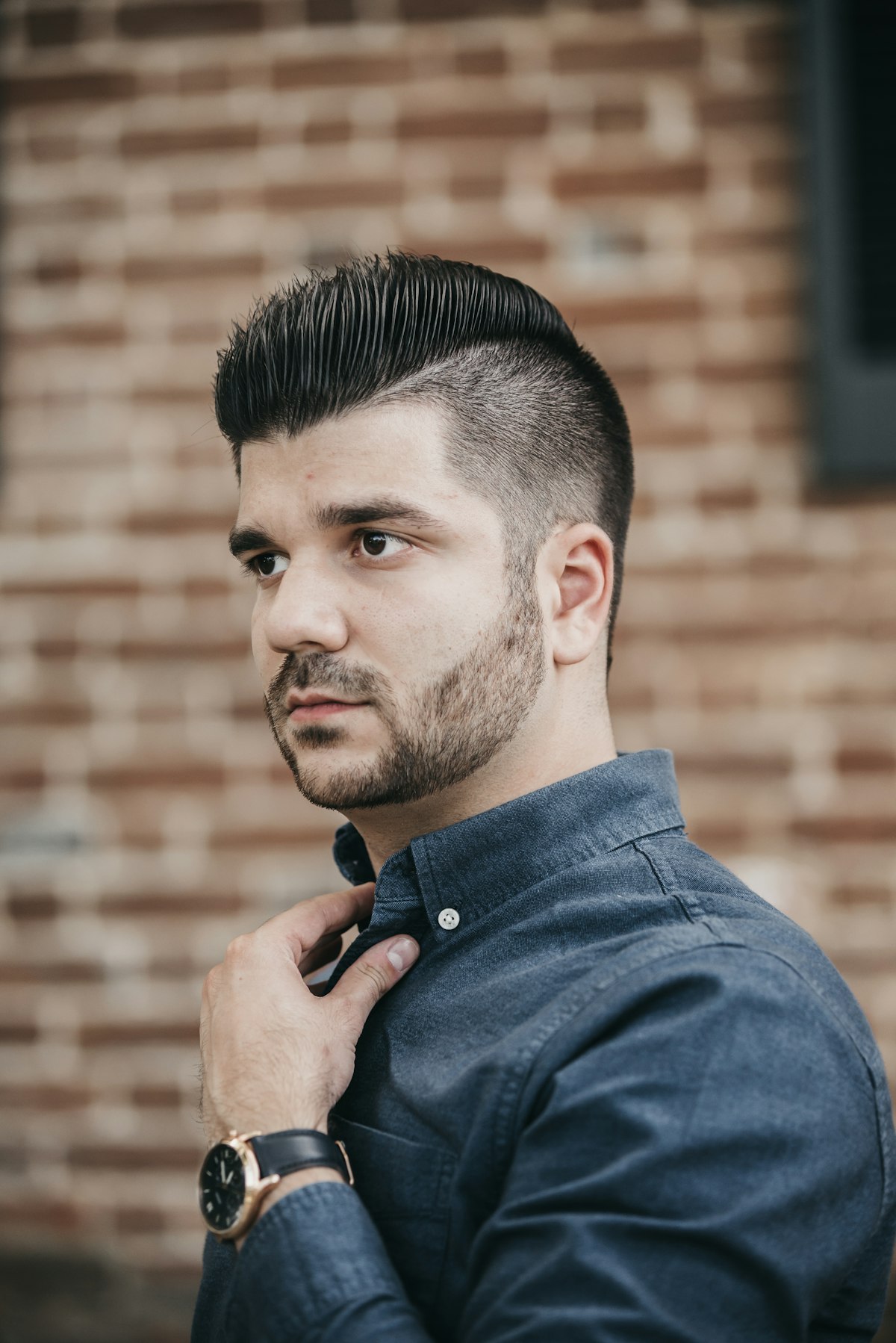
The defining characteristic of the undercut is the separation between the length on top and the length on the sides and back. Where most tapered and faded cuts create a gradual transition from long to short, the undercut creates a clear horizontal line of separation. Above the line: longer hair that can be styled in multiple directions. Below the line: uniformly short or shaved hair. The word "under" refers to the hair under and around the longer top section being cut away.
The Traditional Undercut
In the traditional undercut, the sides and back are cut short with clippers (typically to a #2 or shorter) and the line of separation is defined but not shaved. There is a visible transition line but the sides are not taken to skin. The top section is left long and can be slicked back, parted to one side, or swept in various directions. The traditional undercut has a structured appearance without the hard contrast of the disconnected version.
The Disconnected Undercut
The disconnected undercut takes the contrast further. The sides and back are taken to skin or very close to skin, creating a hard visible separation from the long top. The term "disconnected" refers to the fact that the two sections have no blended transition between them. There is simply a line where the long hair ends and the bare or near-bare sides begin. This is the version most associated with the contemporary undercut and produces the most dramatic silhouette.
Styling Options for the Top
The long top section of the undercut is the design canvas. Common styling directions: slicked back (classic European look), swept to one side with or without a part, textured and pushed forward (continental style), or left with natural texture and slight messiness (casual version). The length of the top section determines which of these are possible. A top section of 4 to 6 inches provides the most versatility.
Frequently Asked Questions
How is an undercut different from a fade?
A fade creates a gradual transition from longer hair at the top to skin at the base. The sides and back blend into the top section. An undercut creates a hard line of separation rather than a graduated blend. The sides and back are at one consistent short length with no gradual transition into the top. These two structures can be combined (an undercut with a fade on the sides), but in their pure forms they are opposite approaches to the side-to-top transition.
How long does the top need to be for an undercut?
The minimum workable length for the top section is 2 to 3 inches. Below this, there is not enough material for the styling range that makes the undercut visually distinctive. The style is at its most functional between 4 and 7 inches on top. Shorter tops create a more subtle disconnection; longer tops create more dramatic contrast with the short sides.
Does the undercut work for all face shapes?
The undercut adds width at the temples (where the long top transitions to the short sides) and draws attention to the horizontal separation. This tends to work well for oblong or narrow faces by adding visual width at the side of the head. For very wide or round face shapes, the added visual width at the sides can accentuate roundness rather than balance it. A barber can adjust the height of the disconnection line and the styling direction of the top to modify how the shape reads for different face structures.
How do I maintain the undercut between barbershop visits?
The top section grows and may require trimming to maintain intended length. The shaved or closely clipped sides need refreshing every 2 to 3 weeks to maintain the hard disconnection. A grown-out undercut loses the defining contrast that makes the style work. The disconnected line softening is one of the first things to refresh at each visit. Some men maintain the sides themselves with a clipper; others visit the barber specifically for the sides while leaving the top longer.
Want to learn to cut an undercut yourself? CADMEN Barber Academy teaches cutting hands-on, with an educator beside you. See the barber academy in Mississauga or view in-person classes and send an enquiry.
Watch the free Barbering for Beginners playlist on YouTube.
