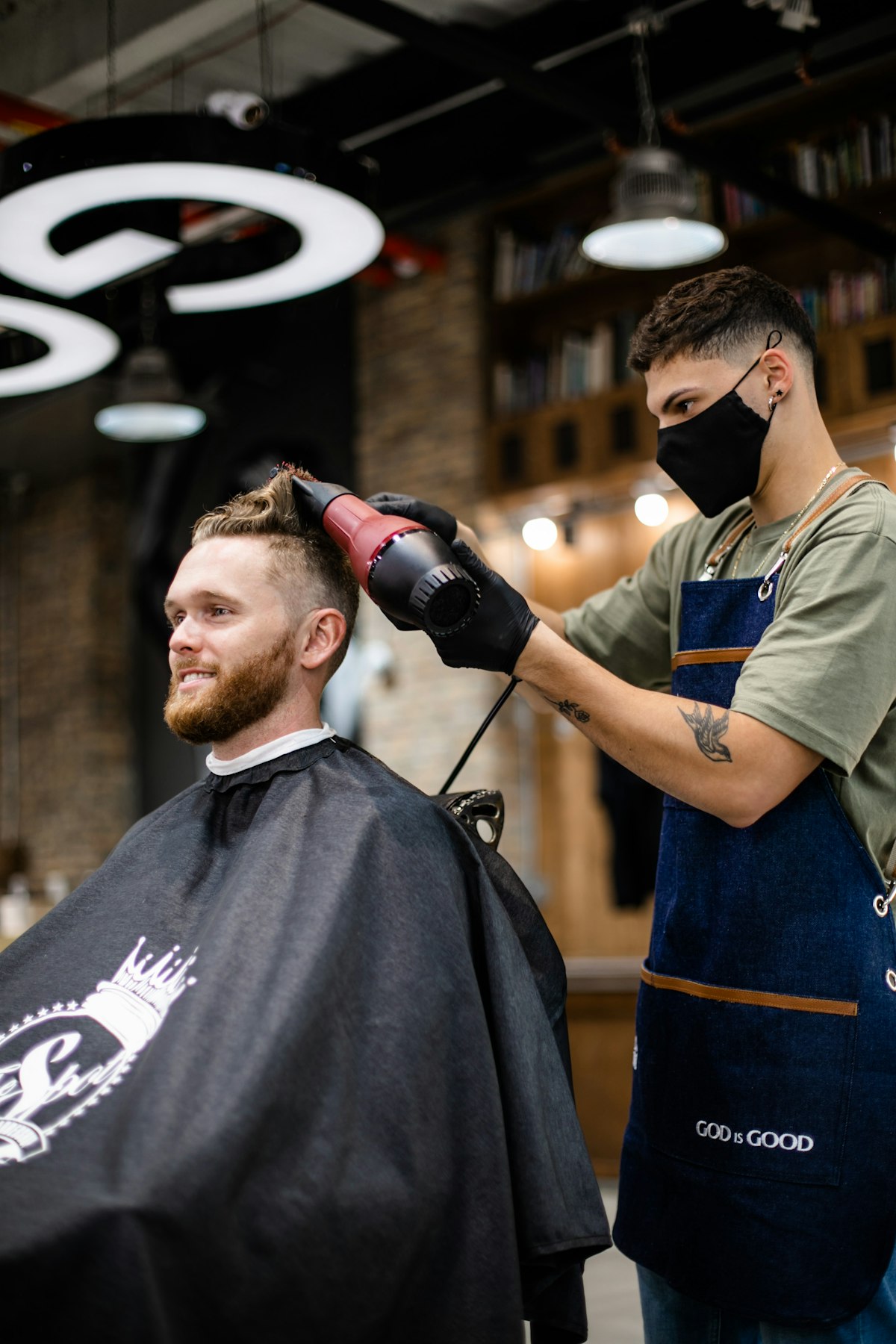
The Taper Haircut: How It Works and Who It Suits
The Taper Haircut: How It Works and Who It Suits
The taper is the foundation of most men's barbershop haircuts. Understanding what it is explains why so many different haircuts are described as tapered and why it is consistently the most flattering basic structure for men's hair.
What a Taper Does
A taper gradually reduces hair length from a longer section to a shorter section. In the context of men's haircuts, this means the hair gets shorter as it approaches the neckline and the ears. The graduation is smooth: there is no visible step change between lengths, just a continuous reduction in length from one zone to the next.
The taper creates a clean hairline at the neck and sides without cutting the hair to skin. The neckline in a traditional taper is defined and clean but shows a very short layer of hair rather than exposed skin. This natural finish is what distinguishes a taper from a fade.
The Variables in a Taper
How high the graduation begins: a low taper starts close to the neckline and has a short graduation zone. A high taper starts further up the side of the head and creates a longer graduation. The higher the taper begins, the more of the side of the head has graduated short hair visible.
The length at the neckline: the shortest point of the taper at the neck can range from a very short guard length to a natural-looking finish where the hair blends into the neckline cleanly without being extremely close. Conservative tapers finish at a natural neckline; modern versions may go shorter.
The top section: the taper defines the sides and neckline but the top is handled separately. A taper can be combined with almost any top section length and style, from a very short uniform buzz to a medium or long length with sophisticated styling. The taper is a framework that works with many top styles.
Why It Is Universally Flattering
The taper creates visual structure for the face without dramatically altering proportions. The graduation at the sides draws the eye toward the face rather than creating competing shapes at the sides of the head. It cleans up the neckline, which is one of the most noticeable indicators of a maintained haircut. And because it does not prescribe the length or style of the top section, it adapts to a wide range of personal style preferences and face shapes.
Classic Combinations
Taper with a side part: the tapered sides and back contrast with a slightly longer top that is parted and combed to one side. This is the most formally appropriate haircut combination for professional settings across almost all industries.
Taper with a short textured top: the taper frames a short, textured top section. This is the most common contemporary men's haircut in a wide range of environments.
Taper with a crew cut: the taper defines the sides while the top is cut to a flat or slightly rounded short length consistent throughout. Classic and straightforward.
Frequently Asked Questions
Is a taper the same as a fade?
No. A taper graduates the hair shorter toward the hairline but does not reach skin. A fade goes all the way to skin at some point along the graduation. A "taper fade" is a common hybrid term that refers to a graduated cut that reaches skin, combining both techniques. If you want skin showing at the hairline, ask specifically for a fade. If you prefer the hair to graduate short without skin exposure, ask for a taper.
How often should I get a taper haircut trimmed?
Every 4 to 6 weeks for most men. The sides and neckline show growth more noticeably than the top section, so the maintenance schedule is primarily driven by how quickly the tapered areas look grown out. Men who are particular about a clean neckline may trim the neckline at 3 weeks and get the full haircut at 6 weeks.
Does the taper work with thick hair?
Yes. Thick hair tapers cleanly and the graduation is visually pronounced because of the density of each length stage. The barber may need to thin the top section to manage bulk, but the taper itself is not complicated by thickness. Thick hair actually shows the taper graduation more dramatically than fine hair, which can make the overall structure of the cut more visually defined.
Is a taper appropriate for a job interview?
Yes, universally. The taper is probably the single safest haircut choice for interview settings across all industries. It signals grooming, maintenance, and attention to appearance without any stylistic edge that might be misread in a conservative environment. Whether the top is a classic side part or a short textured section, the tapered sides and clean neckline communicate the right things.
Can I ask for different taper lengths on different visits?
Yes. The taper is not a fixed prescription. You can ask for a tighter, shorter taper one visit and a longer, more conservative taper on another. The best way to communicate what you want is to reference where on the head the graduation should begin (high or low) and the length you want at the shortest point. Showing a photo of a taper you like is the clearest reference a barber can work from.
Want to learn to cut a taper yourself? CADMEN Barber Academy teaches cutting hands-on, with an educator beside you. See the barber academy in Mississauga or view in-person classes and send an enquiry.
Watch the free Barbering for Beginners playlist on YouTube.
