Haircuts for Men with Thick Hair: What Works and What to Avoid
Haircuts for Men with Thick Hair: What Works and What to Avoid
Thick hair presents a different set of cut and styling challenges than fine or medium hair. It holds volume, resists lying flat, and can become bulky if the cut is not designed to manage it. Here is what works, what does not, and why.
What Makes Thick Hair Different to Cut
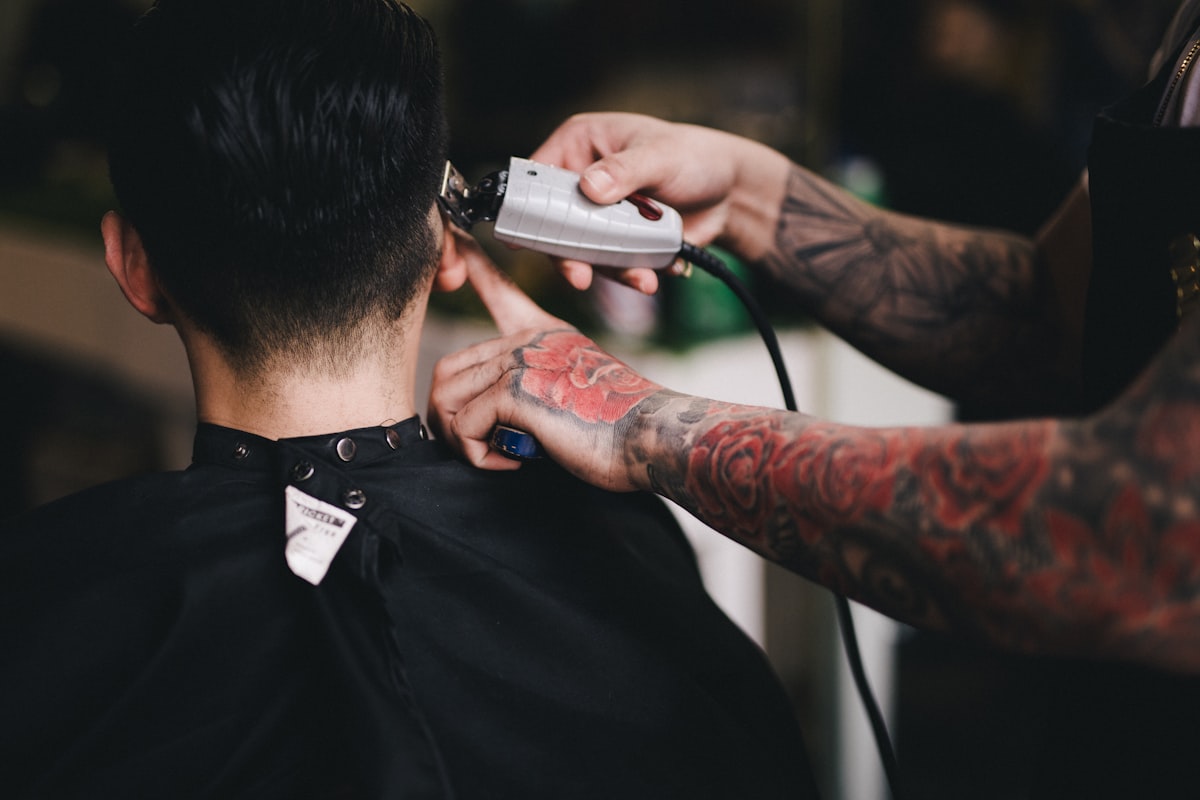
Thick hair behaves differently because each strand is larger in diameter and the density (number of follicles per area) is higher. The result is hair that has natural volume and substance. Left unmanaged by the cut, thick hair expands outward and upward rather than falling cleanly. The weight is distributed broadly, which means a cut that would look structured on fine hair can look bulky or round on thick hair without specific adjustments.
Barbers cutting thick hair typically use texturizing techniques (thinning shears, point cutting, or razor work) to remove internal bulk without taking off length. These techniques are specifically designed to reduce the mass of the hair from within so the surface looks clean but does not have the bulk that would otherwise cause the style to expand or lose shape by mid-day.
Haircut Structures That Work
Tapered sides and back: thick hair on the sides without a taper creates a round, wide silhouette that visually widens the head. A taper or fade pulls the sides in and creates a cleaner silhouette. The contrast between the managed sides and the top section where the thickness is retained as a styling feature is the most common successful structure for thick hair.
Textured top: leaving some length on top and working it with texture gives the thickness somewhere productive to go. A short textured crop with a taper works with thick hair's tendency to hold shape. The texture on top looks deliberate rather than expanding randomly.
The crew cut: short on top and tapered on the sides, the crew cut uses length as a control mechanism. Thick hair at 1 to 2 inches on top has enough weight to lie relatively flat compared to what thicker, longer hair would do. This is a reliable, low-maintenance option for men with thick hair who want minimal styling effort.
What to Avoid
One-length cuts where the sides and top are the same length. On thick hair, this creates maximum volume in all directions without structural contrast. The result is a round, voluminous shape that expands as the day progresses.
Very long top sections without internal thinning. More than 3 to 4 inches of thick hair on top becomes difficult to manage. The weight and bulk interact to create unpredictable volume. If you want longer hair and have thick hair, the cut needs significant internal thinning to make the top manageable.
Smooth, flat styles that rely on the hair lying completely flat. Slick-backs and pomaded flat styles are hard to maintain in thick hair because the volume fights against them throughout the day. They can be done but require more product and effort than the style warrants for most men.
Frequently Asked Questions
Should I tell my barber my hair is thick?
They will see it immediately, but mentioning it upfront allows you to discuss the techniques they plan to use. If you have had previous cuts where the hair expanded or looked round by the end of the day, saying so gives the barber specific information to act on. Asking "will you thin this out?" is a direct way to confirm the barber plans to address the internal bulk.
Does thinning the hair damage it?
No. Thinning shears cut the hair; they do not damage the remaining strands. The techniques barbers use to remove bulk are removing hair, not weakening the hair that remains. There is no structural damage from professional thinning techniques done correctly.
How do I style thick hair without it expanding throughout the day?
Start with a cut that has enough taper on the sides to create structure. Apply a medium-hold clay or paste on slightly damp hair and direct the top while damp, using a blowdryer if needed to set the direction. Thick hair holds styling positions better than fine hair once correctly set while damp. Trying to style thick hair when completely dry is harder because the hair is rigid at that point. The daily routine should involve damp application, not dry product manipulation.
Can I grow thick hair longer without it becoming unmanageable?
Yes, with the right approach. At medium to longer lengths, the weight of the hair suppresses some of the outward expansion. The key is internal thinning at every trim: removing bulk from the interior of the sections without reducing the visible length on the surface. A barber who is experienced with thick hair will do this automatically. As the hair gets longer, the cuts become more about managing the internal volume distribution than the external length. The silhouette should be controlled, not round or triangular.
Why does my thick hair expand by the end of the day even after styling?
Expansion through the day in thick hair is almost always a product choice or application issue combined with a cut that is not managing the internal bulk. A cut with proper thinning creates a structure that stays closer to the styled position. A product that sets the hair in place rather than adding light hold allows the style to stay through humidity and movement. If your current product and cut combination does not hold through the day, the answer is likely a cut with more internal thinning, a stronger-hold product, or both.
Related Reading From CADMEN Barber Academy
- Men's Haircuts for Thick Hair: What Works Best
- Getting a Fade with Thick Hair: What to Tell the Barber
- Haircuts for Thinning Hair: What Works and Why
- Cutting Techniques for Thick Hair
- Cutting Thick Hair: The Adjustments Barbers Make on High-Density Hair to Get a Clean Result
- Thick Hair in Men: What to Expect at the Barbershop and How to Manage It
