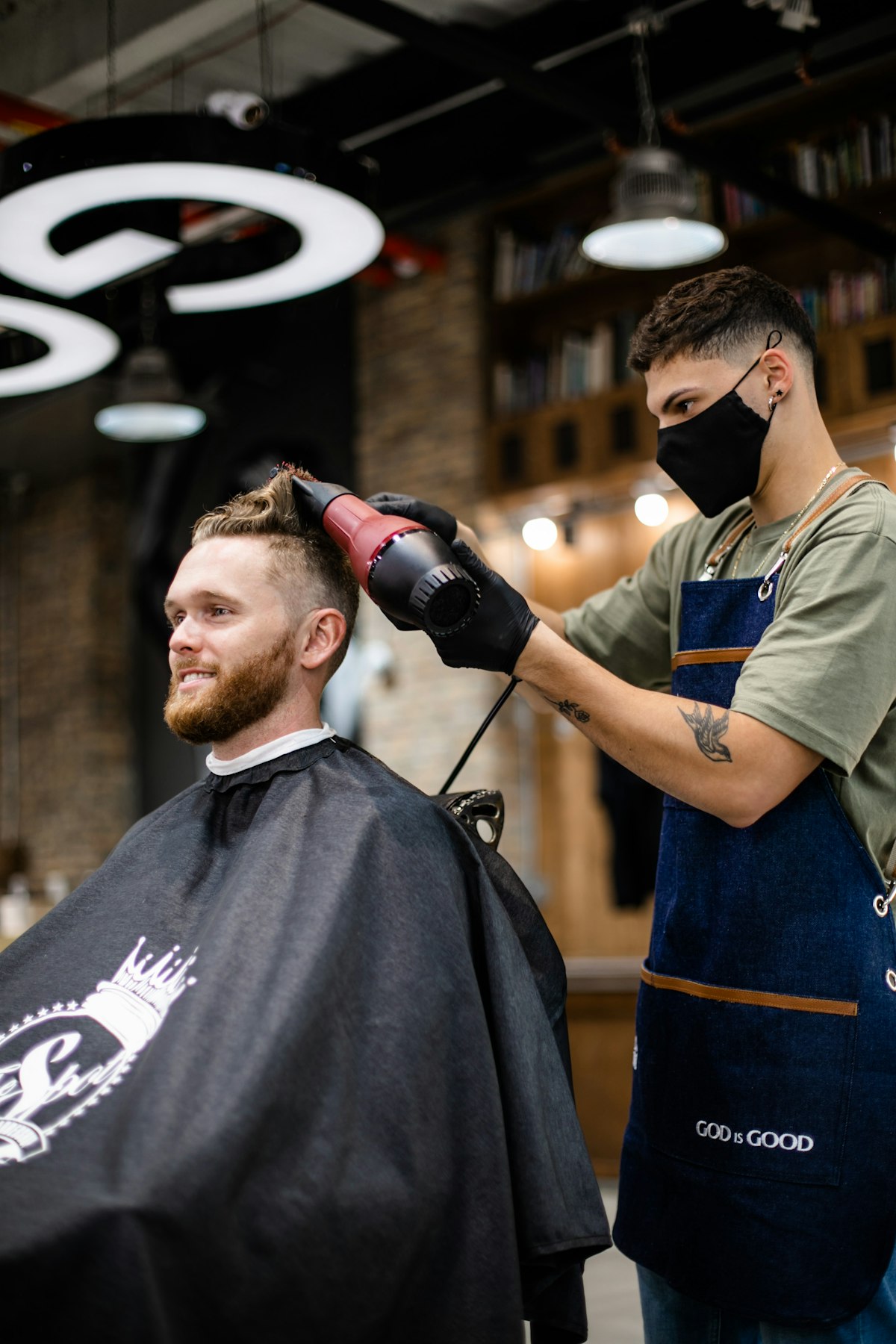
Temple Fade Haircut for Men: What It Is and How to Get It
Temple Fade Haircut for Men: What It Is and How to Get It
The temple fade is a precise fade applied specifically at the temples, the area of the head above the ears and at the sides of the forehead. It is one of the more technically demanding fade positions to execute cleanly because of the curved anatomy of the temple area. Here is what it is and how it works.
What the Temple Fade Is
A temple fade (also called a temp fade) fades the hair at the temples down to skin or near-skin, creating a clean, tight transition at that specific zone. The fade is localized: it runs from the natural hairline at the forehead back through the temple region to above the ear. Below the temple area, the sides may maintain more length or have a separate fade graduation. The defining visual characteristic is a sharp, clean edge at the forehead hairline and a tight fade through the temple that creates a precise, well-defined edge to the top section of the hair.
How It Differs from Other Fades
A low fade sits just above the ear across the entire side of the head. A mid fade sits at the midpoint of the side. A high fade sits high on the sides, close to the top. A temple fade is positionally specific to the temple zone rather than being defined by a uniform height across the entire side. Many barbers include a temple fade as part of a low or mid fade without naming it separately, because the temple area naturally requires different work due to its curved shape. When clients specifically request a temple fade, they typically mean extra attention to that zone, with a sharper, tighter finish at the temple hairline than the rest of the fade.
The Hairline at the Temple
The temple fade often involves either maintaining or shaping the hairline at the corners of the forehead. The natural hairline at the temples tends to recede slightly or have an irregular edge; many temple fades involve defining or cleaning this line. Barbers typically use a trimmer or razor to create a clean edge at the hairline before executing the fade behind and below it. The result is a crisp boundary between the skin at the forehead and the beginning of the hair section, creating a squared or rounded corner at each temple that frames the face clearly.
Works Well With
The temple fade is particularly effective with styles that have a clear top section: textured crops, Afros with shape-ups, short faux hawks, and any style where the transition from side to top benefits from a clean, defined temple line. It suits any face shape but is especially flattering on rounder faces because the defined temple line creates visual angles at the sides of the forehead that add structure. It is common in styles worn by men with tightly coiled or curly hair, where the precise edge at the temple creates a clean geometric boundary that defines the shape of the haircut.
Frequently Asked Questions
Is a temple fade the same as a temp fade?
Yes. "Temp fade" is short for "temple fade." The terms are interchangeable in barbershop usage. Some barbers use "temp fade" more commonly because it is shorter, but they refer to the same thing: a fade concentrated at and around the temple region with a clean edge at the hairline.
How often do I need to maintain a temple fade?
The temple fade requires more frequent maintenance than longer styles because the short length and precise edge at the temple hairline show grow-out within 2 to 3 weeks. If you want to maintain the sharp, defined temple line, a visit every 3 to 4 weeks is standard. Some men who keep very tight fades visit every 2 weeks. If you are between cuts, a clean-up of the hairline at home with a trimmer can extend the appearance of the fade by a week; the clean hairline edge is what most people notice first when the fade grows out.
Can all barbers do a temple fade?
A temple fade requires skill because of the curved anatomy of the temple area. Most experienced barbers can execute it; it is a standard part of barbering training. Barbers who specialize in fades on tightly coiled and curly hair often have the most refined technique for temple fades because this style is common in their regular clientele. When trying a new barber, looking at their portfolio for examples of clean temple fades on similar hair types to yours is a reliable way to gauge whether their technique will produce the result you want.
What do I ask for to get a temple fade?
Ask for a "temp fade" or "temple fade" and specify the desired finish: skin (zero guard at the temple), near-skin (very close but not bald), or light (a short guard, graduated to shorter). If you want a clean defined hairline edge at the forehead, specify that too: "clean up the hairline at the temples." Most barbers who do temple fades will automatically address the hairline, but stating it explicitly ensures you get the edge work you want rather than just the graduation.
Want to learn to cut a temple fade yourself? CADMEN Barber Academy teaches cutting hands-on, with an educator beside you. See the barber academy in Mississauga or view in-person classes and send an enquiry.
Learn this fade step by step in our free Fade Tutorials playlist on YouTube.
