Short Back and Sides Haircut for Men: What It Means and How to Get It
Short Back and Sides Haircut for Men: What It Means and How to Get It
Short back and sides is one of the broadest haircut descriptions in the barbershop. It is also one of the most requested and least precisely defined. Understanding what the phrase means and how to be more specific about what you want will produce better results.
What the Phrase Actually Means
Short back and sides (sometimes abbreviated as SBS) describes a haircut where the hair at the back of the head and the sides is kept shorter than the hair on top. The phrase dates to the early 20th century and originally described military-influenced short cuts. Today it covers an enormous range of specific styles, from a closely scissor-cut sides and back with a longer, comb-styled top, to a tight fade with a textured quiff. The only specific technical information in the phrase is the relative length relationship: sides and back shorter than top. Everything else is undefined.
The Classic Version
In the traditional sense, short back and sides refers to a scissor-cut or clipper-cut side and back, typically cut to a consistent medium-short length (around a 3 or 4 guard, which is 3/8 to 1/2 inch), with the top left longer (1.5 to 3 inches) and combed or styled to the side or back. No fade is required; the transition from short sides to the longer top can be blended with scissors or defined with a clipper line. This is the version that older barbers and older clients typically mean by the phrase. It is a clean, conservative, low-maintenance style.
Modern Interpretations
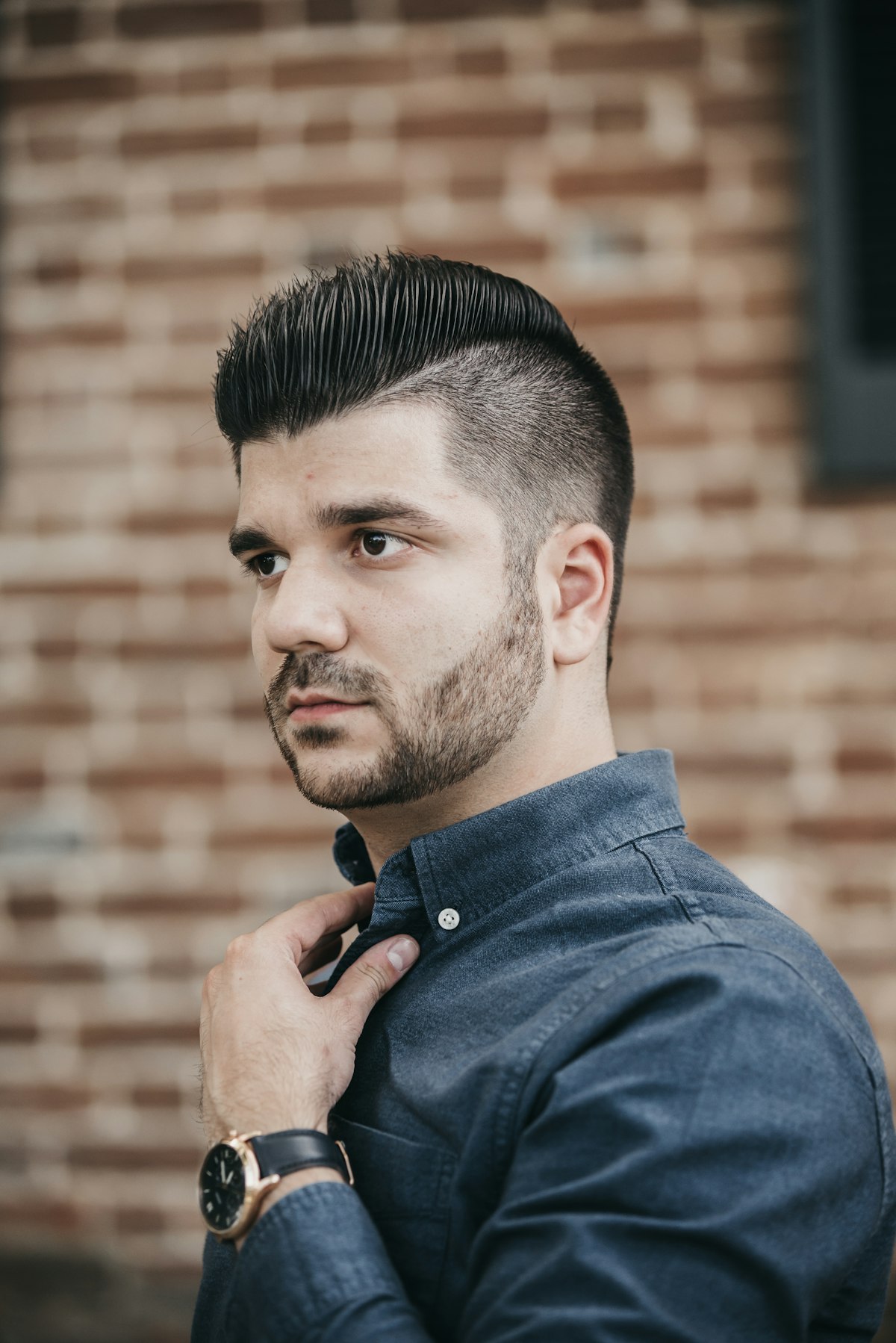
In contemporary usage, "short back and sides with a bit more on top" often implies: a low to mid fade at the sides and back (skin to 1/4 inch at the base, graduating to longer toward the top), 2 to 3 inches of length on top, and some texturing or styling. The fade replaces the blended or defined line of the classic version. The top may be styled in a quiff, textured fringe, or pushed to the side. These modern versions of short back and sides still satisfy the basic description but are stylistically very different from the classic cut. Most men who ask for short back and sides in a contemporary barbershop get this version unless they specify otherwise.
How to Be More Specific
If you want a specific result, add details to the phrase: "Short back and sides with a low skin fade, about 2 inches on top, textured" gives the barber enough information to execute a precise cut. "Short back and sides, scissor-cut only, no fade" tells them the classic approach. Bringing a reference photo alongside the phrase eliminates all remaining ambiguity. "Short back and sides" alone is a starting point, not a complete instruction.
Frequently Asked Questions
Is short back and sides always a fade?
No. A fade is one way to achieve short back and sides. The classic version uses scissor-cut or clipper-cut sides at a consistent length with a blended or defined transition to the top, not a graduated fade. Whether the style includes a fade depends on the specific interpretation you want and whether you ask for one. Many barbers default to a light fade in a modern context; if you do not want a fade, specify scissors or a specific guard length for the sides rather than leaving it ambiguous.
How long is "short" for the sides in short back and sides?
Typically a 2 to 4 guard (1/4 to 1/2 inch) for the classic version. In faded versions, the sides graduate from skin or near-skin at the base up to a longer length before transitioning to the top. The phrase "short" is relative and subjective; asking for a specific guard number or showing a reference photo with the length you want is more reliable than relying on the word "short" to communicate a specific length.
Does short back and sides suit all face shapes?
Yes, because it is a broad style category rather than a specific cut. The specific version within short back and sides that suits a face shape depends on the proportions: round faces benefit from versions with more height on top (quiff, textured volume) to create visual length; square faces benefit from softer texturing rather than hard-edged styles; oval faces work with most variations. The barber can guide you toward the specific version within the short back and sides family that suits your face shape if you mention it during the consultation.
