The Quiff: How to Wear It and What It Requires
The Quiff: How to Wear It and What It Requires
The quiff is a high-volume front section styled upward and back, typically with some texture rather than the smooth, slick look of a pompadour. It has been a consistent style choice for men who want visible volume at the front without the full commitment of a pompadour's height and shine. Here is how it works and what it takes to maintain.
What a Quiff Is
The quiff has volume and height at the front hairline that sweeps back over the top of the head. Unlike a pompadour, the quiff typically has a more relaxed, textured appearance. The front section rises from the hairline and falls back in a wave rather than forming the precise rounded arch of a classic pompadour.
The sides are typically faded or tapered, creating contrast with the longer, fuller top section. The fade position varies: low, mid, and high fades all appear in quiff styles. The choice depends on how much contrast you want and how bold a look you are going for.
How It Differs from a Pompadour
A pompadour has a more architectural shape, with a pronounced rounded lift at the front and a high-shine finish. The quiff is softer. It has volume but not necessarily the deliberate arch of the pompadour. The quiff also typically uses a matte or low-sheen product rather than the high-shine pomade associated with classic pompadours. The result is a more casual, modern version of the same general idea.
What You Need to Build a Quiff
Length: the top section needs at least 3 to 4 inches at the front to create visible volume when styled. Less than 3 inches and the lift is minimal. More than 5 to 6 inches and the weight of the hair fights the upward direction without significant product.
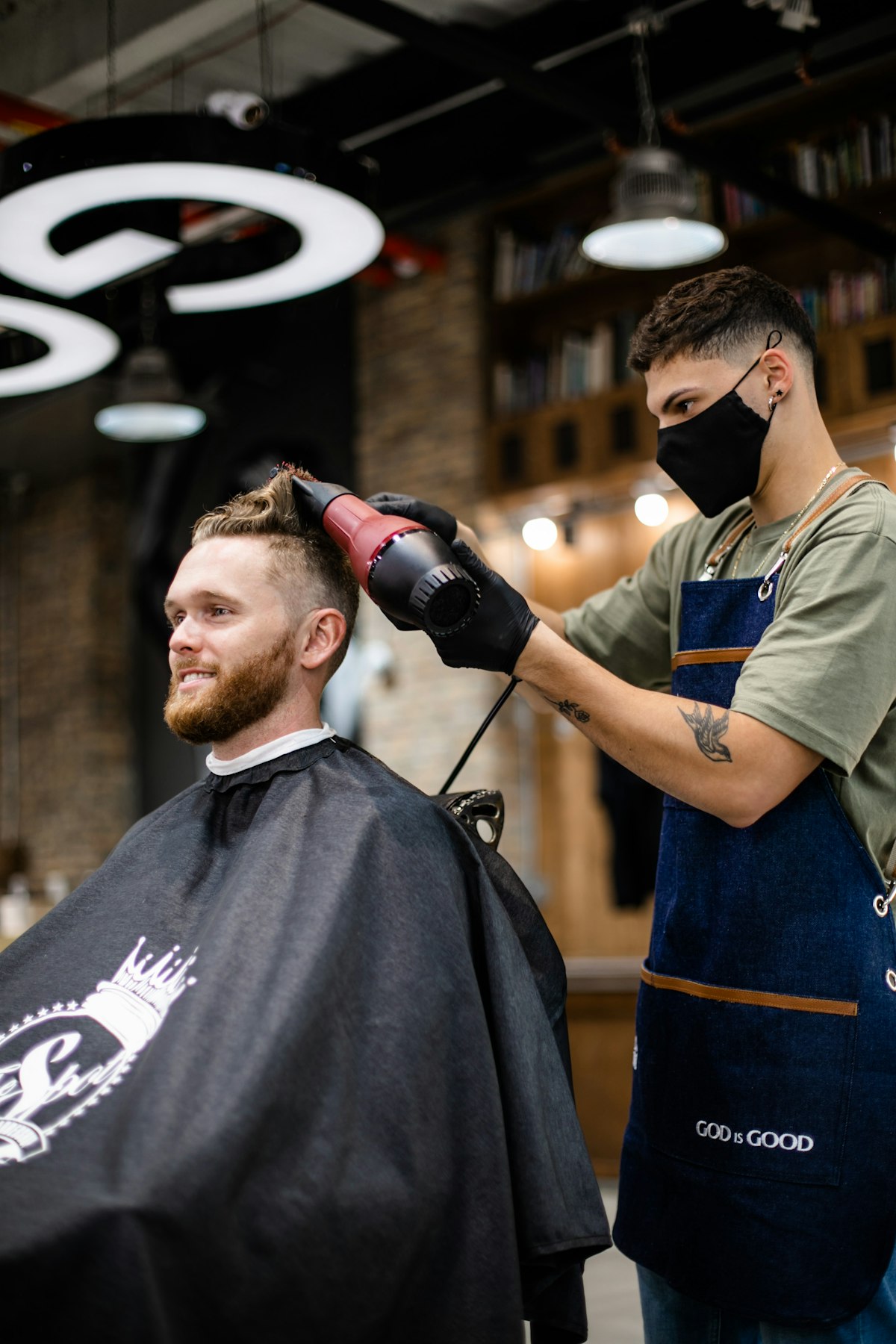
Blowdryer: the blowdryer is the most important tool for building a quiff. Start with damp hair. Apply a volumizing or light-hold product and direct the airflow at the roots while brushing or combing backward. The heat sets the direction and creates the volume that defines the style. Without a blowdryer, the quiff is significantly harder to achieve with most hair types.
Product: a matte or low-sheen clay or paste provides hold without weighing the hair down. Apply after blowdrying to add definition and set the style. Too much product collapses the volume. Start with less than you think you need.
Maintenance
A fresh quiff requires time in the morning. The blowdrying step is the difference between a quiff and just having long hair on top. For men who cannot consistently spend 5 to 10 minutes styling, the quiff is a weekend style rather than a practical daily cut. The barbershop visit every 4 to 6 weeks maintains the top length and the tapered sides.
Frequently Asked Questions
Can fine hair hold a quiff?
Fine hair can hold a quiff with the right product and technique. A volumizing spray or mousse applied before blowdrying provides lift that fine hair needs. A light clay applied after blowdrying maintains the shape without weighing it down. The result is less dramatic than a quiff on thick hair, but the style is achievable. Fine hair quiffs often look more natural and subtle, which works in their favor.
Does a quiff work for any face shape?
The quiff adds height and visual length to the face, which benefits round and wide face shapes specifically. For oblong or long face shapes, the added height can accentuate the length. In those cases, a quiff with less extreme height and more width in the styling works better. The quiff is most commonly flattering on round, square, and heart face shapes.
What is the difference between a quiff and a side swept fringe?
A side swept fringe directs the front section across the forehead to one side. A quiff directs it upward and back. The side sweep is horizontal. The quiff is vertical. Both involve the front section as the styling focus but the direction and the visual effect are different.
How do I prevent the quiff from falling flat during the day?
A stronger-hold product helps. A small amount of clay or paste reapplied mid-day to the front section can restore the volume. Humidity and heat are the main enemies of the quiff. A light-hold hairspray applied over the finished style after blowdrying provides some protection against humidity without creating a stiff or crunchy result.
Can a quiff be worn with a beard?
Yes. A quiff with a maintained beard is a common combination. The volume at the top of the head and the coverage at the chin create a balanced frame for the face. The quiff adds height, the beard adds width, and the combination suits most face shapes. A well-groomed short beard or stubble works particularly well with the quiff because both elements look intentional and maintained.
Related Reading From CADMEN Barber Academy
- The Men's Quiff: How to Cut and Style It
- The Quiff Haircut: How to Get It and Style It
- The Quiff Haircut: What It Is and How It Compares to the Pompadour
- Choosing a Hairstyle for Your Face Shape: A Practical Guide
- The Quiff: What Makes It Work and How to Style It
- The Quiff Haircut: How to Get It and Style It
Want to learn to cut a quiff yourself? CADMEN Barber Academy teaches cutting hands-on, with an educator beside you. See the barber academy in Mississauga or view in-person classes and send an enquiry.
Watch the free Barbering for Beginners playlist on YouTube.
